What should you check?
Start with the kind of cup the person enjoys, then check the caffeine wording and the instructions on the particular pack.
| Priority | What to check | Your needs |
|---|
| Residual caffeine |
Read the current pack’s caffeine statement and any brewing conditions attached to a figure. Yorkshire Tea states an average 1.5–2mg per 200ml cup brewed for five minutes; that is not a figure for other teas or brewing methods. |
I want to reduce caffeine while keeping an afternoon tea. If I have been told to avoid it completely, I need advice on whether this particular drink fits that restriction. |
| Blend and milk |
Look for a decaf black-tea blend described as strong or robust if that is the preferred style. Twinings describes its English Breakfast Decaffeinated as an Assam, Kenyan and Ceylon blend; descriptions indicate intended style, not a tested comparison of flavour. |
Will the usual amount of milk leave me with a cup I enjoy, or would I prefer a lighter tea? |
| Brewing |
Follow the instructions for the chosen pack before adjusting the steeping time. The supplied guidance differs between PG Tips, Twinings and Tesco decaf teas. |
I would like to make the cup the same way each afternoon, then adjust it to the drinker’s taste. |
| Pack format |
Check the bag count, net weight and whether the format suits the number of cups usually made. Do not assume similarly sized-looking boxes contain the same number of bags. |
A smaller pack may suit occasional visits; for cups served regularly, I want a pack size that is practical to store and use. |
| Sourcing claims |
Check the precise product’s organic and Fairtrade wording if either matters to you. Clipper describes its Organic Everyday Decaf as using organically grown black tea and Fairtrade sourcing; these claims do not establish its caffeine level or flavour relative to other teas. |
Organic or Fairtrade sourcing matters to me, but I still need a decaf tea the drinker likes. |
Decaf tea brands to consider
These brand examples describe particular decaf lines, not every tea made by each company.
Yorkshire Tea
Yorkshire Tea describes its Decaf as a strong, familiar-style black tea.
- The brand states an average 1.5–2mg caffeine per 200ml cup brewed for five minutes.
- That conditional average is not a promise that every cup has the same caffeine content.
Tetley
Tetley offers decaffeinated black tea in larger bag packs for regular household cups.
- The checked 160-bag product provides a clearly stated bag count.
- Check the particular pack’s caffeine wording and brewing instructions rather than applying details from another pack.
PG Tips
PG Tips Decaf is an everyday black-tea option, including a 70-bag pack.
- The checked product’s information gives a one-to-two-minute brew.
- Tesco’s listing states less than 0.2% caffeine for that product, so “caffeine free” marketing wording should not be read as a zero-caffeine guarantee.
Twinings
Twinings offers named decaf styles, including English Breakfast, Earl Grey and green tea.
- The brand describes English Breakfast Decaffeinated as an Assam, Kenyan and Ceylon blend.
- Anyone working to a strict caffeine limit should check the current pack rather than assume a figure applies across Twinings’ range.
Clipper
Clipper’s Organic Everyday Decaf is a black tea for buyers who prioritise its stated sourcing attributes.
- Clipper describes this line as organic and Fairtrade and says it uses carbon dioxide for decaffeination.
- The stated decaffeination method does not establish that its residual caffeine is lower than another decaf tea’s.
Tesco
Tesco Decaff Original is an own-label decaf black tea offered in an 80-bag pack.
- The checked product information suggests a three-to-five-minute brew.
- Read the current pack for ingredients and preparation details, as Tesco notes that food products may be reformulated.
Joybuy decaf tea options
These decaf teas include familiar black-tea packs, a CO2-labelled option and an organic and Fairtrade option for afternoon cups.
 Image unavailable
Tetley 80 Decaffeinated Tea Bags 250g
An 80-bag decaf option for regular afternoon cups of black tea. If caffeine intake is strictly limited, check the current pack for product-specific information.
View on Joybuy
 Image unavailable
Taylors of Harrogate Yorkshire Tea Decaf 250g
A decaf choice for someone who prefers Yorkshire Tea’s stated strong black-tea style. Yorkshire Tea reports an average 1.5–2mg caffeine per 200ml cup brewed for five minutes; check the pack’s format and preparation directions.
View on Joybuy
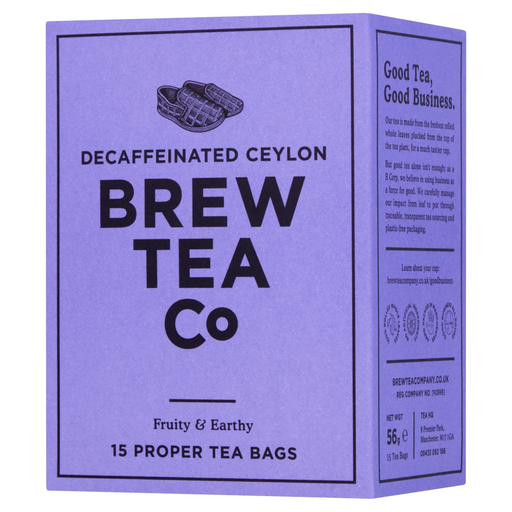 Image unavailable
Brew Tea Co CO2 Decaffeinated Tea, 15 Bags, 56g
The 15-bag format may suit occasional afternoon cups or a trial of a different decaf. The product name identifies CO2 decaffeination; check the current pack for brewing directions and any caffeine information relevant to a strict limit.
View on Joybuy
 Image unavailable
Clipper Organic Fairtrade Decaf Everyday 80 Tea Bags 277g
An 80-bag decaf black-tea option when Clipper’s organic and Fairtrade claims matter to the buyer. Check the current pack for hot-tea brewing directions and caffeine information if a strict limit applies.
View on Joybuy
 Image unavailable
Tetley 160 Decaf Tea Bags 500g
The 160-bag format suits a household making decaf tea regularly. Check this pack’s brewing directions and caffeine wording rather than assuming they match a smaller Tetley pack.
View on Joybuy
Questions about decaf tea
Is decaf tea completely caffeine-free?
No: decaf tea can retain traces of caffeine. Twinings acknowledges residual traces, while Yorkshire Tea states an average 1.5–2mg in a 200ml cup brewed for five minutes. If complete avoidance has been advised, check the exact pack and ask the relevant clinician or pharmacist.
Which decaf tea suits a traditional afternoon cup with milk?
Start with a decaf black tea whose stated style appeals to the drinker. Yorkshire Tea describes its Decaf as strong, and Twinings describes its English Breakfast Decaffeinated as a robust Assam, Kenyan and Ceylon blend. Brew according to the chosen pack before judging how it tastes with the usual amount of milk.
Should tea be served with food when someone has iron-deficiency anaemia?
Check the person’s healthcare advice before serving tea with a meal. University Hospitals Coventry and Warwickshire NHS Trust advises avoiding tea within one hour before or after mealtimes in its guidance on iron-deficiency anaemia; choosing decaf should not be assumed to change that advice.
How can I make a milder or stronger cup of decaf?
Begin with the chosen pack’s brewing instructions, then adjust to taste. The supplied guidance ranges from one to two minutes for PG Tips Decaf to three to five minutes for Tesco Decaff Original, so a single brewing time will not reflect every product’s directions.


