For an unattended hotel breakfast buffet, start by checking whether guests need individually enveloped, clearly labelled decaf tea bags: Nisbets and Hotel Buyer Store describe a Yorkshire Tea 200-pack with envelopes, strings and tags. A larger boxed pack can also work where staff manage dispensing and replenishment, while a smaller organic or English Breakfast option may suit a supplementary station. Label the tea as decaf rather than caffeine-free.
Who is choosing the tea?
Self-service breakfast teams
These teams need guests to recognise and prepare the decaf option without assistance, and staff to replenish it without disrupting the station. Individually enveloped, tagged bags are worth considering when guests pick up their own tea.
Hotels planning a regular breakfast-tea option
A larger pack of decaf black tea may fit a staffed station. Compare the serving format as well as the bag count: a product listed in a large box is not necessarily individually enveloped.
Hotels with specific sourcing or blend requirements
An organic or Fairtrade-positioned tea, or a named English Breakfast blend, may have a place alongside the main decaf option. Check that its pack size and presentation fit the way it will be served.
What should a hotel check?
Choose the serving format for the station first, then check the tea type, replenishment routine and information guests will see.
| Priority |
What to check |
Your needs |
| Self-service presentation |
Check for individual envelopes, a legible decaf label and strings or tags if guests brew at their tables. Nisbets and Hotel Buyer Store describe these features on the Yorkshire Tea 200-pack. |
I want guests to spot decaf and take one bag without handling the rest of the supply. |
| Tea and preparation |
Check the declared tea ingredient and the instructions on the exact pack. Tesco Groceries lists Tetley Decaffeinated as black tea with a two-to-three-minute brew instruction; Twinings gives two to three minutes for its English Breakfast Decaffeinated. |
The decaf choice should be a familiar black-tea option that guests can prepare using clear instructions. |
| Pack and replenishment |
Match the stated bag or envelope count to the station’s turnover. Confirm how staff will dispense and store the tea rather than assuming a large box contains individually wrapped portions. |
At a busy buffet, I need staff to top up the station without leaving loose bags exposed to shared handling. |
| Caffeine wording |
Use the product’s decaf or decaffeinated wording; do not substitute caffeine-free without support from the exact label. University Hospitals of Leicester NHS Trust explains that decaffeinated tea can retain very low levels of caffeine. |
Guests avoiding caffeine should be able to identify the option without being promised that it contains none. |
| Station information |
Keep current product details available and include milk, plant drinks and flavoured additions in the station’s allergen-information process. The Food Standards Agency says UK catering operators must provide allergen information for prepacked and non-prepacked food and drink. |
If a guest asks about ingredients or allergens, staff need to answer for the whole tea station, not just the tea bag. |
Buffet buying pitfalls
-
Calling decaf tea caffeine-free
University Hospitals of Leicester NHS Trust explains that decaffeinated tea can still contain very low levels of caffeine. A caffeine-free sign could give guests the wrong impression.
Use ‘decaf’ or ‘decaffeinated’ on the buffet label and keep the exact pack information available for staff questions.
-
Choosing by bag count alone
Nisbets and Hotel Buyer Store describe individual envelopes and tags on the Yorkshire Tea 200-pack. A bag count by itself does not establish how another product can be presented at an unattended station.
Check the packaging before choosing a dispensing method; plan how staff will keep the supply orderly and replenish it.
A format that needs staff-controlled dispensing can add monitoring and replenishment work during service.
-
Checking the tea but overlooking the rest of the station
Milk, plant drinks and other additions raise separate ingredient and cross-contact questions. The Food Standards Agency’s allergen guidance applies to food and drink supplied by UK catering businesses.
Keep product information current and make sure staff can follow the hotel’s allergen-information and cross-contact procedures for the full station.
Brand and product-line references
These examples show how particular decaf products differ in presentation and pack size; a brand name alone does not establish the format of every pack.
Yorkshire Tea
An enveloped decaf option to consider for guest self-service.
- Nisbets and Hotel Buyer Store describe a 200-bag pack with individual envelopes, strings and tags.
- Check that the exact pack ordered is the enveloped version required for the station.
Tetley
A larger boxed decaf black-tea option to assess for a staffed station.
- Tesco Groceries lists Tetley Decaffeinated as 160 tea bags, 500g, with decaffeinated black tea as the ingredient and a two-to-three-minute brew instruction.
- Confirm the serving and wrapping format before using it for unattended self-service.
PG Tips
Another larger-pack decaf black-tea option for breakfast service.
- Tesco Groceries lists a PG Tips Decaf pack of 160 tea bags, 464g, with black tea as the ingredient.
- Check the exact pack if individual envelopes are needed.
Twinings
A named English Breakfast decaf blend that could serve as a supplementary choice.
- Twinings describes its English Breakfast Decaffeinated 20-envelope product as a blend of Assam, Kenyan and Ceylon teas.
- Plan replenishment around the 20-envelope pack if it will be offered at a busy buffet.
Clipper
A decaf black-tea option for hotels considering organic and Fairtrade-positioned products.
- Clipper lists an Organic Everyday Decaf 80-bag product and says its decaffeination process uses CO2.
- Clipper notes that decaffeination can affect flavour; sample the exact product before changing the tea served to guests.
Tesco
A retail-pack reference for hotels considering local purchasing.
- Tesco Groceries lists Tesco Decaff Original Tea in an 80-pack, 250g format.
- Check its ingredients, wrapping and purchasing format against the hotel’s service requirements.
Organic decaf options on Joybuy
These organic decaf black-tea products are options to examine for a supplementary breakfast station. Check the exact packaging before planning unattended self-service.
 No image available
Clipper Organic Fairtrade Decaf Everyday 80 Tea Bags 277g
A decaf black-tea option to consider where organic and Fairtrade positioning matters to the hotel. The stated pack contains 80 tea bags and weighs 277g; check whether the exact bags are enveloped and follow the pack’s preparation instructions when setting up the station. Describe it to guests as decaf, not caffeine-free.
Joybuy
 No image available
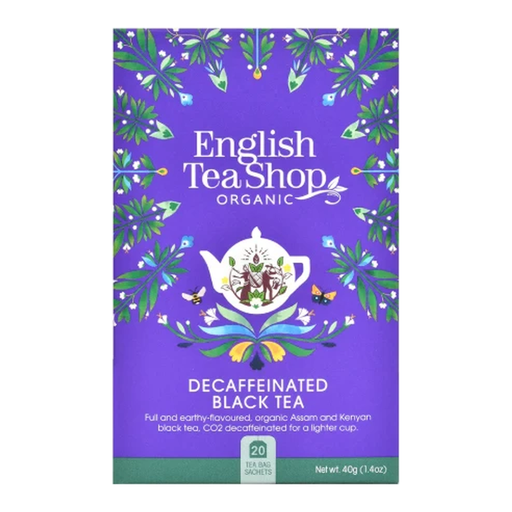
English Tea Shop Organic Decaffeinated Black Tea 20g
An organic decaf black tea to assess for a smaller supplementary service. The stated pack weight is 20g; check the number of servings, whether they are individually enveloped and the brewing instructions before planning buffet replenishment. Label it decaffeinated rather than caffeine-free.
Joybuy
Questions about serving decaf tea
Is decaf tea caffeine-free?
No. University Hospitals of Leicester NHS Trust explains that decaffeinated tea can retain very low levels of caffeine. Use ‘decaf’ or ‘decaffeinated’ on the buffet label rather than promising zero caffeine.
Does a hotel buffet need individually wrapped decaf bags?
Individual envelopes are useful when guests serve themselves or take bags to their tables, but a staffed station can use another format if dispensing is managed. Nisbets and Hotel Buyer Store describe envelopes, strings and tags on the Yorkshire Tea 200-pack; check those features on any alternative pack before ordering for self-service.
How should guests brew decaf black tea at breakfast?
Give guests the instructions for the exact tea being served. Tesco Groceries lists a two-to-three-minute brew before adding milk for Tetley Decaffeinated, while Twinings recommends two to three minutes for its English Breakfast Decaffeinated; check how those instructions work with the hotel’s cups and hot-water setup.
What allergen information matters at a UK tea station?
The Food Standards Agency says UK catering operators must provide allergen information for prepacked and non-prepacked food and drink. Keep current details for the tea, milk, plant drinks and other additions, and make sure staff can respond to questions about the whole station and its cross-contact procedures.


