Black-tea drinkers
Decaffeinated black tea keeps the type of tea you might make with milk, but it is not necessarily caffeine-free. Check the caffeine information for the product and serving you choose.


For a familiar black-tea drink at lunch, choose decaffeinated black tea; individually wrapped envelopes are worth considering if you carry one serving between lectures. Decaf can still contain caffeine, so a clearly labelled caffeine-free fruit or herbal infusion is a different choice when avoiding caffeine is essential. Check what a jar contains before buying: Twinings’ filled infusion jar is not a jar of decaf black tea.
The useful distinction for a lecture lunch is whether you want black tea with less caffeine, a portion to carry, or a drink labelled caffeine-free.
Decaffeinated black tea keeps the type of tea you might make with milk, but it is not necessarily caffeine-free. Check the caffeine information for the product and serving you choose.
An individually wrapped decaf envelope is easier to separate from a larger box for a day of lectures. Twinings lists decaf envelope and individually wrapped options; check the packaging of the particular product.
A fruit or herbal infusion labelled caffeine-free is a different drink from decaf black tea. Check the ingredients as well as the label: Twinings notes that blends containing mate or guarana can contain caffeine.
Choose the drink type first, then check whether its packaging and preparation fit the time and facilities available at lunch.
| Priority | What to check | Your needs |
|---|---|---|
| Caffeine | Distinguish decaffeinated tea from a caffeine-free infusion. Compare any stated caffeine amount using its serving size and brewing conditions; check infusion ingredients for mate or guarana. | I want to know whether less caffeine is enough for me or whether I need a drink labelled caffeine-free. Yorkshire Tea states 1.5–2mg per average 200ml cup of its Decaf brewed for five minutes; that figure does not apply to every tea. |
| Drink type | Read whether the ingredients identify black tea, green tea or a fruit or herbal infusion. A jar’s shape does not identify its contents. | If I want a familiar black-tea cup, a fruit infusion would be a change of drink, even if both appear among lower-caffeine options. |
| Portability | Check whether servings are individually wrapped, how many are in the pack and whether hot water will be available at lunch. | For one drink between lectures, I would rather carry a single protected serving than take a whole box or jar. |
| Preparation | Follow the selected pack’s brewing time rather than using one time for every brand. Check its storage directions if the tea will spend time in a bag or cupboard. | My lunch break may be short, so I need to know how I will prepare and store the tea I choose. |
| Jar contents | Check the full product name, ingredients and serving format before choosing a jar. Twinings lists a caffeine-free infusion selection filled jar, not a decaf black-tea jar. | I only want a jar if it contains the kind of drink I intended to buy; the container alone is not a reason to switch from black tea to an infusion. |
Decaffeinated black tea can retain caffeine. Yorkshire Tea gives 1.5–2mg for an average 200ml cup of its Decaf brewed for five minutes.
Check the chosen product’s caffeine statement. If you need a drink labelled caffeine-free, look at fruit or herbal infusions and check for ingredients such as mate or guarana.
Twinings’ filled jar is a selection of caffeine-free infusions, while its decaffeinated teas are listed separately. It is not a like-for-like black-tea choice.
Read the drink name and ingredients before deciding whether the jar meets your tea preference.
Tesco’s listings give 1–2 minutes for PG Tips Decaf and 2–3 minutes for Tetley Decaffeinated. The instructions differ between those products.
Use the directions on the pack you have, particularly when preparing tea during a short break.
Tesco warns that food product details may change as products are reformulated. This matters when an ingredient or allergen affects your choice.
Read the ingredients, allergen information and storage directions on the pack received.
These references describe particular decaf ranges and packs, not every product made by each brand or the Joybuy selection below.
Its Decaf black tea is listed in 40-, 80- and 160-bag packs.
Its decaf range includes black, green and Earl Grey teas, with envelope options for carrying a serving.
UK grocery listings identify Tetley decaffeinated black tea in 40- and 80-bag packs.
Tesco lists PG Tips decaf black tea in 40- and 70-bag packs.
Clipper describes its 80-bag Everyday Decaf as organically grown decaffeinated black tea.
These options include decaffeinated tea bags, a lemon-and-ginger infusion and a Yorkshire Tea decaf product. Check the individual format before choosing one for a lecture lunch; a tea bag is not a jar, and an infusion is not black tea.
 No image available
A decaf tea-bag option for making a lunch drink where hot water is available. The pack contains 160 bags and weighs 500g; check whether the bags are individually wrapped if you plan to carry one.
 No image available
An 80-bag, 250g decaffeinated tea option for a black-tea-style lunch drink. Check the pack’s ingredient notation and whether individual bags are wrapped if those details affect your choice.
 No image available
A lemon-and-ginger tea-bag choice if you want a different drink from decaf black tea at lunch. The pack contains 20 bags; check its caffeine labelling and ingredients if complete caffeine avoidance matters.
 No image available
A 250g decaf tea option for someone seeking a black-tea drink. Confirm whether this particular product contains bags, envelopes or another serving format before buying it for a lecture lunch; the brand’s per-cup caffeine estimate should not be assumed to describe this variant.
 No image available
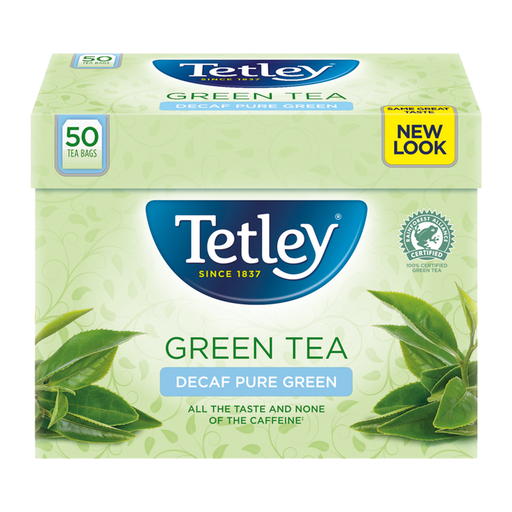
A decaffeinated green-tea option rather than the black-tea drink discussed above. It contains 50 tea bags and weighs 100g; check the packaging if you need an individually wrapped serving to carry.
It can. Twinings says minor traces tend to remain after decaffeination. For a product-specific example, Yorkshire Tea states 1.5–2mg per average 200ml cup of its Decaf brewed for five minutes; check the information for the tea you intend to drink.
For one serving, an individually wrapped decaf envelope lets you carry a portion without taking the whole pack. Twinings lists such decaf formats, but its filled jar contains caffeine-free infusions rather than decaf black tea. Choose by the contents as well as the container.
Follow the selected pack’s instructions: brewing times are not universal. Tesco’s listings give 1–2 minutes for PG Tips Decaf and 2–3 minutes for Tetley Decaffeinated, while Twinings gives 2–3 minutes for its English Breakfast Decaffeinated 80-bag product.
Follow the storage directions on your pack. Yorkshire Tea and the cited Tetley and Clipper product information specify a cool, dry place; Yorkshire Tea also says to keep its Decaf away from direct sunlight.
Yes, especially if ingredients or allergens affect your choice. Tesco warns that food products may be reformulated, so check the physical pack rather than relying solely on an online listing.