Choose decaffeinated loose black tea if you want to keep a traditional tea routine while reducing, rather than eliminating, caffeine from tea. A product labelled caffeine-free offers a different route when residual caffeine matters to you, while decaf pyramid bags avoid measuring and straining loose leaves. If you are breastfeeding, consider caffeine from the rest of your day too; NHS breastfeeding pages give differing numerical guidance, so ask a midwife, health visitor, GP or pharmacist if you need an individual limit.
Who is each format for?
The useful distinction is between the caffeine claim you need and the preparation routine you can accommodate.
Breastfeeding parents considering total caffeine
Decaf tea can reduce caffeine from tea without settling the question of total daily intake. The NHS also identifies other food and drinks as caffeine sources; seek individual advice if a numerical limit affects your choice.
Households that enjoy brewing loose black tea
Unbagged decaffeinated tea retains the measuring, infuser or teapot routine. Check that the product is actually loose tea, rather than a pyramid bag described as containing loose leaves.
Caregivers with short breaks
Portioned decaf pyramid bags remove the need to measure and strain leaves for a single cup. They are a different format from an unbagged pouch for a teapot.
What should you check before choosing?
Decaf loose black tea
Choose it when: You want to measure leaves for a cup or pot and keep a familiar black-tea routine.
Bear in mind: Decaf can retain caffeine traces, and loose leaves need an infuser or strainer.
Caffeine-free infusion
Choose it when: A caffeine-free product claim matters more than a black-tea flavour.
Bear in mind: Check the ingredients and caffeine claim for the particular blend; an infusion is not necessarily a substitute for breakfast tea.
Decaf pyramid bags
Choose them when: You want a portioned black tea without measuring or straining loose leaves.
Bear in mind: The leaves remain inside a bag, and decaf does not mean caffeine-free.
| Priority | What to check | Your needs |
|---|
| Caffeine |
Distinguish decaffeinated tea from a product labelled caffeine-free. If breastfeeding, consider caffeine from other food and drinks as well; NHS guidance identifies tea as only one source. |
I want to reduce caffeine from my cups of tea without overlooking what else I consume during the day. |
| Ingredients |
Read the caffeine claim and ingredient list for the specific infusion. Do not assume that every herbal-style blend is caffeine-free. |
If residual caffeine matters to me, I need to check the particular blend rather than rely on its flavour or category name. |
| Preparation |
Confirm whether the tea is unbagged, in pyramid bags or in ordinary tea bags. For loose tea, check the measure and whether you have an infuser or strainer. |
A teapot suits some breaks; at other times, I would rather make one cup without measuring leaves. |
| Pack size |
Compare the stated quantity with how often your household will brew it. Consider where you will store an opened large pack. |
I would prefer to try the flavour and preparation routine before committing to a large bag. |
Common buying mistakes
-
Using “decaf” and “caffeine-free” interchangeably
Twinings explains that decaffeinated tea can retain minor traces of caffeine. An infusion’s ingredients and caffeine claim also need checking individually.
If residual caffeine matters to you, choose a product explicitly labelled caffeine-free and read its ingredient list.
-
Counting tea but overlooking other caffeine
For someone who is breastfeeding, changing tea alone does not account for caffeine elsewhere in their food and drinks. NHS breastfeeding pages give differing numerical guidance.
Consider your total intake and ask a midwife, health visitor, GP or pharmacist for advice if you need a specific limit.
-
Starting with a large bag of unfamiliar loose tea
A 1kg bag is a substantial quantity to store and use if you have not settled on the flavour or a loose-tea routine.
Consider a smaller pouch or portioned format for an initial trial; choose a larger bag when regular household use fits your routine.
A large opened pack also takes storage space and needs care to preserve its quality.
Brand and range references
Check the particular product and format: a brand’s decaf and loose-tea ranges are not necessarily the same range.
Twinings
All Day Decaf offers decaffeinated black tea in loose-leaf pyramid bags.
- Twinings gives a 3–5 minute infusion method for the bag.
- It is neither unbagged tea for a teapot nor necessarily caffeine-free.
Whittard
Decaffeinated English Breakfast is an unbagged black tea in a 100g pouch.
- Whittard states about 50 cups at 1 teaspoon, or 2g, per cup.
- Brewing loose leaves calls for an infuser or strainer; decaffeinated does not establish zero caffeine.
Bettys
Bettys lists Taylors Decaffeinated Leaf Tea as a 1kg bag of loose black tea.
- The listing describes decaffeination using a carbon-dioxide process.
- The large pack makes more sense when the household already expects to use it regularly than for a first taste.
Yorkshire Tea
Yorkshire Tea describes decaf tea and loose tea as separate options in its range.
- Its range information can help distinguish a decaf choice from its loose-tea blends.
- Check the specific product before assuming it combines decaf and unbagged loose leaves.
Fortnum & Mason
Fortnum & Mason identifies its decaffeinated teas as Earl Grey and Royal Blend tea bags; it also lists caffeine-free infusions.
- Its product information distinguishes the decaf tea-bag route from the infusion route.
- Those decaf tea bags do not meet a requirement for unbagged loose black tea.
Ringtons
Ringtons lists decaf tea bags and has a separate loose-leaf tea range.
- Ringtons notes that a small trace of caffeine remains in decaf tea.
- Check the exact item if both decaffeination and unbagged leaves are requirements.
Joybuy infusion options
These Joybuy options are herbal infusions for considering a caffeine-free product claim instead of decaf black tea. They are not presented as unbagged decaffeinated loose tea; check each product’s ingredients, label and preparation format against what you need.
 No image available
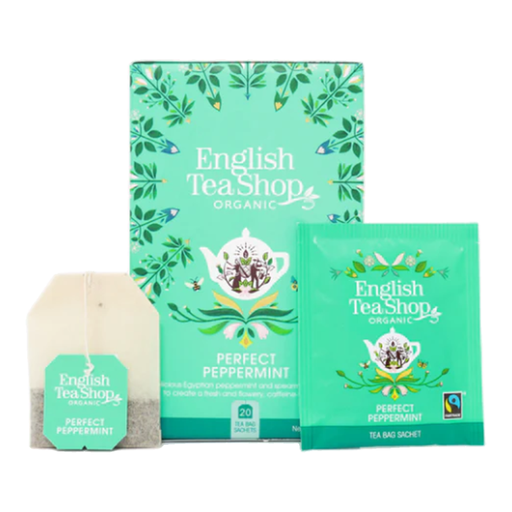
English Tea Shop Organic Perfect Peppermint 20g
The listing describes a caffeine-free peppermint and spearmint infusion in tea bags, for a cup without measuring loose leaves. It is not decaf black tea; check the label if the caffeine claim is important to your choice.
View on Joybuy
 No image available
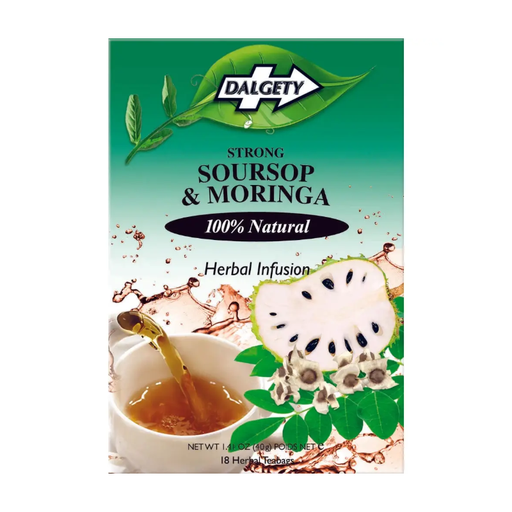
Dalgety Soursop & Moringa Tea 40g
The listing describes a caffeine-free soursop and moringa infusion in individually wrapped tea bags. This portioned format avoids straining loose leaves, but it is not decaf black tea; check the label if the caffeine claim matters to you.
View on Joybuy
 No image available
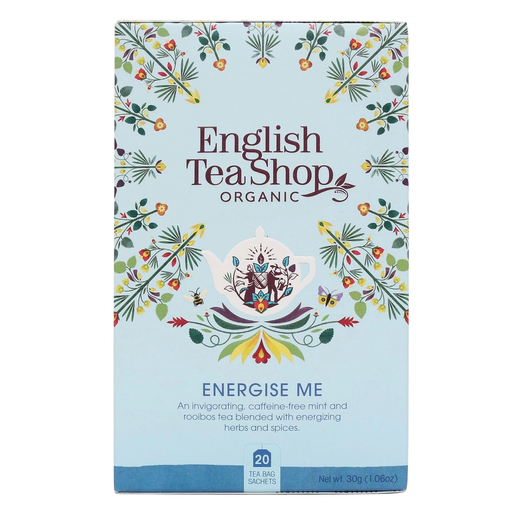
English Tea Shop Organic Wellness Energize Me 30g
The listing describes this herbal infusion as caffeine-free. Before choosing it for either a loose-tea routine or quick single-cup preparation, confirm whether the pack contains loose leaves or bags and follow its preparation directions.
View on Joybuy
Questions about decaf tea
Is decaf loose tea completely caffeine-free?
No: Twinings explains that decaffeinated tea can retain minor traces of caffeine. If residual caffeine matters to you, look for an explicit caffeine-free claim and check the ingredients of the particular drink.
Does breastfeeding mean I need to switch entirely to decaf?
Choosing decaf can reduce caffeine from tea, but it does not account for caffeine from the rest of your day. NHS breastfeeding pages give differing numerical guidance; ask a midwife, health visitor, GP or pharmacist if you need an individual limit rather than making the decision from a tea label alone.
How can I make decaf tea with less measuring and washing-up?
Choose a portioned decaf bag if measuring and straining loose leaves is inconvenient. Twinings says its All Day Decaf pyramid bag infuses for 3–5 minutes; if you prefer unbagged tea, Whittard gives a measure of 1 teaspoon, or 2g, per cup for its Decaffeinated English Breakfast.


