Who is this choice for?
The blend matters most when it helps someone keep a drink they enjoy while fitting their caffeine preference and any advice about meals or swallowing.
Older adults who want less caffeine
Decaffeinated black tea keeps the choice within familiar black-tea blends, but decaf does not mean caffeine-free. Yorkshire Tea states an average of 1.5–2mg per 200ml cup of its Decaf brewed for five minutes; that figure does not describe every decaf tea.
People whose appetite or fluid intake is a concern
According to the NHS, tea can count towards daily fluid intake. It cannot take the place of meals: Age UK identifies unintended weight loss as a possible sign of malnutrition, so a change of blend alone does not address poor food intake.
Carers managing meal timing or drink texture
For iron-deficiency dietary advice, University Hospitals Coventry and Warwickshire NHS Trust recommends keeping tea away from meals. If a speech and language therapist has advised thickened drinks, follow the individual preparation plan rather than serving ordinary thin tea.
What matters when choosing tea bags?
Start with the drink the person will accept, then check caffeine, meal timing and any prescribed drink texture. Tea-bag ingredients or blend names cannot settle those individual requirements on their own.
| Priority | What to check | Your needs |
|---|
| Everyday drinks |
Choose a blend the person likes and can drink as prepared. The NHS includes tea among drinks that count towards daily fluid intake; individual fluid advice may differ. |
I would like a familiar hot drink that fits into a regular drinking routine. |
| Caffeine |
Check the exact decaf product’s caffeine statement and its measurement basis. Yorkshire Tea states 1.5–2mg per 200ml cup of its Decaf after five minutes; a brewed-cup figure cannot be ranked directly against percentage claims for other teas. |
If I want less caffeine but still prefer black tea, I can compare decaf labels without assuming they mean zero caffeine. |
| Food intake |
Treat plain tea as a drink, not a meal replacement. Age UK says unintended weight loss can indicate malnutrition; seek appropriate assessment if appetite or food intake is falling. |
When meals are becoming difficult, changing the tea blend should not be my only response. |
| Iron-deficiency advice |
University Hospitals Coventry and Warwickshire NHS Trust advises avoiding tea within one hour before or after meals in its guidance for iron-deficiency anaemia. Ask the treating clinician about any separate instructions for iron tablets. |
I need a tea time that fits around meals if I am following iron-deficiency dietary advice. |
| Swallowing |
Follow the thickness and preparation method advised after a swallowing assessment. Milton Keynes University Hospital NHS Foundation Trust describes thickened drinks as part of a speech and language therapist’s individual advice. |
If thickened fluids have been prescribed, I need the prepared drink to match that plan; a standard tea bag does not determine its thickness. |
Brand and blend references
These examples show the kinds of label detail worth comparing, not a ranking of brands or a statement that every listed blend is available on Joybuy.
Yorkshire Tea
Its Decaf offers a stated brewed-cup caffeine figure for a black-tea blend.
- Yorkshire Tea states an average of 1.5–2mg caffeine per 200ml cup brewed for five minutes.
- That figure depends on the stated cup size and brewing time and does not apply to other decaf blends.
Twinings
English Breakfast Decaffeinated is a breakfast-style black-tea option.
- Twinings identifies the blend as decaffeinated tea; Tesco lists its 40-bag product as decaffeinated black tea.
- Check the current pack for the caffeine statement relevant to the size and variant being bought.
Tetley
A decaffeinated black-tea choice for an everyday brew.
- Tesco identifies its 40-bag Tetley Decaffeinated product as decaffeinated black tea.
- A statement on that 40-bag listing should not be assumed to describe every Tetley pack or variant.
PG Tips
Its Decaf range provides another black-tea option for someone reducing caffeine.
- Tesco’s 70-bag listing identifies decaffeinated black tea and states less than 0.2% caffeine.
- The percentage is not a measured caffeine amount in a prepared cup.
Clipper
Organic Everyday Decaf is an option for buyers who want to check the declared tea ingredients and process.
- Clipper identifies decaffeinated organically grown black tea; Tesco describes a CO2 decaffeination process for its listed Clipper product.
- An organic label or stated process does not establish a nutritional advantage for someone with poor appetite.
Typhoo
Typhoo labels an 80-bag Kenyan black-tea product as Decaf.
- The Typhoo product title identifies the 80-bag Decaf variant.
- Check the current pack’s caffeine information before choosing it for a specific caffeine preference.
Decaf tea bags on Joybuy
These decaffeinated tea-bag options suit a search for a familiar black-tea-style drink with less caffeine. Check each pack’s current details if the precise caffeine statement, ingredients or brewing instructions affect your choice.
 No image available
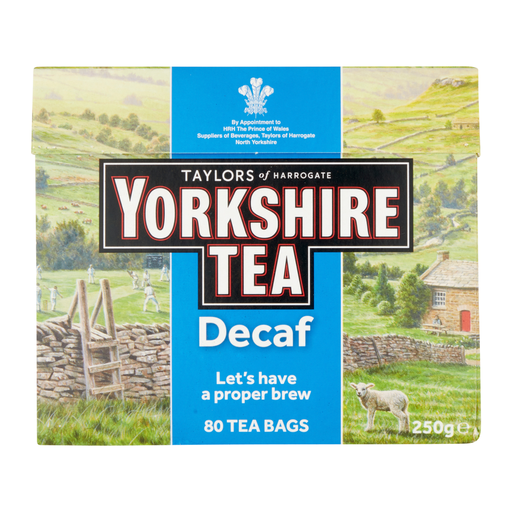
Taylors of Harrogate Yorkshire Tea Decaf 250g
A decaf tea choice for someone who wants to keep a black-tea routine while reducing caffeine. Yorkshire Tea states a caffeine amount for a 200ml cup of its Decaf brewed for five minutes; check that the current pack is the blend described before using that figure for this 250g product.
View on Joybuy
 No image available
Tetley 80 Decaffeinated Tea Bags 250g
An 80-bag decaffeinated option for an everyday tea routine. If a specific caffeine amount matters, check the statement on this 250g pack rather than applying a figure from a different Tetley product.
View on Joybuy
 No image available
Clipper Organic Fairtrade Decaf Everyday 80 Tea Bags 277g
An 80-bag decaf option for someone seeking the named Organic Fairtrade Everyday blend. Check this 277g pack for its own caffeine statement and brewing directions; the blend name does not establish an amount in a prepared cup.
View on Joybuy
Questions about tea in later life
Does tea count towards an older person’s fluid intake?
Yes. The NHS includes tea and coffee among drinks that count towards daily fluid intake. Its advice of 6 to 8 cups or glasses is general guidance, not an individual target for someone who has been given different fluid advice.
Is decaf tea completely caffeine-free?
No: a decaf label does not establish zero caffeine. Yorkshire Tea states an average of 1.5–2mg in a 200ml cup of its Decaf brewed for five minutes, while other product information uses percentage claims; do not compare those figures as though they measured the same prepared drink.
Should tea be served with meals when iron deficiency is being managed?
University Hospitals Coventry and Warwickshire NHS Trust advises against tea within one hour before or after meals in its iron-deficiency anaemia guidance because tea with a meal can reduce iron absorption. Follow any individual meal or iron-tablet instructions from the treating clinician.
Can ordinary tea be served to someone prescribed thickened fluids?
Only if it is prepared according to that person’s prescribed thickened-fluid plan. Milton Keynes University Hospital NHS Foundation Trust describes thickened drinks as following a speech and language therapist’s swallowing assessment; a tea bag alone does not give the drink its required consistency.
What should I check on a flavoured tea-bag pack?
Read the current ingredients and allergen information for the exact blend, and check any milk or other additions separately. Flavoured variants need their own label check rather than an assumption based on a plain black-tea product.


