What matters when choosing?
Choose the drink format first, then check caffeine status and how the drink fits the person’s usual routine or clinical instructions.
Decaf tea bags
Consider when: The person wants a conventional tea routine and can prepare a bagged tea safely or have help making it.
Bear in mind: Decaffeinated tea can retain traces of caffeine, according to Twinings.
Caffeine-free infusion
Consider when: Avoiding residual caffeine matters more than retaining the taste of black tea.
Bear in mind: Check the exact blend’s ingredients and caffeine description rather than relying on the word “herbal”.
Tea pods
Consider when: There is already a capsule machine and a tea product explicitly states compatibility with its system.
Bear in mind: Machine compatibility does not establish that a tea capsule is decaffeinated.
| Priority |
What to check |
Your needs |
| Drink format |
Check whether the product contains tea bags, an infusion or capsules. For capsules, match the stated system to the machine’s exact system. |
I want a familiar cup of tea, or I already use a capsule machine and need a product made for it. |
| Caffeine status |
Read the exact product description. Twinings says decaffeinated tea can retain minor traces; check an infusion’s ingredients and caffeine description separately. |
Reducing caffeine may be enough for me, but avoiding residual caffeine calls for a more specific product check. |
| Regular drinks |
Choose a drink the person is willing and able to have regularly. NHS guidance counts tea towards fluid intake; follow any individual fluid instructions. |
A hot drink I enjoy could be part of my usual fluid intake, provided it fits my care plan. |
| Nutrition |
Check nutrition information for the prepared drink and any additions. Twinings lists 1 kcal and 0 g protein per 100 ml for its brewed English Breakfast Decaf without milk. |
If I need nourishment as well as a drink, plain tea is not a substitute for food or prescribed nutrition support. |
| Preparation |
Check whether the person can prepare the drink safely or needs help. Confirm that its preparation and texture fit any clinical instructions. |
I need a drink that works with the help available at home and with any instructions about what I can drink. |
Decaf tea brand references
These references describe decaf tea formats, not machine-compatible pods or the products in the Joybuy selection below.
Yorkshire Tea
Tesco lists Yorkshire Tea Decaf as tea bags.
- The Tesco listing includes a 160-bag pack.
- Tea-bag packaging does not establish capsule-machine compatibility.
Tetley
Tesco lists Tetley Decaffeinated as tea bags.
- The Tesco listing includes a 160-bag pack.
- Choose a product by its stated format rather than assuming the brand name identifies a pod.
PG Tips
Tesco lists PG Tips Decaf Black Tea as tea bags.
- The Tesco listing includes a 160-bag pack.
- “Decaf” should not be read as a promise of zero caffeine.
Twinings
Twinings lists English Breakfast Decaffeinated in a 40-tea-bag format.
- Its product information gives nutrition values for brewed tea without milk.
- Twinings says decaffeinated tea can retain minor traces of caffeine.
Clipper
Clipper Tea Shop describes Organic Everyday Decaf as an 80-tea-bag product.
- Clipper describes its black tea as organically grown and Fairtrade.
- The described product uses tea bags, not machine-compatible capsules.
Tesco
Tesco lists its own-label Decaff Original Tea in an 80-pack.
- It offers another conventional tea-bag format to consider.
- Check the individual product if caffeine status beyond “decaf” matters.
Joybuy tea-bag options
These Joybuy options are decaffeinated tea bags for someone considering a conventional tea routine. They are not capsules for a coffee machine; choose by tea type and pack size, and check individual drinking instructions where relevant.
 No image available
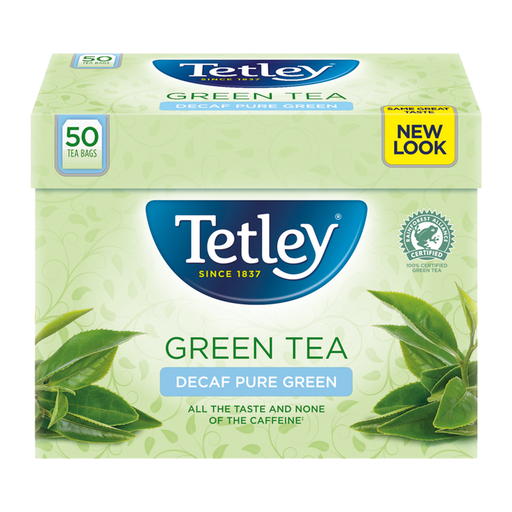
Tetley Green Tea Decaffeinated, 50 tea bags, 100g
A bagged green tea option for someone who wants decaffeinated tea without using a capsule machine. Check the product label if a particular residual caffeine level matters.
View on Joybuy
 No image available
Tetley Decaffeinated Tea, 80 tea bags, 250g
An 80-bag decaffeinated tea option for a conventional tea routine, rather than a machine-made drink. Check the label if avoiding residual caffeine is important.
View on Joybuy
 No image available
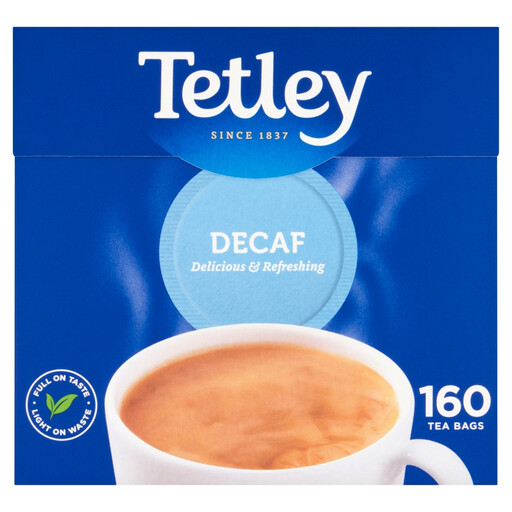
Tetley Decaf Tea, 160 tea bags, 500g
A larger, 160-bag decaf tea pack for someone who regularly prepares tea bags. It does not serve as a coffee-machine capsule; check the label for any caffeine requirement.
View on Joybuy
 No image available
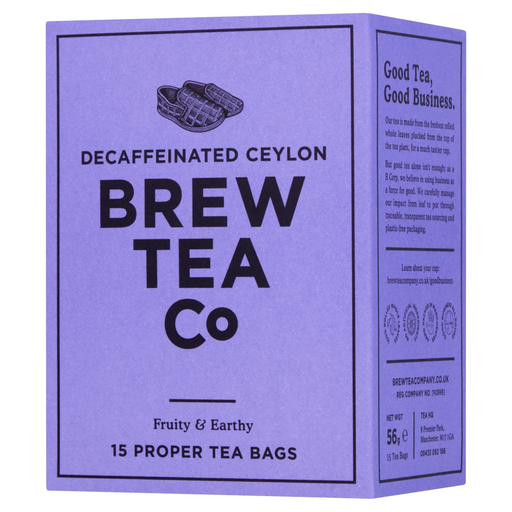
Brew Tea Co CO2 Decaffeinated Tea, 15 tea bags, 56g
A smaller bagged-tea pack for someone considering decaffeinated tea rather than pods. Its title identifies a CO2 decaffeination process; check the exact label if residual caffeine matters.
View on Joybuy
Questions about decaf tea
Does decaf tea count towards an older adult’s fluid intake?
Yes. NHS guidance includes tea among drinks that count towards daily fluid intake. Follow individual instructions instead if a clinician has prescribed a fluid restriction or specific drink texture.
Is decaf tea completely caffeine-free?
Not necessarily: Twinings says decaffeinated tea can retain minor traces of caffeine. Check the exact tea’s description if residual caffeine matters, and check an infusion’s ingredients and caffeine status before treating it as an alternative.
Can decaf tea meet an older person’s nutritional needs?
Plain brewed tea should not be relied on for nutrition. Twinings lists 1 kcal and 0 g protein per 100 ml for its English Breakfast Decaf brewed without milk. Follow individual clinical or dietetic advice where nutritional support is needed.
Will a tea pod work in any coffee machine?
No. MaxiCoffee UK lists tea pods for different machine systems, so check the chosen capsule’s stated compatibility against the exact household machine. Check its caffeine status separately.
Should someone with bladder concerns choose decaf tea?
Decaf tea is an option to discuss as part of an individual drink routine. Gloucestershire Hospitals NHS Foundation Trust’s bladder-and-bowel guidance advises limiting caffeinated drinks and lists decaffeinated tea among its drink options; any personal clinical instructions still take priority.


