Decaf black tea can suit an older person who enjoys tea and wants to reduce caffeine, but decaf does not necessarily mean caffeine-free. Compare the exact product’s caffeine statement and brewing guidance; tea counts towards fluid intake, but plain brewed tea should not take the place of drinks that provide energy and protein when those are needed.
Who is decaf tea for?
Older adults reducing caffeine
Decaf black tea keeps a familiar tea routine while reducing caffeine. If the amount matters, check whether the product states caffeine per prepared cup or uses a percentage declaration; those figures are not directly interchangeable.
Family carers planning drinks
Tea counts towards fluid intake under NHS guidance. For an older person with a poor appetite, also consider whether their drink plan needs options that provide energy and protein: plain brewed tea provides little of either.
People following iron-related dietary advice
For someone with iron deficiency anaemia, the timing of tea around meals matters as well as the choice of decaf product. University Hospitals Coventry and Warwickshire NHS Trust advises keeping tea and coffee away from mealtimes in this context.
What should you check?
Start with the reason for choosing decaf, then check how the prepared drink fits the person’s wider drink and meal routine.
| Priority |
What to check |
Your needs |
| Caffeine information |
Read the exact product’s residual-caffeine statement and its measurement basis. Yorkshire Tea states 1.5 mg to 2 mg per average 200 ml cup brewed for 5 minutes; Tesco lists PG Tips Decaf at less than 0.2% caffeine. These are different measures. |
I want to reduce caffeine while keeping a black-tea routine. If an individual caffeine amount matters, a prepared-cup figure is more directly usable than a percentage alone. |
| Preparation |
Follow the product’s brewing instructions rather than assuming all decaf teas use the same time. Tesco lists a 1- to 2-minute brew for PG Tips Decaf; Yorkshire Tea’s published cup estimate uses a 5-minute brew. |
A repeatable cup matters to me, particularly if I am using a published prepared-cup caffeine figure to understand what the person drinks. |
| Fluids and nutrition |
The NHS says tea counts towards daily fluid intake. Check nutrition values for the prepared tea, not dry tea leaves: Twinings lists 1 kcal and 0 g protein per 100 ml of its brewed English Breakfast Decaffeinated tea without milk. |
Tea can be one of the drinks I offer, but a person with poor appetite may also need drinks that provide energy and protein, according to older-adult hydration guidance published by Oxford Health NHS Foundation Trust. |
| Meal timing |
For iron deficiency anaemia, University Hospitals Coventry and Warwickshire NHS Trust advises avoiding tea or coffee within 1 hour before or after a meal. A decaf label does not establish that this advice no longer applies. |
Where the person is following an iron-focused meal plan, I need to fit tea around that advice rather than relying on a change of brand. |
Mistakes to avoid
-
Assuming decaf means no caffeine
Yorkshire Tea reports 1.5 mg to 2 mg per average 200 ml cup brewed for 5 minutes. PG Tips and Twinings publish percentage-based declarations, which cannot be read as the same measurement per cup.
Use the caffeine statement for the exact tea and note how it was measured or brewed. Seek advice from the person’s clinician if even small amounts of caffeine need to be avoided.
-
Using plain tea in place of nutritional drinks
Tea contributes fluid, but Twinings lists just 1 kcal and 0 g protein per 100 ml of its brewed English Breakfast Decaffeinated tea without milk. Adding milk changes what the drink provides.
If poor appetite is part of a care plan, keep the choice of drinks that provide energy and protein aligned with the person’s dietary advice.
-
Overlooking tea at mealtimes
For people with iron deficiency anaemia, University Hospitals Coventry and Warwickshire NHS Trust says tea or coffee with a meal can greatly reduce iron absorption. Switching to decaf does not establish that the meal-timing advice can be set aside.
In this context, follow the Trust’s advice to avoid tea or coffee within 1 hour before or after meals, unless the person’s clinical team advises otherwise.
Brand references
These examples show different product information to look for; a brand name alone does not tell you the caffeine amount in a prepared cup.
Yorkshire Tea
Yorkshire Tea publishes a prepared-cup caffeine estimate for its Decaf black tea.
- The manufacturer states 1.5 mg to 2 mg of caffeine per average 200 ml cup brewed for 5 minutes.
- This is residual caffeine, not a caffeine-free claim; it cannot be compared directly with a percentage declaration.
Tetley
A Tetley Decaffeinated Tea Bags listing at Tesco describes decaffeinated black tea in a 40-bag pack.
- The listing describes plant-based tea bags and tea sourced from Rainforest Alliance-certified gardens.
- For a specific caffeine target, check the statement on the exact current pack rather than assuming an amount per cup.
PG Tips
Tesco’s listing for PG Tips Decaf Black Tea covers a 70-bag pack.
- The listing states less than 0.2% caffeine and a 1- to 2-minute brew.
- A percentage does not give a milligram amount for a prepared cup.
Twinings
Twinings English Breakfast Decaffeinated is a named black-tea blend offered in a 40-bag pack.
- Twinings states decaffeination to 0.2% and lists 1 kcal and 0 g protein per 100 ml of brewed tea without milk.
- The percentage is not a prepared-cup caffeine amount; adding milk changes the drink’s nutrition values.
Clipper
Clipper describes its Organic Everyday Decaf as an Assam-based blend of decaffeinated organically grown black tea.
- Its stated organic ingredients may matter to shoppers with that purchasing preference.
- Organic ingredients do not establish an additional nutritional benefit for an older adult.
Tesco
Tesco lists its own-label Decaff Original Tea as an 80-bag, 250 g pack.
- The stated bag count and weight make it straightforward to identify the pack.
- If a precise caffeine amount matters, check the current product information for the exact pack.
Decaf tea options on Joybuy
These tea-bag and black-tea options cover everyday decaf packs and an organic preference. Choose by the exact pack and its stated details, especially when an individual caffeine amount matters.
 Image unavailable
Tetley 80 Decaffeinated Tea Bags 250 g
An 80-bag pack for a regular decaf tea routine. If a particular caffeine amount matters, check the current pack for a figure and its measurement basis.
View on Joybuy
 Image unavailable
Tetley 160 Decaf Tea Bags 500 g
A 160-bag, 500 g decaf pack for a household that uses tea bags regularly. Check the exact pack’s caffeine statement if the drink needs to fit a specific limit.
View on Joybuy
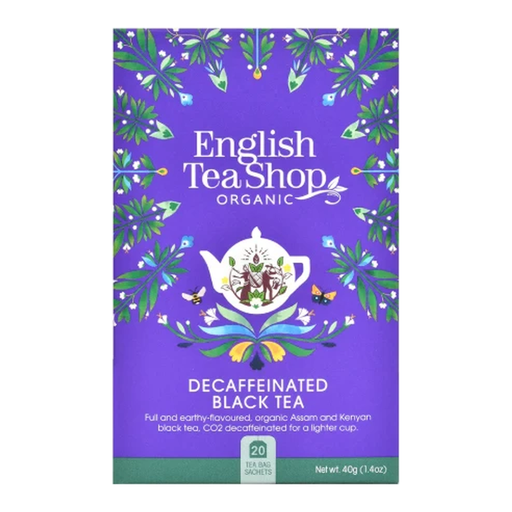 Image unavailable
English Tea Shop Organic Decaffeinated Black Tea 20 g
A 20 g decaf black-tea option for someone choosing organic tea. For a specific caffeine target, check that any stated quantity describes the prepared cup rather than dry tea.
View on Joybuy
 Image unavailable
Taylors of Harrogate Yorkshire Tea Decaf 250 g
A 250 g pack for someone who prefers Yorkshire Tea Decaf. Yorkshire Tea publishes a caffeine estimate based on a 200 ml cup brewed for 5 minutes; check how that preparation relates to the cup being served.
View on Joybuy
 Image unavailable
Clipper Organic Fairtrade Decaf Everyday 80 Tea Bags 277 g
An 80-bag, 277 g decaf tea pack for an organic and Fairtrade purchasing preference. Those descriptions do not indicate the caffeine amount in a prepared cup or give the tea an additional nutritional benefit.
View on Joybuy
Common questions
Is decaf tea completely caffeine-free?
No. Yorkshire Tea states that its Decaf contains 1.5 mg to 2 mg of caffeine per average 200 ml cup brewed for 5 minutes. Tesco lists PG Tips Decaf at less than 0.2% caffeine, while Twinings states that its English Breakfast Decaffeinated is decaffeinated to 0.2%. Those percentages cannot be converted into a per-cup amount from these statements alone.
Does decaf tea count towards an older adult’s fluid intake?
Yes. The NHS says tea and coffee count towards daily fluid intake. If the person has an individually prescribed fluid limit, follow the advice from their clinical team rather than general guidance.
Can plain decaf tea provide nutrition when appetite is poor?
Plain brewed black tea provides little energy or protein: Twinings lists 1 kcal and 0 g protein per 100 ml of its English Breakfast Decaffeinated tea brewed without milk. Older-adult hydration guidance published by Oxford Health NHS Foundation Trust notes that adding milk can add energy and protein; whether that fits the person’s needs depends on their dietary plan.
Should someone with iron deficiency anaemia drink decaf tea with meals?
University Hospitals Coventry and Warwickshire NHS Trust advises people with iron deficiency anaemia not to drink tea or coffee within 1 hour before or after meals because drinking them with a meal can greatly reduce iron absorption. Do not assume switching to decaf removes that advice; follow any individual guidance from the person’s clinical team.


