Pod-machine owners looking for decaf tea
If you own a TASSIMO, Nespresso OriginalLine or Dolce Gusto machine, you need to check the capsule’s tea type, caffeine status and machine compatibility separately.


If decaffeinated tea is the priority, choose a tea bag explicitly labelled decaf rather than assuming a tea pod or a decaf coffee pod meets that need. A pod is worth considering only when the exact tea product confirms its caffeine status and names your machine system; decaf tea bags give up pod-machine preparation, and decaf does not necessarily mean caffeine-free.
If you own a TASSIMO, Nespresso OriginalLine or Dolce Gusto machine, you need to check the capsule’s tea type, caffeine status and machine compatibility separately.
If a clearly labelled decaf tea matters more than machine preparation, conventional black or green tea bags provide options without confusing tea with decaf coffee capsules.
If you have a particular afternoon cup in mind, compare everyday black tea, Earl Grey and green tea before deciding whether the bag format suits you.
Start with the exact drink and its caffeine label, then check machine fit if you still want a pod.
| Priority | What to check | Your needs |
|---|---|---|
| Caffeine status | Check that the exact product is tea labelled decaffeinated, rather than decaf coffee or a tea capsule with no stated caffeine status. Twinings notes that traces of caffeine can remain in decaf tea. | I want a decaffeinated afternoon tea, so the label on the particular tea matters more to me than a general pod-category description. |
| Machine fit | Match the capsule to your machine system. TASSIMO identifies its tea pods as T DISCs; Torrié Coffee UK lists separate tea ranges for Nespresso OriginalLine and Dolce Gusto. | My existing machine determines which pod format I can consider. If I choose tea bags, pod compatibility is no longer part of the decision. |
| Tea style | Compare the exact tea variety on the pack: everyday black, Earl Grey or green. UK listings from Twinings and Tesco show decaf tea-bag options across these styles. | For an afternoon cup, I may prefer a familiar black tea, a flavoured Earl Grey or green tea; a generic decaf label does not tell me which one I am buying. |
| Preparation | Check whether the product is a machine capsule or a tea bag, and follow its own brewing directions. Tea bags need hot water and brewing time instead of pod-machine preparation. | Convenient machine preparation matters to me only if I can also confirm the tea and caffeine status I want. |
Nespresso UK and TASSIMO describe decaf coffee pods, which do not meet a request for tea.
Read the exact drink name as well as its caffeine label before choosing a capsule.
A tea range can identify its flavours and machine format without establishing that a particular capsule is decaffeinated.
Check the caffeine information for the exact tea variant; do not infer it from a green-tea or herbal flavour name.
TASSIMO T DISCs, Nespresso OriginalLine-compatible capsules and Dolce Gusto-compatible capsules carry different machine-specific descriptions.
Identify your machine system, then choose a tea capsule expressly labelled for it.
A capsule that does not fit may be unusable in the machine you own.
Twinings says small traces of caffeine can remain in decaffeinated tea.
If the distinction matters to you, check the current pack for the exact product rather than relying on the word “decaf” alone.
These are references for choosing a tea-bag style, not a list of compatible decaf machine capsules.
A conventional decaffeinated everyday black tea-bag option.
An option for shoppers choosing conventional decaf tea bags.
A decaf black tea-bag option for a conventional afternoon brew.
Tea-bag choices for shoppers comparing decaf black, Earl Grey and green tea.
A decaf tea-bag option for shoppers interested in the range’s labelled sourcing attributes.
An own-label decaffeinated tea-bag option.
These are tea-bag options for an afternoon cup when a clearly labelled decaf tea matters more than pod-machine preparation.
 Image unavailable
For a conventional decaf afternoon tea rather than machine preparation, this pack contains 80 tea bags and weighs 250g. Check the current pack if you need to distinguish decaf from caffeine-free.
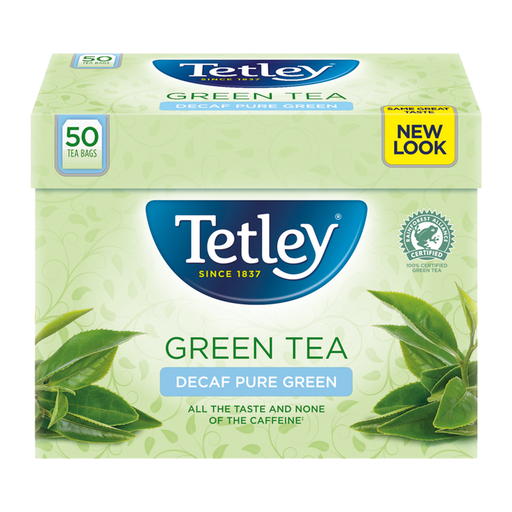 Image unavailable
Choose this tea-bag format if you want decaffeinated green tea rather than an everyday black tea or a machine capsule. The pack contains 50 tea bags and weighs 100g; decaffeinated does not mean caffeine-free.
 Image unavailable
This 160-bag, 500g pack suits someone choosing a larger quantity of conventional decaf tea bags. It is not a machine-compatible pod; use the current pack for brewing directions and caffeine information.
 Image unavailable
For a conventional decaf tea-bag cup, this 80-bag, 277g pack is labelled Organic and Fairtrade in its product name. Check the current packaging if those labels or residual caffeine information are important to your choice; these are tea bags, not pods.
No. Twinings says small traces of caffeine can remain in decaffeinated tea. Check the current information for the exact product if the distinction matters to you.
Do not assume so. TASSIMO describes tea T DISCs for its machines, while Torrié Coffee UK lists separate tea capsules for Nespresso OriginalLine and Dolce Gusto. Match the product’s stated format to your machine.
Only if you want coffee instead of tea. A decaffeinated coffee capsule does not establish that a decaffeinated tea capsule is available for the same machine.
UK listings from Tesco, Twinings and Clipper identify decaf tea-bag options from Yorkshire Tea, Tetley, PG Tips, Twinings, Clipper and Tesco. Check the exact pack for the black, Earl Grey or green tea style you prefer.