Who is the tea for?
The right choice depends on whether the drinker wants a familiar black tea, a different flavour, or a pack suited to regular service.
Tea drinkers cutting back on caffeine
Decaffeinated black tea keeps the traditional tea format for someone who wants less caffeine, including in an evening cup. It can still contain traces of caffeine, so the pack matters when avoidance rather than reduction is the aim.
Managers stocking a retirement shop
For regular sales or communal tea service, consider which tea bags customers recognise, how many cups the shop serves and whether a large pack will be used steadily.
Customers seeking declared sourcing credentials
Someone choosing organic or Fairtrade decaf black tea should check that the declaration applies to the exact pack, rather than assuming it applies to a brand’s whole range.
What should you check before buying?
Decide first whether the drinker wants to reduce caffeine or avoid it; then match the tea style and pack format to how it will be served.
| Priority |
What to check |
Your needs |
| Caffeine level |
Read the exact pack’s decaffeination statement and ingredients. Twinings explains that decaffeinated tea can retain traces of caffeine; the Tesco listing for Tetley Decaffeinated 40 states “decaffeinated to 0.2%”. Do not apply that figure to other packs. |
I want less caffeine but still want tea. If I need to avoid caffeine, I’ll check whether an alternative drink’s ingredients and label confirm that it is caffeine-free. |
| Tea style |
Check whether the product is decaffeinated black tea, green tea or an infusion, and whether its stated blend suits the way it will be served. |
For a familiar cup with milk, I’m looking for black tea. I’d choose a different style for customers who prefer something other than an everyday black tea. |
| Pack size |
Compare the bag count and net weight, then consider expected use and storage. A 160-bag pack makes more sense when it will be used regularly than when tea is served only occasionally. |
Our regular tea service needs a practical supply; for occasional requests, I’d rather keep a smaller pack. |
| Serving format |
Check whether bags are individually wrapped if customers select or handle their own tea. Do not assume a speciality tea comes in individual wrappers. |
Customers choose their own drink at our counter, so the way each bag is presented matters alongside the range of flavours. |
| Ingredients and credentials |
Read the current pack for ingredients and any organic or Fairtrade declaration. For an allergy, intolerance or strict dietary requirement, check the physical pack before selling or serving it. |
I want to identify suitable options without assuming that every decaf blend has the same ingredients or sourcing claims. |
Decaf tea brands to consider
These brand references describe particular decaf products or ranges, not every tea the brands make.
Yorkshire Tea
Yorkshire Tea positions its Decaf blend as a familiar black-tea option for people cutting back on caffeine.
- Tesco has listed Yorkshire Tea Decaf in several bag counts, including 160 bags for regular use.
- The brand’s description of the blend’s flavour is its own claim; choose by the tea style and pack that customers want.
Tetley
Tetley offers decaffeinated black tea in both smaller and larger bag-count formats.
- Tesco’s listing for Tetley Decaffeinated 40 identifies decaffeinated black tea and states “decaffeinated to 0.2%”.
- Check the statement on another Tetley pack rather than assuming it carries the same product information.
PG Tips
PG Tips Decaf is another black-tea option to consider for customers seeking an everyday bagged tea.
- Tesco has listed a 160-bag PG Tips Decaf pack, a format to consider for frequent service.
- Check the exact pack if a specified caffeine level or ingredient declaration is important.
Twinings
The Twinings decaf range includes alternatives to an everyday black tea, such as Earl Grey and green tea.
- Twinings also lists individually wrapped All Day Decaf bags for shoppers who need that serving format.
- Twinings explains that decaffeinated tea can retain minor traces of caffeine; check the chosen product if avoidance is essential.
Clipper
Clipper Organic Everyday Decaf is a black-tea option for customers looking for declared sourcing credentials.
- Clipper describes this tea as organically grown decaffeinated black tea and states that its 40-bag product is Fairtrade.
- Confirm the declarations on the exact format being bought; do not extend them to every Clipper tea.
Tesco
Tesco Decaff Original Tea offers an own-label everyday decaf option in an 80-bag format.
- The stated bag count gives a straightforward basis for planning regular use.
- Check the current pack when the decaffeination statement or ingredients are decisive for a customer.
Joybuy decaf tea options
These options cover everyday decaffeinated black tea in several pack sizes, plus a decaffeinated green tea and a smaller Ceylon black-tea pack. Choose the tea style and bag count for the shop’s likely use, and check the exact pack where a caffeine statement or sourcing credential is essential.
 No image available
Clipper Organic Fairtrade Decaf Everyday 80 Tea Bags 277g
An 80-bag decaffeinated black-tea option for regular service when customers also ask for declared sourcing credentials. The listing describes organically grown tea and Fairtrade sourcing; check those declarations on the pack if they are essential to the purchase.
View on Joybuy
 No image available
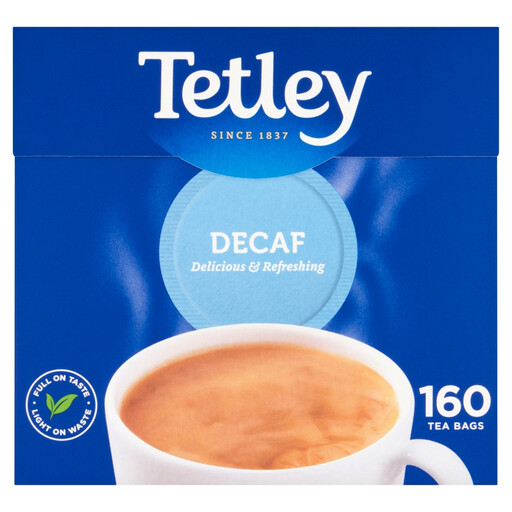
Tetley Decaf 160 Tea Bags 500g
The 160-bag format is worth considering for predictable, frequent black-tea service. This is a 500g pack of decaffeinated black tea; check this pack’s own caffeine statement if a defined level matters, rather than relying on information for a different Tetley pack.
View on Joybuy
 No image available
Taylors of Harrogate Yorkshire Tea Decaf 250g
A 250g decaffeinated black-tea option for customers who ask for Yorkshire Tea. Check the bag count on the pack before estimating how many servings to stock, and read its caffeine statement if a specific level is required.
View on Joybuy
 No image available
Tetley Green Tea Decaffeinated 50 Tea Bags 100g
A 50-bag green-tea choice for customers who do not want the usual black-tea cup. The listing states decaffeination to 0.2%; that statement does not mean the tea is caffeine-free.
View on Joybuy
 No image available
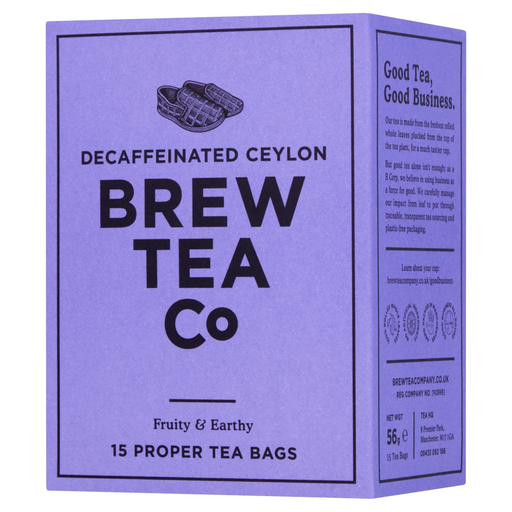
Brew Tea Co Decaffeinated Ceylon Tea 15 Bags 56g
A smaller black-tea pack for a shop offering a Ceylon option alongside everyday stock. The listing describes 15 bags, a CO2 decaffeination method and Ceylon tea. Its bag count calls for more frequent replenishment if it becomes a regular service choice.
View on Joybuy
Decaf tea questions
Is decaf tea completely caffeine-free?
No. Twinings explains that decaffeinated tea can retain minor traces of caffeine, while the Tesco listing for Tetley Decaffeinated 40 states “decaffeinated to 0.2%”. Check the exact drink’s ingredients and caffeine statement if avoiding caffeine is essential.
What could a shop offer for an evening drink?
Decaffeinated black tea is an option for someone wanting less caffeine and a familiar tea. If the customer wants to avoid caffeine, check an alternative infusion’s ingredients and label rather than assuming every infusion is caffeine-free. NHS guidance notes that caffeine in tea can make people feel more awake and suggests herbal tea as an alternative before bed.
How should decaf black tea be brewed?
Follow the instructions for the exact tea being served. Tesco’s information for Tetley Decaffeinated 40 recommends boiling fresh water and brewing for 2–3 minutes before adding milk; do not assume another product has the same directions.
Should a retirement shop choose small or large packs?
Choose the bag count according to how steadily each tea will be used. A large everyday pack suits predictable, frequent service; a smaller pack may be more practical for occasional requests or a speciality choice. Check whether bags are individually wrapped if that serving format matters.
What rules matter if the shop sells or serves tea?
If the UK shop operates as a food business, the Food Standards Agency says it must register with its local authority at least 28 days before trading or starting food operations. GOV.UK guidance says retail and catering food businesses must provide allergen information for prepacked and non-prepacked food and drink; the applicable way of providing it depends on how the tea is sold or served.


