For a household that drinks decaf black tea regularly, start with a pack size you are likely to use; if you are changing brands, a smaller pack lets you try the blend before stocking up. Twinings describes a particular Everyday blend, while Clipper states organic and Fairtrade credentials and a carbon-dioxide decaffeination method for its Everyday Decaf. Decaf should not be assumed to mean caffeine-free, so check the exact pack if residual caffeine matters to your decision.
Who is choosing decaf tea?
The pack and blend worth considering depend on how often you make tea and which product details matter to you.
Households buying decaf every week
If several people use decaf tea bags regularly, check both the bag count and net weight. Those details make an 80-bag pack easier to distinguish from a 160-bag pack when planning cupboard space and repeat purchases.
Evening tea drinkers reducing caffeine
If you want a decaffeinated version of an everyday black-tea brew, look at the particular blend and its brewing directions. Yorkshire Tea describes its decaf blend as intended for low-caffeine lifestyles and bedtime drinking; that description does not establish how another brand will taste to you.
Shoppers checking sourcing credentials
If organic tea, Fairtrade sourcing or a stated decaffeination method affects your choice, check the claims on the specific product. Clipper states those credentials and a carbon-dioxide method for its Everyday Decaf tea.
What matters in a weekly shop?
Choose a usable pack format first, then check the blend, caffeine information and any sourcing credentials that affect your decision.
| Priority |
What to check |
Your needs |
| Pack format |
Read the tea-bag count and net weight together. Consider how quickly your household uses tea and where the pack will be stored. |
We make decaf regularly, so I want enough bags for our routine without committing to a large pack of an unfamiliar blend. |
| Black-tea blend |
Check the named blend and brewing directions for the exact product. Twinings describes its Everyday Decaffeinated tea as a Kenyan-tea blend and suggests a two-to-three-minute infusion. |
I usually drink black tea, sometimes with milk, and want to know which blend I am trying rather than assuming all decaf tea bags brew alike. |
| Caffeine information |
Check the exact pack if a residual-caffeine figure matters. Decaffeinated tea should not be treated as automatically caffeine-free; caffeine may also come from other drinks and foods. |
I am reducing caffeine, so the label and my other caffeine sources matter more to me than the word “decaf” alone. |
| Ingredients and sourcing |
Read the product’s ingredient and credential statements rather than assuming they apply across a brand. Clipper states that its Everyday Decaf contains decaffeinated organically grown black tea, is traded in compliance with Fairtrade standards and uses carbon dioxide for decaffeination. |
Organic tea or Fairtrade sourcing is part of my shopping decision, so I want those details on the particular pack I choose. |
What should you avoid assuming?
-
“Decaf” means caffeine-free
Decaffeination does not establish a zero-caffeine content for every tea. Assuming otherwise matters particularly when you are keeping track of caffeine from several sources.
Check the exact pack for caffeine information. The NHS advises no more than 200 mg of caffeine a day during pregnancy and recommends the same limit when breastfeeding; its guidance considers sources beyond tea, including coffee, cola and chocolate.
-
A larger pack will suit your usual cup
A bag count tells you how much tea is in the pack, not whether you will like that blend with milk, without milk or at your usual brewing time. Brand descriptions are not independent taste comparisons.
If you are changing blends, consider trying a smaller format before choosing one for regular household use.
An unsuitable large pack can leave more unused tea bags in the cupboard.
-
Sourcing credentials tell you how the tea will taste
Organic status, Fairtrade sourcing and a named decaffeination method describe particular product attributes. They do not establish whether a blend matches your preferred strength or serving style.
Check the credentials on the exact product, then consider its ingredients and brewing guidance separately.
Brand references
These examples describe particular decaf products and ranges; a brand name alone does not establish the details of every pack.
Tesco
Tesco Decaff Original Tea is an own-label black-tea-bag option listed in an 80-bag, 250 g format by Tesco Groceries.
- The stated bag count and weight help with household pack planning.
- Check the pack if blend origin or decaffeination method is important to you.
Tetley
Tetley has decaffeinated black-tea bags in 80- and 160-bag formats. Joybuy identifies its 160-bag, 500 g product’s ingredient as decaffeinated black tea.
- The two stated pack counts offer different quantities for a household routine.
- Check the ingredient declaration on the particular format you choose rather than transferring details between packs.
PG Tips
PG Tips Decaf Black Tea is listed by Tesco Groceries in a 160-bag, 464 g format.
- The stated count identifies a large pack for shoppers planning repeat use.
- Pack size alone cannot tell you whether its brew suits your usual serving style.
Yorkshire Tea
Yorkshire Tea describes its Decaf as a blend intended to retain character after decaffeination, including for bedtime drinking. That is the brand’s description, not an independent taste assessment.
- Tesco Groceries lists a 160-bag, 500 g format for households considering a larger pack.
- Try the blend before stocking up if its taste in your usual cup is the deciding factor.
Twinings
Twinings describes Everyday Decaffeinated as an 80-bag, 250 g Kenyan-tea blend with a hearty, well-rounded profile.
- Its product guidance gives a two-to-three-minute infusion time.
- Its flavour description is a brand statement, not a comparison with other decaf blends.
Clipper
Clipper describes its Everyday Decaf as decaffeinated organically grown black tea traded in compliance with Fairtrade standards.
- Clipper also states that it uses carbon dioxide for decaffeination of this product.
- Those attributes do not establish whether its flavour will suit every black-tea drinker.
Decaf tea options on Joybuy
These tea-bag packs cover larger household formats, 80-bag options and a smaller pack for trying a different style. Compare the stated pack details and check the exact product label for any ingredient or caffeine information important to you.
 Image unavailable
Tetley 160 Decaf Tea Bags, 500 g
A 160-bag format to consider if your household uses decaf black tea regularly. Joybuy identifies the ingredient as decaffeinated black tea and the pack weight as 500 g. Check the exact pack if a residual-caffeine figure matters to you.
View on Joybuy
 Image unavailable
Clipper Organic Fairtrade Decaf Everyday, 80 bags, 277 g
An 80-bag option when organic and Fairtrade credentials are part of your choice. The product name states 277 g; check the exact pack’s ingredient and caffeine information if either affects your purchase.
View on Joybuy
 Image unavailable
Tetley 80 Decaffeinated Tea Bags, 250 g
An 80-bag format if you want fewer bags than Tetley’s 160-bag pack. The product is identified as 250 g, and its Joybuy page suggests brewing for two to three minutes. Check the exact pack’s ingredient declaration if you need that detail confirmed.
View on Joybuy
 Image unavailable
Taylors of Harrogate Yorkshire Tea Decaf, 250 g
A 250 g Yorkshire Tea Decaf option for shoppers considering the brand’s black-tea blend. Check the bag count on the pack before comparing how long it may last in your household.
View on Joybuy
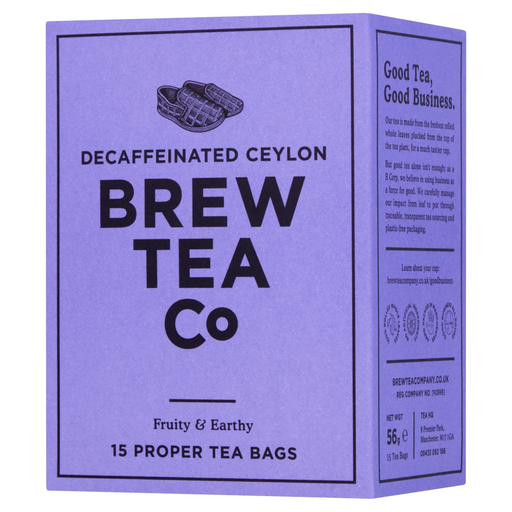 Image unavailable
Brew Tea Co CO2 Decaffeinated Tea, 15 bags, 56 g
A 15-bag, 56 g format to consider when trying a smaller decaf pack rather than stocking up. The product name specifies CO2 decaffeination; check the exact pack’s ingredient and caffeine information if those details matter to you.
View on Joybuy
Decaf tea questions
How do I choose a pack size for a weekly shop?
Compare the bag count and net weight with how often your household makes decaf tea. If the blend is new to you, a smaller pack gives you a chance to try it in your usual cup before buying a larger format.
Are decaf black teas caffeine-free?
Do not assume they are. Twinings’ Everyday Decaffeinated product page refers to residual caffeine, so check the exact pack or contact the manufacturer if a precise figure affects your choice.
What matters about caffeine during pregnancy or breastfeeding?
The NHS advises no more than 200 mg of caffeine a day during pregnancy and recommends the same limit when breastfeeding. Tea is only one possible source: its guidance also identifies drinks and foods such as coffee, cola and chocolate, so a decaf label alone does not describe total intake.
Which decaf tea has stated organic and Fairtrade credentials?
Clipper states that its Everyday Decaf contains decaffeinated organically grown black tea and is traded in compliance with Fairtrade standards. Check the specific product when shopping rather than assuming those statements apply to every tea sold under the brand.


