Students stocking a kitchen for the first time
A smaller or mid-sized pack lets you establish how often you drink decaf tea before committing cupboard space to a larger supply.


For a student moving in, start with a manageable pack of decaf tea bags rather than assuming the tea needs to come in a jar. A larger pack makes more sense if several people will use it regularly; if you want jar-like storage, Tesco advises keeping its opened decaf tea in an airtight container in a cool, dry place.
A smaller or mid-sized pack lets you establish how often you drink decaf tea before committing cupboard space to a larger supply.
A 160-bag pack is worth considering when several people agree to use the same tea regularly and have a dry place to store it.
A named English Breakfast-style blend or stated organic and Fairtrade attributes may matter more to you than pack size alone.
Decide how much tea your household is likely to use, then check the tea style and how you will store an opened pack.
| Priority | What to check | Your needs |
|---|---|---|
| Pack size | Check the tea-bag count and pack weight. Consider whether one person or several flatmates will use the tea. | I am still finding out how often I drink tea, so I would rather start with a manageable pack. |
| Jar and storage | Check the product format rather than assuming it comes in a jar. Tesco advises storing its opened decaf tea in an airtight container in a cool, dry place. | A separate airtight container would give me tidy shared-kitchen storage without making jar packaging a requirement. |
| Tea style | Read the blend description. Twinings identifies Assam, Kenyan and Ceylon teas in its English Breakfast Decaffeinated blend; its Everyday Decaffeinated is described as a Kenyan-tea blend. | If the kind of black tea matters to me, I want to know which blend I am choosing rather than treating every decaf pack as interchangeable. |
| Stated sourcing | Check attributes on the exact product. Clipper describes its Organic Everyday Decaf as decaffeinated organically grown black tea, and its 80-bag listing states Fairtrade compliance. | Organic tea or Fairtrade sourcing may be a condition of my purchase. |
| Caffeine information | Check the current pack if a precise residual-caffeine figure matters. Twinings gives differing figures on its English Breakfast Decaffeinated product page. | I want the caffeine information for the pack I am buying, not an assumption based on the word “decaf”. |
Even a shared-kitchen pack may sit open for longer than expected if flatmates prefer different teas.
Start with a pack you expect to use, and keep opened tea airtight in a cool, dry place, as Tesco advises for its decaf tea.
Blend descriptions and sourcing statements differ: Twinings names the teas in its English Breakfast Decaffeinated blend, while Clipper states organic and Fairtrade attributes for its Everyday Decaf.
Choose the tea style or stated sourcing attribute you care about, then check the format and pack size.
Twinings gives differing decaffeination figures on its English Breakfast Decaffeinated product page. Tesco also cautions that food products may be reformulated.
Read the current pack label and contact the manufacturer if you need a precise figure.
These examples describe particular decaf tea lines and formats; a brand name alone does not establish the details of every pack.
Tesco Decaff Original Tea is listed as an 80-bag, 250g pack.
Tesco Groceries lists Tetley Decaffeinated tea in several bag counts, including a 160-bag, 500g pack.
Tesco Groceries lists PG Tips decaf black tea in multiple pack sizes, including 160 bags.
Yorkshire Tea describes its Decaf as a blend intended for people choosing a lower-caffeine cup.
Twinings identifies Assam, Kenyan and Ceylon teas in English Breakfast Decaffeinated and describes Everyday Decaffeinated as a Kenyan-tea blend.
Clipper describes Organic Everyday Decaf as decaffeinated organically grown black tea.
These options include stated tea-bag packs for a student kitchen and one 20g decaffeinated black tea whose pack format should be checked before buying.
 No image available
The stated 160-bag pack is worth considering if several flatmates will regularly share the tea; check that you have suitable dry storage for an opened pack.
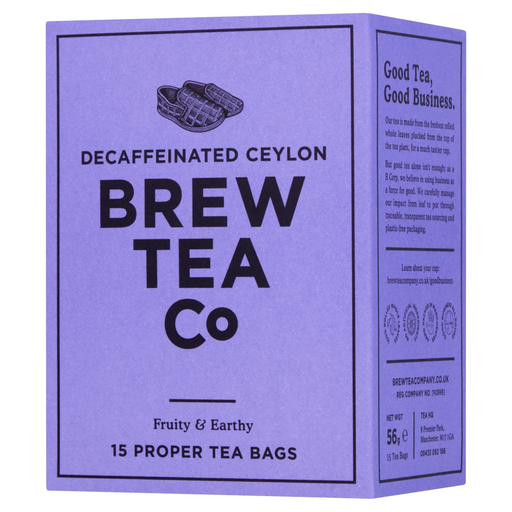 No image available
The stated 15-bag format offers a smaller first supply if you are still learning how often you will drink decaf tea.
 No image available
This 80-bag decaf tea is a choice to examine if organic and Fairtrade attributes matter to you. Check the current pack for its preparation instructions.
 No image available
The stated 80-bag format is an alternative to Tetley’s larger pack if you are buying for one person or are unsure how quickly the household will use it.
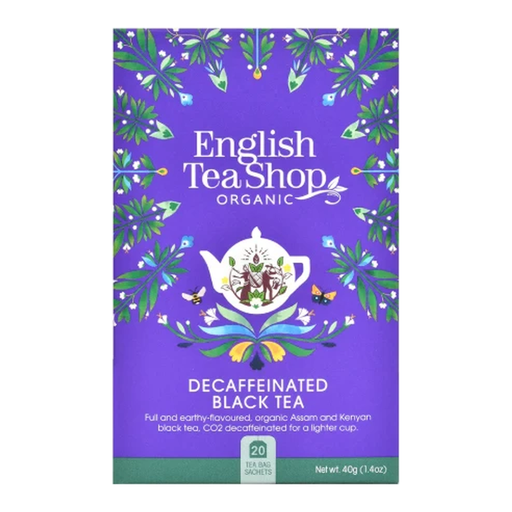 No image available
The title identifies an organic decaffeinated black tea weighing 20g. Check the current pack for its format and contents, and confirm its caffeine information if you need a precise figure.
No jar is needed to store tea bags. If a jar would make a shared cupboard tidier, choose a clean, dry, airtight container for the opened tea; Tesco advises airtight storage for its Decaff Original Tea.
A 160-bag pack is more practical when several people will drink the same tea regularly. If you do not yet know the household’s habits, a smaller pack lets you judge how quickly it will be used.
Keep them in a cool, dry place. Tesco’s guidance for its decaf tea says to use an airtight container once the pack has been opened, so choose a spot away from steam and damp surfaces.
Check the current pack if an exact figure matters. Twinings gives differing decaffeination figures on its English Breakfast Decaffeinated page, while Tesco advises reading food labels because products can be reformulated.