Evening black-tea drinkers
If you want a familiar cup after dinner or alongside winter food while reducing caffeine, plain decaf black tea is a starting point. Check the pack’s brewing guidance and decide whether you prefer it with milk.


For a familiar cup with toast, biscuits or a savoury winter meal, start with plain decaffeinated black tea and choose a pack whose flavour description and brewing guidance suit how you take it. If avoiding caffeine altogether matters more than black-tea flavour, consider a herbal or fruit infusion after checking its ingredients: decaf black tea can still contain traces of caffeine.
If you want a familiar cup after dinner or alongside winter food while reducing caffeine, plain decaf black tea is a starting point. Check the pack’s brewing guidance and decide whether you prefer it with milk.
Decaffeinated black tea can retain traces of caffeine. A herbal or fruit infusion offers a different route, but check the ingredients for caffeinated additions such as mate or guarana.
If organic production, Fairtrade sourcing, certification or packaging materials affect your choice, check the claims on the exact pack. These attributes do not automatically come together.
Decide whether you want a conventional black-tea cup or an infusion, then compare ingredients, brewing instructions and the pack you will use.
| Priority | What to check | Your needs |
|---|---|---|
| Black-tea flavour | Look for plain decaffeinated black tea if you want to avoid added citrus flavourings. Follow the individual pack’s brew time when deciding how to prepare it with milk. | I want a familiar black-tea cup beside toast, biscuits or a savoury meal, rather than a citrus-flavoured or herbal drink. |
| Caffeine wording | Distinguish decaffeinated tea from an infusion described as caffeine-free. Check the exact product statement and any caffeinated ingredients in an infusion. | Reducing caffeine is enough for some occasions; if I need to avoid it altogether, traces in decaf black tea matter to my choice. |
| Ingredients | Read the current ingredients and allergen information. Twinings lists bergamot and lemon flavourings in its Earl Grey Decaffeinated tea, unlike the plain decaf black-tea examples listed by Tesco for Tetley and PG Tips. | I prefer to know whether the cup contains only decaffeinated black tea or also has flavourings, especially when changing products. |
| Sourcing claims | Check each claim on the exact product. Clipper states that its Organic Everyday Decaf is organic and Fairtrade and uses carbon dioxide for decaffeination; those claims do not establish the attributes of other blends. | Organic production, Fairtrade sourcing or a stated decaffeination method may matter to me independently of flavour. |
| Pack and brewing | Check the bag count and product-specific instructions. Tesco gives 1–2 minutes for PG Tips Decaf and 2–3 minutes for Tetley Decaffeinated; Typhoo gives 1–5 minutes for its decaf bags. | A pack size that fits how often I make tea matters, and I want brewing instructions I can follow for my preferred cup. |
Twinings explains that minor traces of caffeine can remain after tea is decaffeinated. That distinction matters if complete avoidance is your requirement.
Check the exact pack’s caffeine wording. For a herbal or fruit infusion, also check for ingredients such as mate or guarana.
Plain decaf black tea and flavoured decaf tea offer different ingredient lists: Twinings Earl Grey Decaffeinated includes bergamot and lemon flavourings.
Read the current ingredients and allergen information when choosing a new blend, particularly if you avoid specific ingredients.
A larger bag count does not tell you whether you will enjoy the blend or use it regularly.
Check the number of bags alongside the tea style and brewing instructions before choosing a household pack.
Organic, Fairtrade, Rainforest Alliance and a stated decaffeination method describe different attributes. None establishes how a tea will taste or that it contains no caffeine.
Decide which attribute matters to you and confirm that claim on the exact product pack.
These references describe particular decaf products or ranges, not every tea made by each brand.
A plain decaf black-tea option for shoppers who want a conventional evening cup.
Its decaf range includes plain black-tea styles and a flavoured Earl Grey.
Organic Everyday Decaf is a plain black-tea choice for shoppers prioritising stated sourcing and process details.
A plain decaf black tea available in a 70-bag format in the Tesco product information.
A plain decaffeinated black-tea option for a familiar cup with milk.
An 80-bag everyday decaf option described by Typhoo as a Kenyan-tea blend.
These options include plain decaf black teas for a familiar cup with winter food and one herbal infusion for shoppers seeking a different, caffeine-free style of drink.
 No image available
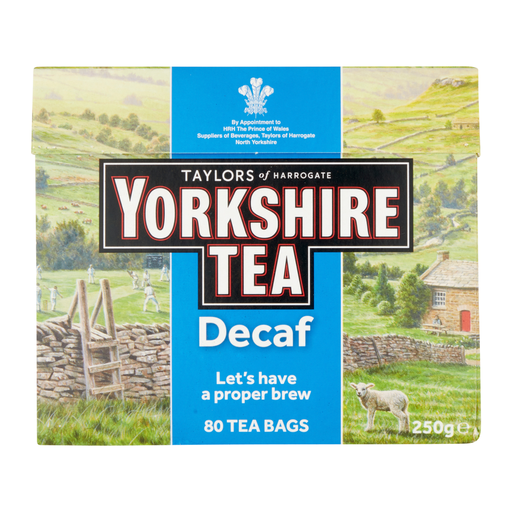
A plain black-tea option for a familiar cup with winter food. Tesco’s information for the matching 80-bag product recommends brewing for 2–3 minutes before adding milk. Check the current pack’s ingredient and decaf wording: the Joybuy product information also has an ingredient line that says ‘Black tea’.
 No image available
A plain decaffeinated black tea to consider if you prefer a conventional cup with hearty food. The product description calls it full-bodied; treat that as a flavour description rather than a measured comparison. Check the pack for brewing instructions and caffeine wording relevant to your needs.
 No image available
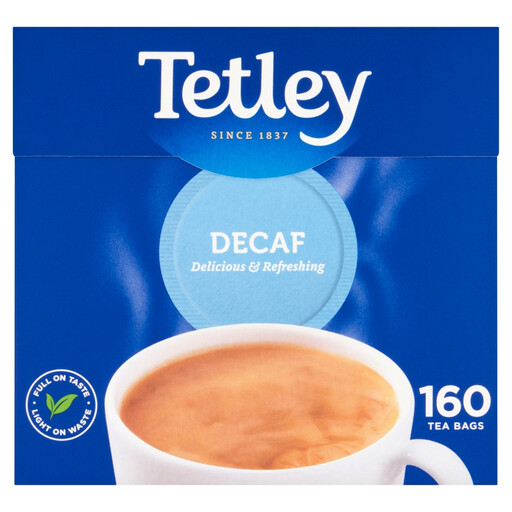
A larger pack of plain decaffeinated black tea for households that make it regularly. The stated ingredient is decaffeinated black tea. Check this pack’s brewing instructions and caffeine wording rather than assuming they match another Tetley pack.
 No image available
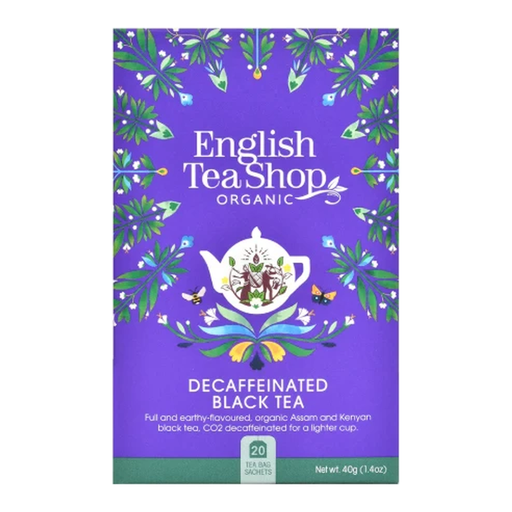
A plain black-tea option if organically grown tea is a purchase criterion. The ingredient information identifies decaffeinated organically grown black tea. If a numeric caffeine limit matters, check what serving or measurement the pack’s caffeine statement refers to, as well as its preparation instructions.
 No image available
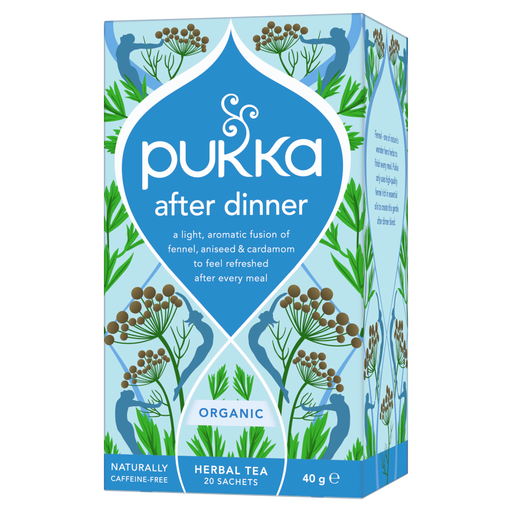
A herbal infusion rather than decaffeinated black tea, so choose it for a different style of cup, not a conventional milk tea. The product description says the blend is without caffeine and gives a 5–7 minute brew. It also identifies possible celery traces; check the current pack if celery is relevant to you.
Not necessarily. Twinings explains that minor traces can remain in decaffeinated tea, while Tesco lists less than 0.2% caffeine for the cited PG Tips Decaf product. If you need to avoid caffeine, check the ingredients of a herbal or fruit infusion too: blends containing mate or guarana are exceptions to the usual caffeine-free choice.
Start with a plain decaffeinated black tea if you want a familiar milk-tea style rather than citrus flavouring. Twinings Everyday, Tetley Decaffeinated, PG Tips Decaf, Typhoo Decaf and Yorkshire Tea Decaf are relevant examples; compare their pack instructions and described flavour styles, bearing in mind that taste descriptions come from brands or retailers.
Follow the instructions for the exact product. Tesco gives 1–2 minutes for PG Tips Decaf and 2–3 minutes for Tetley Decaffeinated; Twinings suggests 2–3 minutes for Everyday Decaffeinated, while Typhoo gives a 1–5 minute range for its decaf bags.
Read the current pack’s ingredients and allergen information, especially when changing blends. Plain decaf products listed by Tesco for Tetley and PG Tips contain decaffeinated black tea, whereas Twinings Earl Grey Decaffeinated also lists bergamot and lemon flavourings.