Evening black-tea drinkers
If a mug of ordinary black tea is part of your evening routine, look for a product explicitly identified as decaffeinated black tea. Plain decaf and a bedtime blend with added herbs or spices are different choices.


Choose a plain decaffeinated black tea if you want a familiar cup alongside winter food, particularly if you take tea with milk. Choose a flavoured bedtime blend only if its added ingredients appeal to you; if sourcing or the decaffeination method matters more, check the claims on the exact pack. Decaf does not, by itself, establish that a tea contains no caffeine.
The useful starting point is the kind of cup you want, followed by any ingredient, sourcing or pack-size requirements.
If a mug of ordinary black tea is part of your evening routine, look for a product explicitly identified as decaffeinated black tea. Plain decaf and a bedtime blend with added herbs or spices are different choices.
An 80- or 160-bag pack may suit frequent tea breaks. Check both the bag count and net weight, then consider whether you can store and use the pack within its best-before date.
If organic tea, Fairtrade sourcing or a stated decaffeination process matters to you, check those details for the particular product rather than assuming they apply across a brand’s range.
Start with the tea and flavour you want in the cup. Then check caffeine information, product-specific claims and pack details where they affect your choice.
| Priority | What to check | Your needs |
|---|---|---|
| Caffeine information | Confirm that the exact product is decaffeinated. If a precise residual-caffeine level matters, use a clear statement on the current pack or ask the manufacturer; the Twinings English Breakfast Decaffeinated page gives conflicting figures. | I want an evening black-tea cup, but I need to know more than the word ‘decaf’ tells me about its caffeine content. |
| Tea and flavour | Read the ingredient list to distinguish plain decaffeinated black tea from blends with herbs or spices. Yorkshire Tea describes its plain Decaf and its flavoured Bedtime Brew as separate products. | For a familiar cup with winter food, I would choose plain black tea; added flavours only appeal if I want a different kind of drink. |
| Brewing and milk | Check the directions for the particular tea before adjusting brewing time. Twinings suggests two to three minutes for its English Breakfast Decaffeinated, or four minutes for a stronger cup, and mentions milk as an option. | I take tea with milk and want preparation guidance I can use to make the cup stronger or lighter. |
| Sourcing and process | Check claims on the exact product. Clipper says its Organic Everyday Decaf contains organically grown decaffeinated black tea, is Fairtrade and uses carbon dioxide for decaffeination. | Organic ingredients, Fairtrade sourcing or a stated decaffeination method may decide which pack I pick. |
| Pack format | Compare bag count and net weight, not bag count alone. Check the best-before date and storage instructions if you are considering a larger pack. | We drink decaf often, so a cupboard pack makes sense if we can store it properly and use it in time. |
Decaffeination alone does not establish a zero-caffeine content. Twinings gives inconsistent residual-caffeine figures for its English Breakfast Decaffeinated on the same product page.
If an exact level matters to your purchase, check the current pack or ask the manufacturer rather than relying on the category name.
Yorkshire Tea describes Bedtime Brew as a separate blend made with its Decaf plus herbs and spices. Those added ingredients change what you are choosing, even though both products are positioned for later-day drinking.
Read the exact ingredient list and choose plain decaf when you want a conventional black-tea cup.
A Joybuy page for Tetley 160 Decaf Tea Bags identifies decaffeinated black tea in its ingredient statement but also displays unrelated descriptors in structured specifications. The distinction matters when checking what is actually in the tea.
Use the current pack’s ingredient statement for ingredient decisions, and seek clarification if product-page fields conflict.
Brand names can help narrow a choice, but ingredients and claims still need to be checked on the particular tea.
Yorkshire Tea presents its plain Decaf as an everyday-style brew for lower-caffeine routines, while Bedtime Brew is a separate flavoured blend.
Tetley offers decaffeinated black tea in different bag counts; the particular pack determines its quantity and ingredient statement.
If you usually choose PG Tips, its decaf tea is another black-tea option to compare by the details on the exact pack.
Twinings identifies its English Breakfast Decaffeinated 40-bag product as black tea and provides brewing guidance, including an option to add milk.
Clipper’s Organic Everyday Decaf is relevant when organic black tea, Fairtrade sourcing and a stated decaffeination method are part of the decision.
Tesco Decaff Original Tea is an own-label option for shoppers considering a straightforward decaf cupboard pack.
These tea-bag packs offer plain decaf black-tea options for winter cups, alongside products labelled with organic, Fairtrade or carbon-dioxide decaffeination details. Choose by the claims and pack format of the individual product, not its position here.
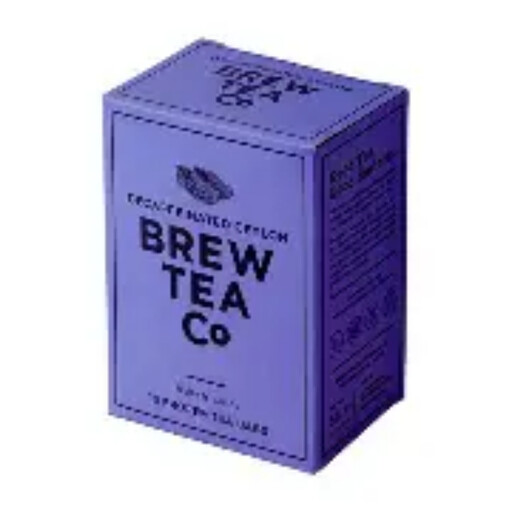 No image available
Consider this pack if a decaf tea with a stated CO2 process appeals for an evening cup. The product name specifies 40 tea bags and 200g; check the current pack if you need a precise caffeine level or preparation directions.
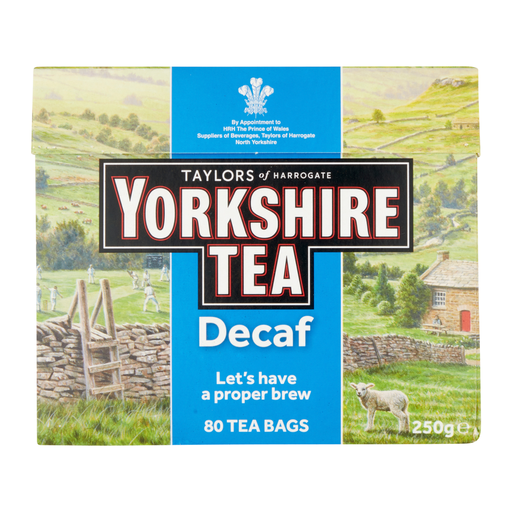 No image available
For a plain Yorkshire Tea decaf cup, distinguish this 250g pack from the brand’s separate flavoured Bedtime Brew. Check the current pack if brewing directions or a precise caffeine level matter to you.
 No image available
This 80-bag, 250g pack is an option for a regular decaf tea break. If the precise ingredient wording affects your choice, check the current pack: the product information’s ‘Black tea**’ ingredient line does not explain its marker.
 No image available
Choose this 80-bag, 277g pack if its stated organic and Fairtrade attributes fit your sourcing preferences. Check the current pack for preparation instructions rather than relying on unrelated serving descriptions.
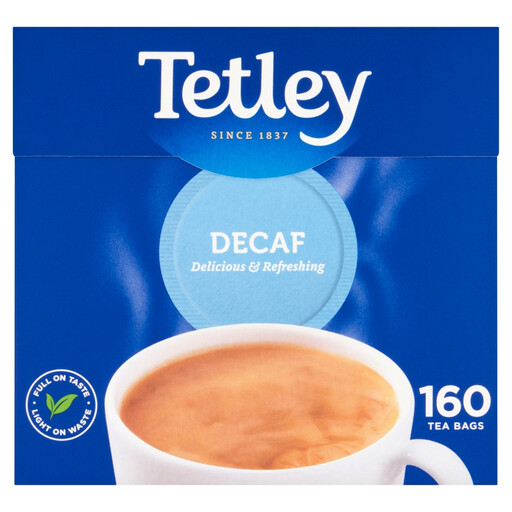 No image available
The 160-bag, 500g format suits a household that uses decaf tea regularly and can store the pack in a cool, dry place. Its product ingredient statement identifies decaffeinated black tea; check the pack if you need a precise caffeine level.
Not necessarily: ‘decaf’ alone does not establish a zero-caffeine content. Twinings gives conflicting residual-caffeine figures for its English Breakfast Decaffeinated on its product page, so check the current pack or ask the manufacturer if an exact level is important.
Start with an unflavoured decaffeinated black tea if you want a conventional milky cup. Twinings identifies its English Breakfast Decaffeinated as black tea and suggests two to three minutes’ brewing, or four minutes for a stronger cup, with milk as an option.
A bedtime blend may contain additional ingredients rather than being the same plain black tea under another name. Yorkshire Tea describes its Bedtime Brew as Decaf with herbs and spices, so choose between it and plain Decaf by checking the ingredients and the flavour you want.
Read the current pack’s ingredient statement for the exact product, particularly when considering a flavoured blend. A Joybuy page for Tetley 160 Decaf Tea Bags identifies decaffeinated black tea as its ingredient, while Yorkshire Tea describes herbs and spices in its separate Bedtime Brew.