Evening tea-and-biscuits drinkers
If you want black tea later in the day while reducing caffeine, decaf keeps tea on the menu. It is not automatically caffeine-free: check the pack if even small traces matter to you.


For a familiar tea-and-biscuits break, start with an everyday decaf black tea; choose a named style such as English Breakfast or Ceylon if that distinction matters to you. Clipper’s organic and Fairtrade-labelled option offers a different set of stated product attributes. Decaffeinated tea can still contain traces of caffeine, so check the exact pack if avoiding caffeine is essential.
The choice depends on whether you are changing your usual evening cup, looking for a particular tea style or checking what goes into the bag.
If you want black tea later in the day while reducing caffeine, decaf keeps tea on the menu. It is not automatically caffeine-free: check the pack if even small traces matter to you.
Everyday black tea, English Breakfast, Earl Grey and green tea are distinct choices. Decide which style you want with your biscuits rather than assuming every decaf tea will make the same sort of cup.
Read the current ingredients and any organic or Fairtrade statements on the pack. Bag count, net weight and preparation directions can also help you distinguish otherwise similar-looking products.
Choose the kind of tea you want first, then check its caffeine statement, ingredients and pack details. Brewing directions matter when you compare how different teas suit your usual cup.
| Priority | What to check | Your needs |
|---|---|---|
| Caffeine | Read the exact pack’s caffeine statement. Twinings explains that decaffeination removes nearly all caffeine but can leave minor traces; the PG Tips 70-bag product described by Tesco states less than 0.2% caffeine. Do not apply one product’s figure to another. | I want to reduce caffeine, but I need to know whether traces are acceptable. If I need a caffeine-free drink, I should check a suitable herbal or fruit infusion separately, including its ingredients. |
| Tea style and brewing | Distinguish everyday black tea from a named blend or another tea type. Follow the chosen pack’s infusion directions before judging its strength; Waitrose & Partners gives two to three minutes for its Tetley Decaf 80-bag product. | For my usual tea with biscuits, I might prefer a familiar black-tea cup. Alternatively, I may specifically want English Breakfast, Earl Grey, green tea or a Ceylon blend. |
| Pack size | Compare both tea-bag count and net weight. A 15-bag pack and a 160-bag pack suit different restocking habits, even when both are labelled decaf. | I might want a small pack to try an unfamiliar style, or enough bags for regular tea breaks. |
| Ingredients and sourcing | Read the current ingredient list and any relevant organic or Fairtrade claim. Clipper describes its Organic Everyday Decaf as organic and Fairtrade tea decaffeinated using carbon dioxide; those product statements do not establish how another brand processes its tea. | Ingredient details matter to me, or I am choosing a pack for its stated sourcing and decaffeination method. I want to check those details on the product I actually buy. |
Twinings says decaffeinated tea can retain minor traces of caffeine. A decaf black tea therefore may not meet a need to avoid caffeine altogether.
Check the exact pack’s caffeine statement. If you are considering a herbal or fruit infusion instead, read its ingredients too; blends containing ingredients such as mate or guarana need separate checking.
Products sold under the same broad tea description can have different ingredient lists, and recipes can change. A brand name alone does not answer an ingredient or allergen question.
Use the current physical pack for the ingredient and allergen information relevant to you, rather than relying on an earlier online description.
Product directions vary. Waitrose & Partners recommends two to three minutes for its Tetley Decaf 80-bag listing, while the researched Tesco Decaff Original directions specify four to five minutes.
Start with the directions on your chosen pack before deciding whether its cup is the strength you want with biscuits or milk.
These ranges offer different tea styles and stated product attributes; a brand description is not an independent taste comparison.
An everyday decaf black-tea route for shoppers who already favour Yorkshire Tea.
An everyday decaf black tea offered in different tea-bag pack sizes.
A familiar decaf black-tea option for an everyday cup.
A range to explore when you want to choose by tea style, including English Breakfast and other decaf varieties.
An everyday decaf black tea for shoppers interested in stated organic and Fairtrade attributes.
An own-label everyday decaf black-tea option.
These options include everyday decaf black teas, a named Ceylon tea and an organic Fairtrade-labelled tea for a tea-and-biscuits break. Choose by the style and pack details that matter to you, and check the product label where traces of caffeine or ingredients are important.
 No image available
An 80-bag decaf black-tea pack for a regular tea-and-biscuits break. Waitrose & Partners recommends brewing its Tetley Decaf 80-bag product for two to three minutes. Check the current pack for ingredients and a product-specific caffeine statement if either matters to you.
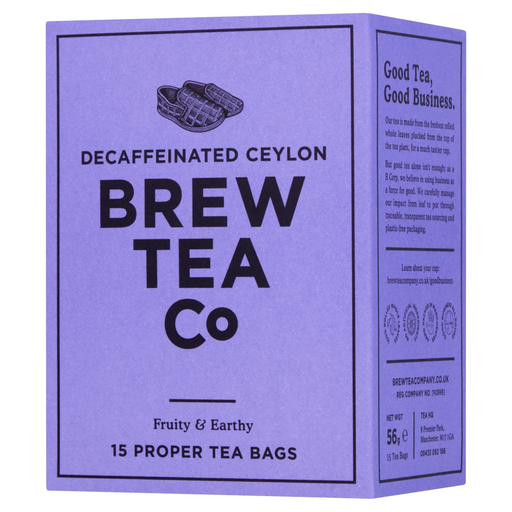 No image available
A smaller pack to consider if you want to try a named Ceylon black-tea style with biscuits. The product description identifies Ceylon tea and carbon-dioxide decaffeination. Follow the current pack’s brewing directions and check its caffeine statement if traces matter to you.
 No image available
For a black-tea break when the stated organic and Fairtrade attributes are part of your choice. The title identifies 80 tea bags and 277g; Clipper describes its corresponding Organic Everyday Decaf tea as decaffeinated using carbon dioxide. Check that the pack is this tea-bag product before buying, as some accompanying listing text describes a chilled drink.
 No image available
A Yorkshire Tea decaf black-tea option if that is the style you want with biscuits. The product is identified as a 250g pack of decaffeinated black tea. Check its tea-bag count, brewing directions and caffeine statement on the current pack where those details affect your choice.
 No image available
A larger Tetley decaf black-tea pack for regular tea breaks: the title specifies 160 bags and 500g. Check this pack’s brewing directions and caffeine statement rather than assuming they match those of another Tetley pack.
Not necessarily. Twinings explains that decaffeinated tea has had nearly all its caffeine removed but can retain minor traces. Check the exact product label if you need to avoid caffeine rather than reduce it; a herbal or fruit infusion is a separate choice whose ingredients also need checking.
Start with an everyday decaf black tea if you want a familiar tea-break style. If you want a named blend instead, Twinings identifies its English Breakfast Decaffeinated as an Assam, Kenyan and Ceylon tea blend. Follow the chosen pack’s brewing directions before judging the cup.
Check the ingredients and any caffeine, sourcing and brewing statements relevant to your choice. For an allergy or a particular ingredient requirement, use the current pack: Tesco cautions that food products can be reformulated and online ingredient and allergen details may change.
Use the directions for the product you have. Waitrose & Partners recommends two to three minutes for its Tetley Decaf 80-bag listing, whereas the researched Tesco Decaff Original directions specify four to five minutes. The same brewing time should not be assumed across brands.