Choose organic decaf black tea if colleagues want a familiar brew with reduced caffeine, including the option to add milk. If avoiding residual caffeine matters more, choose an organic herbal infusion whose particular blend is described as naturally caffeine-free; decaf black tea can still contain traces of caffeine. For a shared tea station, decide whether individual envelopes or a larger pack fits how people actually use it, and check the current pack’s organic certification details if your office requires them.
Who is each option for?
Organisers stocking everyday black tea
If colleagues want an organic decaf brew they can take with or without milk, consider how quickly a shared pack will be used. Clipper lists Organic Everyday Decaf in an 80-bag pack, a 25-envelope catering pack and a 250-envelope catering format.
Teams seeking a caffeine-free option
Choose a specifically identified naturally caffeine-free herbal infusion rather than assuming decaf black tea has no caffeine. Pukka describes its Three Chamomile infusion as naturally caffeine-free and says its products are certified organic.
Offices offering a choice of flavours
A plain decaf black tea and a herbal infusion serve different tastes. For colleagues who also want a flavoured black tea, Clipper lists an organic decaf Earl Grey with bergamot.
What should you check before ordering?
Organic decaf black tea
Choose when: The office wants a familiar black-tea brew with reduced caffeine.
Trade-off: Decaffeination does not necessarily remove every trace of caffeine, as Twinings explains.
Organic caffeine-free herbal infusion
Choose when: Avoiding residual caffeine matters more than retaining a black-tea flavour; check the claim on the particular blend.
Trade-off: A floral or herbal infusion tastes different from everyday black tea and may not suit the same milk preferences.
| Priority |
What to check |
Your needs |
| Organic status |
Look for an organic claim on the current pack. For UK food labelling, Department for Environment, Food & Rural Affairs guidance dated 20 August 2025 says the product must meet organic production rules, have at least 95% organic agricultural ingredients, and have the product and suppliers certified by an approved organic control body. Check the pack’s certification details if office policy requires them. |
I need an organic-labelled tea that meets our purchasing requirements, rather than relying on words such as ‘natural’ or ‘ethical’. |
| Caffeine |
Check whether the tea is decaffeinated black tea or a blend described as naturally caffeine-free. Twinings notes that decaf tea can retain minor traces of caffeine; inspect each herbal blend rather than assuming every infusion is caffeine-free. |
If colleagues want less caffeine but still prefer black tea, decaf fits that brief. If residual caffeine is a concern, I would look for a specifically caffeine-free blend. |
| Pack format |
Compare the stated bag or envelope count with expected use and storage space. Clipper lists 25- and 250-envelope catering formats as well as 80 bags; confirm individual wrapping when protected single portions matter. |
A smaller pack makes sense while we learn what people drink; a regularly used tea station may call for a larger count. |
| Flavour choice |
Distinguish plain decaf black tea, bergamot-flavoured decaf Earl Grey and herbal infusions. Check the ingredients of a particular blend before adding it to a shared selection. |
Our tea station serves different tastes, so I may want a second flavour instead of replacing the everyday brew. |
What can go wrong at an office tea station?
-
Assuming ‘decaf’ means caffeine-free
A decaf black tea can retain traces of caffeine, according to Twinings, so it may not meet a request to avoid caffeine.
Clarify whether colleagues want reduced caffeine or a caffeine-free drink. For the latter, choose a blend specifically described as naturally caffeine-free and check its ingredients.
-
Taking ‘natural’ as proof of organic status
Broad descriptive or ethical wording does not establish that a food meets the UK requirements for an organic label.
Check the current pack’s organic claim and certification details, particularly when an office purchasing policy requires documentation.
-
Ordering a large pack before gauging demand
A 25-envelope catering pack, 80-bag pack and 250-envelope catering format call for different replenishment and storage plans.
Start with a count that fits expected use, then choose a larger format once consumption and any need for individual envelopes are clear.
A poorly matched format can leave unused tea occupying cupboard space or require more frequent replenishment.
-
Expecting one blend to suit every colleague
Plain black tea, bergamot-flavoured Earl Grey and chamomile infusion differ in flavour as well as caffeine status.
Where colleagues have different preferences, consider a plain organic decaf black tea alongside a specifically caffeine-free herbal option. Add Earl Grey if there is demand for it.
Which brands offer useful points of reference?
Clipper
Clipper lists organic decaf black tea in everyday and catering formats, as well as an organic decaf Earl Grey.
- Its product pages identify decaffeinated organically grown black tea; the 25-envelope Everyday Decaf pack is presented for catering use.
- Check the current pack’s control-body details if your office needs certification documentation. Decaf black tea should not be treated as caffeine-free.
Pukka
Pukka offers a herbal route for offices that want a drink other than decaf black tea.
- Pukka says its products are certified organic and describes Three Chamomile as naturally caffeine-free.
- A herbal infusion has a different flavour from black tea; check the caffeine description and ingredients of each particular blend.
Twinings
Twinings provides a useful explanation of decaf tea for buyers comparing reduced caffeine with caffeine-free drinks.
- Its decaf guidance explains that minor traces of caffeine can remain after decaffeination.
- Do not assume a particular Twinings decaf black tea is organic without checking that product’s pack.
Yorkshire Tea
Yorkshire Tea describes its Decaf as a black-tea blend intended to retain the character of its regular tea.
- It is a point of comparison if the office is considering a conventional decaf black-tea brew.
- Check the specific product label rather than assuming this decaf blend meets an organic purchasing requirement.
Joybuy tea options for the office
These options include organic-labelled decaf black teas for an everyday brew and herbal infusions described as caffeine-free. Compare pack counts and wrapping against how the office tea station is used.
 No image available
Clipper Organic Fairtrade Decaf Everyday 80 Tea Bags
An 80-bag organic-labelled decaf black tea for a shared station where an everyday brew is wanted. Decaf can retain traces of caffeine. If individual wrapping or certification documentation matters, check the current pack details before ordering.
View on Joybuy
 No image available
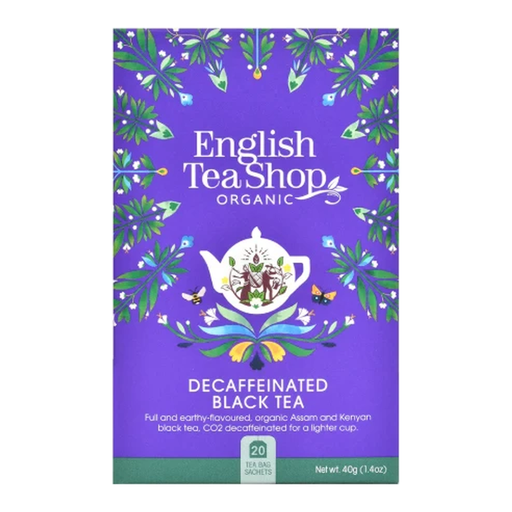
English Tea Shop Organic Decaffeinated Black Tea 20g
An organic-labelled decaffeinated black tea in a 20g pack. Check the bag or sachet count before planning replenishment, and inspect the current pack’s certification details if your office needs them. Decaf tea is not necessarily caffeine-free.
View on Joybuy
 No image available
Pukka Organic Three Mint Herbal Tea 20 Sachets
A 20-sachet mint infusion described as naturally caffeine-free, for an office offering an alternative to decaf black tea. It is a herbal drink, not a black-tea substitute in flavour. Check the current pack’s organic certification details if required for purchasing.
View on Joybuy
 No image available
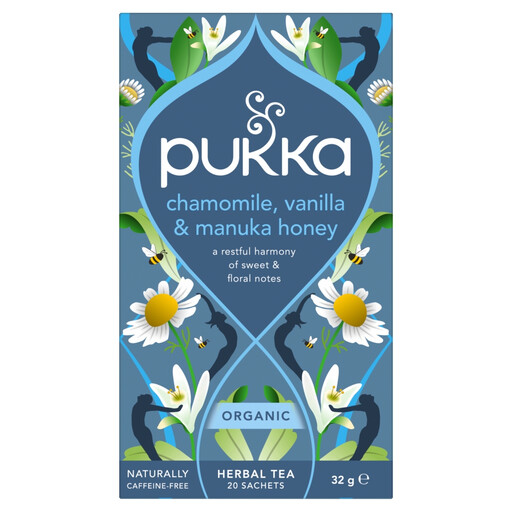
Pukka Chamomile Vanilla & Manuka Honey Herbal Tea 20 Sachets
A chamomile-led herbal infusion described as caffeine-free, with 20 individually wrapped tea bags for protected single portions. It differs from black tea in flavour. Read the pack’s cautions if chamomile-family allergies, pregnancy or other health concerns are relevant, and check its current organic certification details if your office requires them.
View on Joybuy
Office tea questions
How can I check an organic tea claim in the UK?
Look for the organic claim and current certification details on the pack. Department for Environment, Food & Rural Affairs guidance dated 20 August 2025 says food labelled organic must meet organic production rules, contain at least 95% organic agricultural ingredients, and have the product and suppliers certified by an approved organic control body.
Is decaf black tea caffeine-free?
No: Twinings explains that minor traces of caffeine can remain after tea is decaffeinated. If the office needs a caffeine-free choice, check the claim and ingredients on a particular herbal infusion; Pukka describes its Three Chamomile tea as naturally caffeine-free.
Should an office choose loose tea bags or envelopes?
Choose according to use, storage and whether protected individual portions matter. Clipper presents its 25-envelope organic decaf pack for catering and also lists 80 bags and 250 envelopes; a larger count makes more sense once regular demand is clear. Check wrapping on the particular pack rather than assuming every tea bag comes in an envelope.
How should office tea bags be stored?
Keep them in a cool, dry place, following the pack instructions. Clipper gives this storage advice for its Organic Everyday Decaf 80 Tea Bags.


