Late-night black-tea drinkers
Decaf black tea keeps the choice close to a conventional supper-time brew. Compare the exact blend, caffeine statement and brewing directions if you usually drink your tea with milk.


Choose decaf black tea if you want a familiar supper-time cup, with or without milk, while reducing caffeine; decaf green tea offers a different tea flavour but can also retain caffeine. If avoiding residual caffeine matters more than keeping a tea-leaf flavour, choose a herbal or fruit infusion labelled caffeine-free and check its ingredients.
The useful starting point is whether you want to keep the flavour of tea leaves or avoid the residual caffeine that decaffeinated tea can retain.
Decaf black tea keeps the choice close to a conventional supper-time brew. Compare the exact blend, caffeine statement and brewing directions if you usually drink your tea with milk.
Twinings notes that decaffeinated tea can retain minor traces of caffeine. If those traces matter to your choice, look for an infusion labelled caffeine-free and read its ingredient list rather than relying on the word 'herbal' alone.
If organic, Fairtrade or other sourcing claims influence your purchase, check them on the exact decaf product. A claim attached to one blend need not describe every tea from the same brand.
Decide first whether a black-tea flavour, a different tea style or avoiding residual caffeine matters most; then compare the particular packs you would buy.
| Priority | What to check | Your needs |
|---|---|---|
| Caffeine | Read the exact product's caffeine statement; decaf does not necessarily mean caffeine-free. Twinings states that its English Breakfast Decaffeinated 20 Envelopes blend contains tea decaffeinated to 0.02% caffeine, while Tesco's listings state 0.2% for Tetley's 40-bag pack and less than 0.2% for PG Tips' 70-bag pack. Do not assume those figures apply to other packs. | I want less caffeine with supper, but I need to know whether a small residual amount matters to my choice. NHS Every Mind Matters notes that caffeine in tea can make people feel more awake. |
| Tea style | For a familiar cup, compare decaf black-tea blends. If you prefer a different tea-leaf flavour, consider decaf green tea; if avoiding residual caffeine takes priority, check the label and ingredients of a caffeine-free infusion. | A black tea I can drink with milk appeals to me; on other evenings, I might prefer a different flavour or an infusion without caffeine from tea leaves. |
| Brewing | Follow directions for the exact blend rather than using one time for every decaf tea. Tesco's cited listings give 1–2 minutes for PG Tips Decaf 70 Tea Bags and 2–3 minutes for Tetley Decaffeinated 40 Tea Bags. | At supper, I want straightforward preparation and a cup brewed to suit the blend I bought. |
| Pack and sourcing | Compare bag count, weight and the current unit price on like-for-like listings. Check organic, Fairtrade or other sourcing claims on the particular product, rather than across a whole brand. | A smaller pack may suit occasional evenings; for regular use, I would compare larger packs without overlooking the sourcing information I care about. |
Decaffeinated tea can retain traces of caffeine, as Twinings explains. A decaf label alone does not tell you the residual amount for a particular blend.
Check the exact product declaration. If avoiding residual caffeine is important, look for an infusion labelled caffeine-free and check its ingredients.
A tea positioned for bedtime may still be decaffeinated tea rather than a naturally caffeine-free infusion. Its name also cannot tell you how caffeine will affect your own evening routine.
Choose the flavour route you want first, then check whether the product contains tea leaves and what its caffeine statement says.
Decaf teas come in different bag counts and weights, so a pack total does not provide a like-for-like comparison.
Compare the current unit price alongside bag count and weight, then choose a pack size you expect to use.
Organic, Fairtrade and other sourcing descriptions belong to particular products; they do not establish the caffeine level or flavour of an entire range.
Read the claims and ingredients on the exact decaf tea you intend to buy.
These ranges offer different black-tea styles and product-specific claims; brand inclusion here does not describe the selection in the Joybuy section below.
Yorkshire Tea presents its Decaf blend as a black-tea option for lower-caffeine and bedtime drinking.
Tetley offers everyday decaf black tea in different pack sizes.
PG Tips Decaf is a black-tea option for shoppers considering a shorter stated brewing time.
Twinings lists several decaffeinated tea styles, including black and green tea, as well as infusion options.
Clipper presents Organic Everyday Decaf as a Fairtrade and organic black-tea blend.
Tesco Decaff Original is an own-label black-tea option listed as an 80-bag, 250g pack.
These products are decaf black teas for a familiar supper-time cup. If your priority is avoiding residual caffeine rather than keeping a black-tea flavour, check caffeine-free infusions separately.
 No image available
An 80-bag decaf tea option if you regularly want a black-tea cup after supper. Check this pack's caffeine declaration if the residual amount matters to you; a figure stated for another Tetley pack need not apply here.
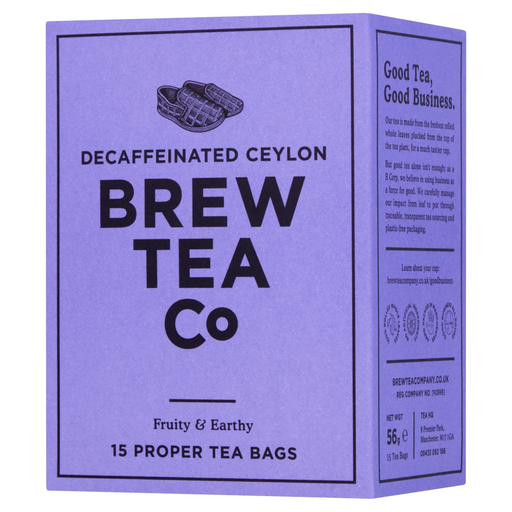 No image available
The 15-bag format may suit occasional supper-time cups. Its CO2 decaffeination description does not establish how much caffeine remains in a prepared cup, so check the current pack if that distinction matters.
 No image available
This 80-bag decaf black tea suits a shopper comparing organic and Fairtrade claims as well as pack size. Clipper says its Organic Everyday Decaf uses carbon dioxide decaffeination; check the pack for caffeine information if residual traces matter.
 No image available
A 250g choice for someone who wants Yorkshire Tea's decaf black-tea blend after supper. Yorkshire Tea positions its Decaf blend for lower-caffeine drinking, but check the exact pack if you need a stated residual-caffeine level.
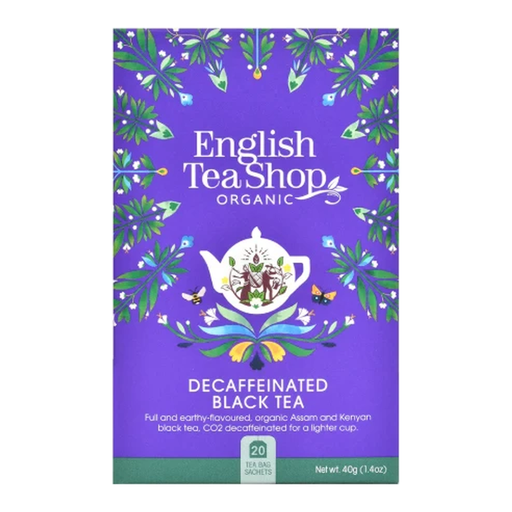 No image available
This 20g pack offers an organic decaf black-tea option for an occasional supper-time cup. If you are comparing caffeine figures, confirm what the figure on the current pack measures before treating it as an amount per brewed cup.
Not necessarily. Twinings says minor traces of caffeine can remain after decaffeination. Check the statement on the exact tea you are buying; if avoiding residual caffeine is your priority, look for an infusion labelled caffeine-free and check its ingredients.
Choose decaf black tea if you want a familiar tea-leaf flavour with less caffeine than ordinary black tea. If avoiding residual caffeine matters more, choose an infusion labelled caffeine-free and check its ingredients. NHS Every Mind Matters notes that caffeine in tea can make people feel more awake and suggests herbal tea as a possible alternative before bed.
Decaf green tea is worth considering if you want a tea-leaf drink but not a conventional black-tea cup. It is still decaffeinated tea, so check its caffeine statement rather than assuming it contains none.
No. Twinings states that its English Breakfast Decaffeinated 20 Envelopes blend contains tea decaffeinated to 0.02% caffeine. Tesco's cited listings state decaffeination to 0.2% for Tetley's 40-bag pack and less than 0.2% caffeine for PG Tips' 70-bag pack. Compare declarations on the particular products, not across whole brands.
Follow the directions for your exact blend. Tesco's listings recommend 1–2 minutes for PG Tips Decaf 70 Tea Bags and 2–3 minutes for Tetley Decaffeinated 40 Tea Bags; those times should not be assumed to suit every decaf tea.