Hosts serving caffeine-conscious guests
A labelled caffeine-free chai-style infusion gives you a spiced option to set alongside coffee without assuming everyone wants regular black tea.


For guests avoiding caffeine, choose a herbal or rooibos chai explicitly labelled caffeine-free; Pukka Spiced Vanilla Chai and Tick Tock Chai Relax are examples described that way by their makers. If guests want a conventional black-tea cup while cutting down on caffeine, decaffeinated tea is another option, but it can retain traces of caffeine and does not necessarily contain chai spices.
The useful distinction is whether guests want no caffeine from the tea base or simply less caffeine in a familiar black-tea drink.
A labelled caffeine-free chai-style infusion gives you a spiced option to set alongside coffee without assuming everyone wants regular black tea.
Look for a herbal or rooibos chai explicitly labelled caffeine-free. Twinings notes that decaffeinated tea can retain minor traces of caffeine.
Decaffeinated black tea preserves the black-tea base, but the Twinings and Clipper decaf products described here are not chai blends. Offer a separate spiced option if chai flavour matters.
Start with the caffeine statement and tea base, then choose a spice profile and serving format that work for the group.
| Priority | What to check | Your needs |
|---|---|---|
| Caffeine status | Read the exact pack claim and identify a herbal, rooibos or decaffeinated black-tea base. Twinings says minor traces of caffeine can remain in decaf tea. | For a guest avoiding caffeine, I would choose an infusion explicitly labelled caffeine-free, rather than treat “decaf” as the same claim. |
| Chai flavour | Check the individual ingredient list for the spices and flavourings you want. Pukka describes cardamom, ginger, cinnamon and vanilla in its Spiced Vanilla Chai. | I want a spiced chai-style cup, not plain decaffeinated black tea. A rooibos or herbal base will also taste different from black-tea chai. |
| Serving format | Compare portioning, brewing instructions and equipment. Tick Tock gives Chai Relax tea bags a 2–4 minute infusion; True Tea Co. specifies about 2 g per 200 ml and 5–8 minutes for its loose-leaf Chai Rooibos Tea. | For self-service, individual bags would be simpler. If I can measure the leaves and prepare a pot, loose leaf is another option. |
| Ingredients for guests | Keep the chosen tea’s ingredient information available, and check any milk or other additions separately. Do not assume chai blends have identical recipes. | Guests should be able to check the particular drink and additions before choosing, especially if they have allergies or dietary restrictions. |
Pukka describes Original Chai as containing black tea, while it labels Spiced Vanilla Chai caffeine-free. The flavour name alone does not establish caffeine status.
Check the exact product name, tea base and caffeine statement before putting it on the drinks table.
Twinings says minor traces of caffeine can remain after decaffeination. Guests avoiding caffeine need to be able to tell it apart from a labelled caffeine-free infusion.
Label the options separately, such as “decaf black tea” and “caffeine-free rooibos chai”.
Drink Me Chai describes its Spiced Chai Latte as lower in caffeine than standard tea and coffee, not caffeine-free. Its Vegan Chai Latte is described separately as containing sweetened black tea.
Check the caffeine claim and tea base on the specific powder rather than treating “chai latte” as a caffeine-free category.
True Tea Co. specifies about 2 g per 200 ml and a 5–8 minute infusion for its Chai Rooibos Tea, so each pot needs measuring and brewing time.
Use tea bags for straightforward self-service, or prepare loose leaf when someone can manage the pot.
Loose leaf also needs an infuser or strainer if one is not already available.
Check the particular blend rather than relying on a brand name: these ranges include both caffeine-free infusions and decaffeinated black teas.
Pukka describes Spiced Vanilla Chai as a caffeine-free herbal chai with cardamom, ginger, cinnamon and vanilla.
Tick Tock describes Chai Relax as a rooibos chai and says its rooibos base is naturally caffeine-free.
Twinings lists conventional black-tea choices in its UK decaf collection, including English Breakfast and Everyday Decaffeinated.
Clipper describes Organic Everyday Decaf as decaffeinated, organically grown black tea and gives a 2–4 minute brewing guide.
This herbal chai option is for serving a spiced, caffeine-free drink in individual tea bags.
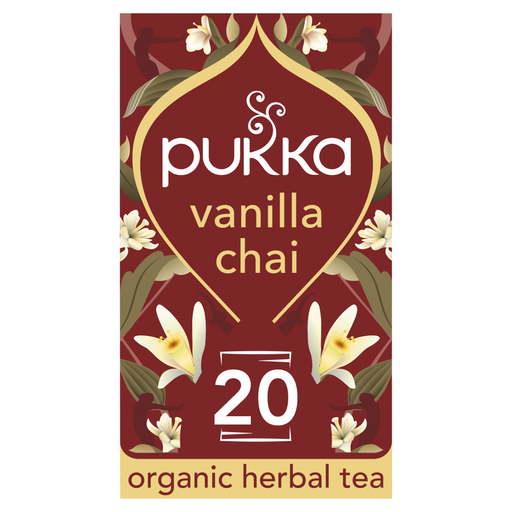 Image unavailable
A portioned herbal chai option for offering a caffeine-free spiced cup alongside coffee. The listing describes it as caffeine-free and lists cinnamon, ginger, cardamom and vanilla; check the pack’s brewing and ingredient information before serving guests with specific requirements.
No. Decaffeinated tea has had most of its caffeine removed, but Twinings says minor traces can remain. If avoiding caffeine is the priority, check for a herbal or rooibos chai explicitly labelled caffeine-free.
Tea bags are simpler for self-service because they are individually portioned. Tick Tock gives Chai Relax a 2–4 minute infusion guide; for a pot of loose-leaf Chai Rooibos Tea, True Tea Co. specifies about 2 g per 200 ml, a 5–8 minute steep and equipment to strain the leaves.
Yes: brew an infusion explicitly labelled caffeine-free and let guests add milk or a separately checked plant-based alternative. Keep the tea and milk packaging available so guests can check ingredients that matter to them.
Make the caffeine status of each drink clear. The NHS advises no more than 200 mg of caffeine a day during pregnancy and identifies tea as a possible source; an explicitly caffeine-free herbal or rooibos chai avoids caffeine from the tea base. Leave decisions about total intake and individual advice to the guest.
Keep the packaging or ingredient information for the exact chai and any milk additions available, rather than assuming every blend has the same recipe. The Food Standards Agency’s food-safety guidance identifies 14 regulated allergens and addresses cross-contamination, so check the information relevant to the products you serve.