Choose decaf beans when a guest wants to reduce caffeine; age alone is not a reason to rule out regular coffee. For either choice, ask about flavour preferences, check that the beans suit the available brewing equipment, and choose a pack size that fits how often you serve coffee.
Who is the coffee for?
Ask what each guest would like to drink before choosing beans on the basis of age.
Hosts serving guests who prefer less caffeine
A clearly labelled decaf bean is worth considering when a guest wants to reduce caffeine. The NHS notes that caffeine can irritate the bladder and make urinary incontinence worse; decaf does not necessarily mean caffeine-free.
Guests who want regular coffee
Someone who wants a caffeinated afternoon cup can choose according to the coffee’s stated flavour and roast description. A darker-sounding name is not a substitute for checking whether a product is decaffeinated.
Households preparing whole beans
Whole beans suit a household with a grinder or bean-to-cup machine. Check the suggested brewing method and grind before buying for an espresso machine, filter brewer or cafetière.
What should you check before choosing?
Decide whether the guest wants to reduce caffeine, then choose a flavour profile and confirm that the beans work with the household’s equipment.
| Priority |
What to check |
Your needs |
| Caffeine |
Look for an explicit decaf label if reducing caffeine matters. Check product-specific caffeine information when the amount is important; the British Coffee Association says decaf is not necessarily caffeine-free. |
I would like a lower-caffeine option for this guest, but I do not want to assume everyone older prefers decaf. The NHS notes that caffeine can worsen urinary incontinence. |
| Flavour and roast |
Read the stated tasting notes rather than treating roast intensity as a caffeine measure. For example, illy describes caramel and floral notes in its decaf beans, while Waitrose describes lemon acidity and caramel in its Peru decaf. |
A smooth-sounding description might appeal to my guests, but I will ask what flavours they actually enjoy. |
| Brewing fit |
Confirm the recommended brewer and whether you can grind whole beans for it. Choose the grind according to the coffee’s instructions and your equipment. |
Our household uses a particular brewer, so I need beans we can prepare with the grinder or machine we have. |
| Pack size and storage |
Compare the pack size with how often you make coffee. Read the pack’s instructions for storing beans after opening. |
If afternoon coffee is occasional, I would rather choose a quantity we can use while the beans still taste as intended. |
Common buying mistakes
-
Assuming every senior needs decaf — or that decaf contains no caffeine
Caffeine preference is individual. The British Coffee Association explains that decaf is not completely caffeine-free, while the NHS notes that caffeine can worsen urinary incontinence.
Ask the guest what they prefer. If they need to limit caffeine for an individual reason, check the product information and follow any advice they have been given.
-
Using roast intensity to judge caffeine content
Roast and tasting descriptions help distinguish flavours, but they do not establish whether a particular bag is decaffeinated.
Check for an explicit decaf label first when reducing caffeine is the aim. Then choose between the available flavour profiles.
-
Buying whole beans without a grinding plan
Whole beans need to be ground before brewing, and the appropriate grind depends on the equipment. A coffee described for espresso or bean-to-cup use may not be the most straightforward choice for another setup.
Check the brewer, grinder and product guidance before ordering.
A separate grinder is needed if the household has neither one nor a suitable bean-to-cup machine.
-
Choosing a large bag for occasional servings
A pack that stays open through infrequent afternoon teas may be harder to use while its flavour remains as intended.
Choose a pack size that matches likely use, and follow its storage instructions after opening.
Relevant coffee ranges
These brand examples illustrate different decaf flavour and brewing descriptions; check the particular product rather than assuming every bean in a range is alike.
Lavazza
Lavazza lists Decaf Intenso whole beans for espresso, moka, filter and French press preparation.
- The Lavazza UK listing gives an intensity of 6/10 and names several brewing methods.
- Check the particular bag’s flavour description against the guest’s preferences.
illy
illy describes its whole-bean decaf as a classic roast with caramel, orange-blossom and jasmine notes.
- illy states that this product contains no higher than 0.1% caffeine.
- The beans still need a suitable grinder or bean-to-cup machine.
Taylors of Harrogate
The Waitrose listing describes Taylors Decaffé Beans as smooth and balanced, with caramel and malt flavours.
- Its stated flavour offers a point of comparison for guests choosing among decaf beans.
- Check the pack’s preparation and storage directions for the bag you buy.
Union
Union recommends its Decaf Blend for espresso or bean-to-cup preparation.
- The roaster’s brewing recommendation helps buyers with that equipment assess fit.
- Confirm that its flavour description suits the guest before choosing it over another decaf.
M&S
M&S describes its Roast & Ritual Decaf Coffee Beans as made from 100% decaffeinated Arabica beans.
- The retailer explicitly identifies the bean type and decaf status for this product.
- Check the particular pack for flavour, preparation and storage details.
Waitrose
Waitrose describes its No.1 Organic Fairtrade Peru Decaf Coffee Beans as single-origin Arabica with lemon acidity and caramel notes.
- The stated tasting notes help distinguish this decaf from other afternoon-coffee options.
- A guest who dislikes noticeable acidity may prefer a different stated flavour profile.
Joybuy coffee bean options
These Joybuy options include clearly labelled decaf beans and other whole-bean coffees to consider by flavour and pack size. For any guest who wants to limit caffeine, check the label of a product that is not explicitly described as decaf.
 No image available
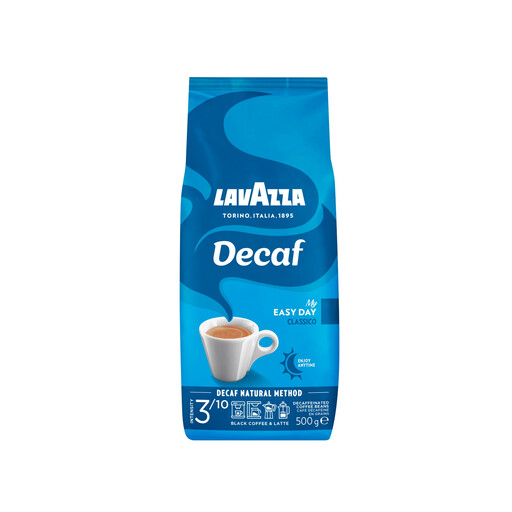
Lavazza Decaffeinated Coffee Beans 500g
The explicit decaf label makes these whole beans an option when a guest wants to reduce caffeine. Consider whether a 500g pack fits how often the household serves coffee; check the pack for brewing directions and caffeine information if those details matter.
View on Joybuy
 No image available
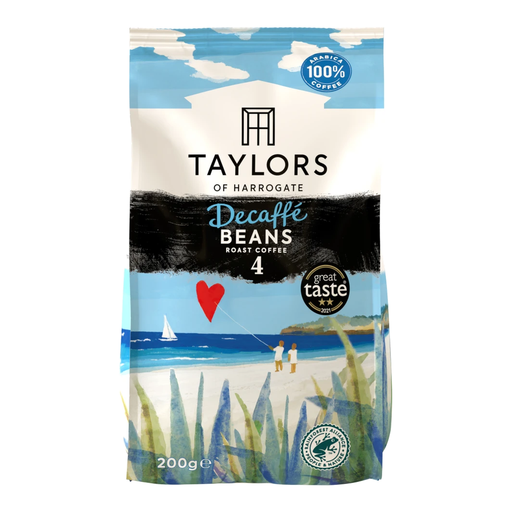
Taylors Decaf Coffee Beans 200 g
These are labelled decaf whole beans in a 200 g pack. The smaller stated pack size may be easier to match to occasional afternoon servings; check its brewing and storage instructions for your setup.
View on Joybuy
 No image available
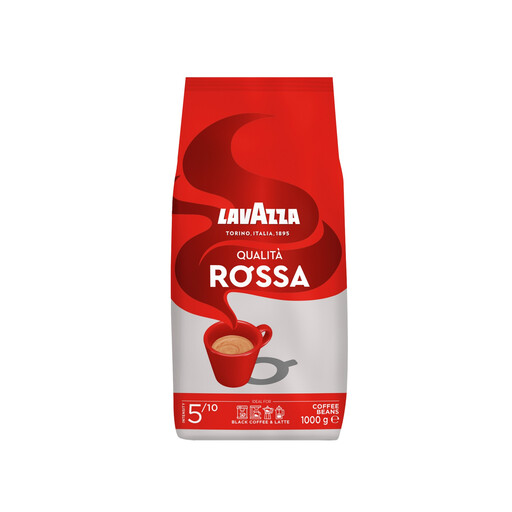
Lavazza Qualita Rossa Coffee Beans 1000g
This 1000g whole-bean pack calls for a check against how often coffee will be served. If a guest wants to reduce caffeine, confirm the product’s caffeine or decaf labelling before choosing it.
View on Joybuy
 No image available
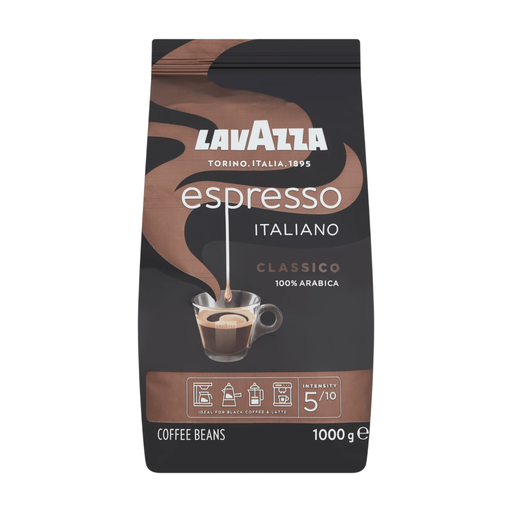
Lavazza Cafe Espresso Coffee Beans 1kg
If you are considering these whole beans for afternoon coffee, check that the preparation directions fit your equipment. A 1kg pack also needs to suit your expected use; confirm the caffeine labelling if a guest wants decaf.
View on Joybuy
 No image available
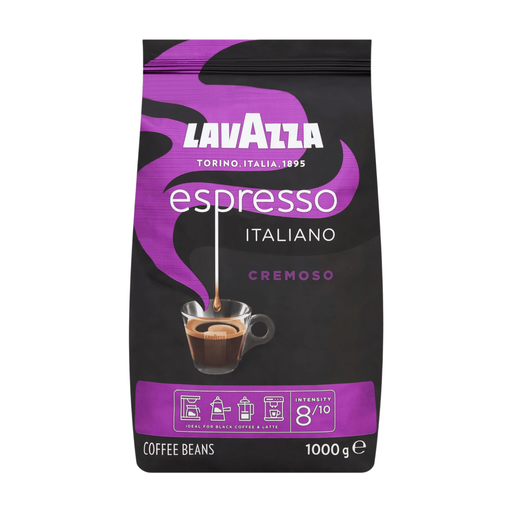
Espresso Italiano Cremoso Beans 1kg
Consider this 1kg whole-bean pack if its preparation directions and quantity fit the household. Check the caffeine or decaf labelling before serving it to someone who wants to reduce caffeine.
View on Joybuy
Questions about afternoon coffee
Should every older guest be served decaf?
No. Ask what the guest prefers rather than using age alone to decide. Decaf is relevant when someone wants to reduce caffeine; the NHS notes that caffeine can irritate the bladder and make urinary incontinence worse.
Is decaf coffee completely caffeine-free?
Not necessarily. The British Coffee Association says decaf does not mean completely caffeine-free, and illy states that its whole-bean decaf contains no higher than 0.1% caffeine. Check the particular product if the amount matters for the guest’s individual advice.
Can I use whole beans for espresso, filter coffee or a cafetière?
Yes, provided you can grind the beans appropriately and the product suits the brewer. Lavazza lists espresso, filter and French press among the preparation methods for its Decaf Intenso beans; check the directions for whichever beans you buy.
What pack size works for occasional afternoon coffee?
Choose a quantity that matches how often the household will brew it, then follow the pack’s directions after opening. This matters particularly when comparing a smaller bag with a 1kg whole-bean pack for infrequent servings.


