Brand and product-line references
These examples help distinguish decaf black-tea chai, caffeine-free herbal chai and plain decaf tea; they do not imply that every product is offered in the selection below.
Tea India
Tea India’s Decaf Masala Chai is a black-tea-based chai sold as decaffeinated.
- Tea India lists black tea, ginger, cinnamon, cardamom, cloves, black pepper and anise in the blend.
- A decaffeinated tea should not be assumed to contain no residual caffeine.
Pukka
Pukka describes its Spiced Vanilla Chai as a caffeine-free herbal blend rather than a black-tea chai.
- The brand describes a blend with cardamom, ginger, cinnamon and vanilla.
- It also identifies liquorice, making the exact ingredient list important where that ingredient needs to be checked.
Twinings
Twinings provides a useful distinction between regular black-tea chai and decaffeinated tea.
- Its decaf information explains that minor caffeine traces can remain after decaffeination.
- Twinings Vanilla Chai lists 58% black tea and should not be mistaken for a decaf chai.
Clipper
Clipper’s Organic Everyday Decaf is an alternative for someone who decides on plain decaffeinated black tea instead of chai.
- Clipper identifies the ingredient as decaffeinated black tea.
- It is not a spiced chai blend.
Tesco
Tesco Decaff Original is another plain decaffeinated tea reference, separate from the retailer’s chai listings.
- Tesco lists Decaff Original as a pack of 80 decaffeinated tea bags.
- Plain decaf tea is not a substitute for chai when the spice blend is essential to the choice.
A caffeine-free chai option on Joybuy
This herbal chai option is for someone considering a spiced afternoon drink without a black-tea base. Check its exact pack before serving if particular ingredients or preparation directions matter.
 No image available
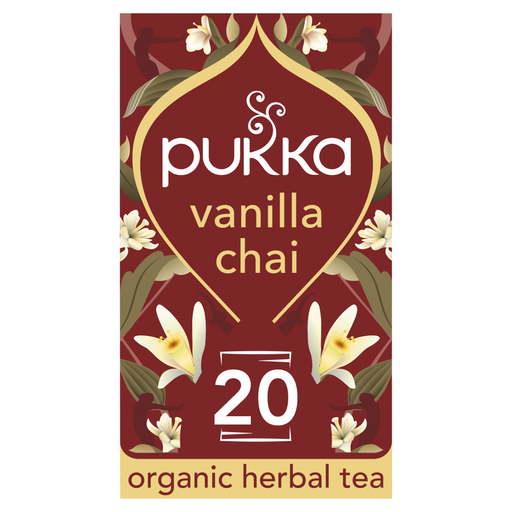
Pukka Vanilla Chai Herbal Tea, 20 Sachets, 40g
The listing describes this as a caffeine-free herbal chai for someone choosing a spiced drink without black tea. It lists liquorice; check the exact pack for ingredient suitability and brewing directions.
View on Joybuy
Questions about decaf chai
Is decaf chai completely caffeine-free?
Not necessarily. Twinings explains that minor caffeine traces can remain in decaffeinated tea. If avoiding residual caffeine matters, look for a clearly labelled caffeine-free herbal chai and check its ingredients.
Does ordinary chai help someone cut back on caffeine?
Do not assume it does. Conventional chai can have a black-tea base: Twinings lists black tea as 58% of its Vanilla Chai. Choose a product explicitly described as decaffeinated or caffeine-free if caffeine reduction is the purpose.
What if the drinker prefers traditional chai with milk?
A decaffeinated black-tea chai keeps the type of tea base they are seeking while reducing caffeine. Tea India sells a Decaf Masala Chai with black tea and spices; follow the preparation directions on the exact pack, particularly if making it with milk.
Should someone with bladder concerns stop drinking afternoon tea?
Not automatically. NHS guidance says tea counts towards daily fluid intake, while Guy’s and St Thomas’ NHS Foundation Trust notes that too little fluid can irritate the bladder. Consider the choice of drink alongside any individual advice about symptoms or fluid intake.
What should I check in a caffeine-free chai besides caffeine?
Read the complete ingredient list and any pack warnings. Pukka identifies liquorice in its Spiced Vanilla Chai; if hypertension or a clinician-directed dietary restriction is relevant, ask the appropriate healthcare professional about individual suitability.


