Who is each format for?
For an afternoon break, the useful starting point is how you will make the coffee, followed by the flavour description and caffeine information on the product you choose.
Afternoon coffee drinkers reducing caffeine
If you want to keep a coffee break while reducing caffeine, choose a preparation format that fits your routine. Instant needs little equipment; ground coffee, beans, bags and pods involve different preparation steps. Decaf can still contain caffeine.
Shoppers with a short break
Classic instant and micro-ground instant can be made with hot water. A coffee bag is another option without a separate brewer; ground coffee and beans need suitable equipment, while pods need the matching machine.
People keeping track of caffeine intake
Do not treat the word “decaf” as a caffeine-free guarantee. Food Standards Scotland and the Food Standards Agency advise pregnant people to limit total caffeine to 200 mg per day, including caffeine from other sources. Check the exact product and seek individual advice if you have a medical reason to avoid caffeine.
What should you check before choosing?
Match the preparation method to the time and equipment available, then compare product-specific flavour descriptions. If caffeine intake is important to you, make that a separate check rather than relying on the format name.
| Priority | What to check | Your needs |
|---|
| Caffeine |
Read the exact pack information; decaf does not mean caffeine-free. Consider caffeine from other drinks and foods if you are tracking total intake. |
I want a coffee-style afternoon drink while keeping track of caffeine, rather than assuming every decaf cup contains none. |
| Preparation |
Check whether the product needs hot water, a suitable brewer, a grinder or a specific capsule machine. Confirm pod compatibility with your machine before buying. |
With only a kettle and a short break, I would choose a format I can actually prepare there; a pod makes sense only if I have the matching machine. |
| Flavour description |
Compare roast, intensity and bean descriptions on the named products, not as verdicts on every decaf. Kenco describes its standard Decaf as a medium instant roast with intensity 7. |
I can use those descriptions to shortlist a style for my afternoon cup, then try a smaller pack before committing to more. |
| Label and storage |
Read the current ingredients and allergen information, particularly for speciality formats. Follow the storage directions on the exact pack after opening. |
If ingredients matter to me, I need the label on the pack I am buying; for ground coffee, I also want storage instructions that fit how I will use it. |
Which brands offer relevant formats?
These brand examples help distinguish preparation formats and named product descriptions; they are not a comparison of every coffee each brand makes.
Nescafé
Nescafé describes Original Decaf, Gold Blend Decaf and AZERA Americano Decaf as instant options for shoppers who want a cup made with hot water.
- Nescafé describes Original Decaf as 100% pure coffee and AZERA Americano Decaf as an Arabica-and-Robusta blend.
- Nescafé’s own guidance says decaf still contains a small amount of caffeine; its flavour descriptions are not independent taste assessments.
Kenco
Kenco offers standard Decaf instant coffee and a Millicano Decaff format that it describes as instant coffee blended with finely milled whole beans.
- Kenco describes its standard Decaf as a medium instant roast with intensity 7.
- Its flavour descriptions apply to the named products and should not be taken as independent taste-test results.
Taylors of Harrogate
Tesco Groceries listed Taylors decaf coffee bags, ground coffee and beans in its UK decaf category, offering different ways to prepare an afternoon cup.
- The listed formats let shoppers choose between a coffee bag and coffee intended for suitable brewing equipment.
- Check the current pack for the particular coffee’s roast, ingredients and preparation instructions.
Tesco
Tesco Groceries listed own-label decaf instant coffees and a Finest Colombian ground coffee alongside branded formats in its UK category.
- Its category offers a way to compare instant and ground-coffee formats alongside other listed decafs.
- Check the current listing and pack for the precise variant and its preparation requirements.
M&S
M&S lists decaf instant, coffee bags and ground coffee, including named products with different ingredient and roast descriptions.
- M&S describes its Micro-Ground Instant Decaf as 95% instant coffee and 5% finely ground roast coffee; its Single Origin Colombian Decaf Ground Coffee is described as 100% Arabica and medium roast.
- Those descriptions are product-specific. M&S advises reading the current label because product information may change.
Decaf coffee options on Joybuy
These options cover instant coffee for a kettle-led break, capsules for a Dolce Gusto machine and ground coffee for a suitable brewer. Choose by the preparation method you can use, rather than treating the formats as interchangeable.
 No image available
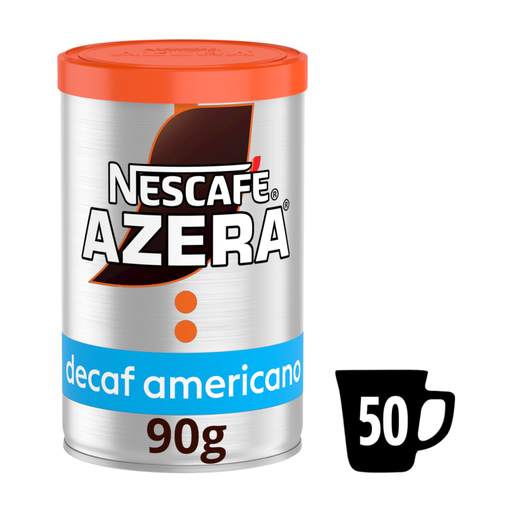
NESCAFÉ Azera Decaf Americano 90g
An instant decaf option for an Americano-style afternoon cup without a separate brewer. Nescafé describes AZERA Americano Decaf as an Arabica-and-Robusta blend. Check the pack if the caffeine in a prepared cup matters to you; decaf does not mean caffeine-free.
 No image available
Kenco Decaff Instant Coffee 100g
Instant decaf for a break with a kettle and cup. Kenco describes its standard Decaf as a medium instant roast with intensity 7; use that as a product description rather than a guarantee of taste. Check the pack if you need to track caffeine intake.
 No image available
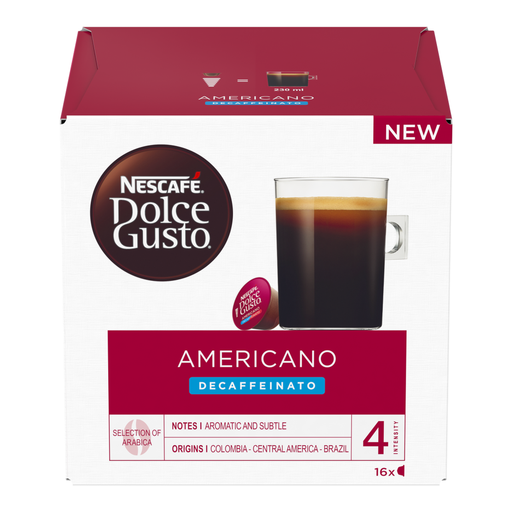
Nescafe Dolce Gusto Americano Decaf Pods, 16 capsules, 128g
A portioned decaf option if your afternoon break takes place where you have a compatible Dolce Gusto machine. The pack contains 16 capsules; confirm compatibility with your exact machine before buying. Decaf is not necessarily caffeine-free.
 No image available
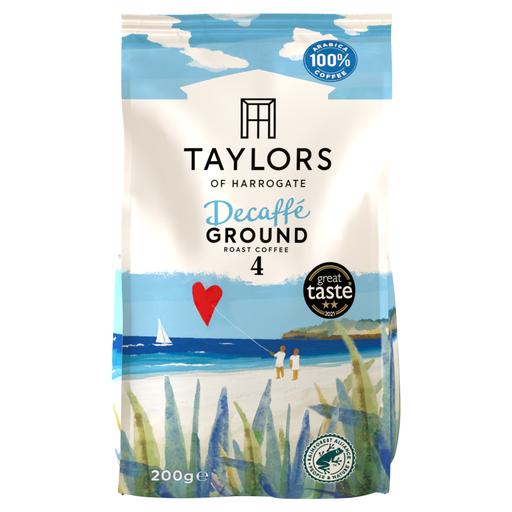
Taylors of Harrogate Decaf Ground Coffee 200g
Ground decaf for a break when you have suitable brewing equipment and time to use it. Check the pack’s preparation and storage instructions for this coffee, as well as its caffeine information if you are tracking intake.
 No image available
NESCAFÉ Original Decaff Coffee 300g
Instant decaf for a straightforward cup during a kettle-led afternoon break. Nescafé describes Original Decaf as 100% pure coffee. If caffeine intake matters to you, check the current pack rather than treating “decaf” as caffeine-free.
Decaf coffee questions
Is decaf coffee completely caffeine-free?
No. Nescafé’s UK guidance says decaf coffee still contains a small amount of caffeine. Check the exact product, and seek individual clinical advice if you have been told to avoid caffeine.
Which decaf format is simplest for a short afternoon break?
Instant decaf is a practical choice when you have a kettle but no brewer. A coffee bag is another option without a separate brewer; ground coffee and beans need suitable equipment, while pods require the matching machine system.
What should I consider about decaf during pregnancy?
Decaf should still be counted as a possible source of caffeine. Food Standards Scotland and the Food Standards Agency advise pregnant people to limit total caffeine to 200 mg per day from all sources; check product information and ask a clinician for advice about your circumstances.
How should I store opened decaf ground coffee?
Follow the instructions on the exact pack. For one M&S Decaf Ground Coffee product, M&S advises an airtight container for two weeks in the refrigerator or four weeks in the freezer after opening; those directions are not a rule for every ground coffee.
Should I check the ingredients on a decaf coffee pack?
Yes, particularly if an allergy or dietary requirement affects your choice. M&S advises reading the current label because product information can change; check the pack you are buying rather than relying on an older description.


