Quick kettle-and-mug break takers
An instant jar suits a break where you have hot water and a mug but do not want to brew ground coffee. Check the preparation directions on the jar you choose.


Start with an instant decaf jar if your morning break calls for a mug, hot water and little preparation. Then choose a flavour direction and a jar size you will use: NESCAFÉ describes Original Decaf as bold and Gold Blend Decaf as smooth, while Kenco describes its Decaf as balanced. Decaf can still contain traces of caffeine, according to NESCAFÉ’s UK FAQ, so do not treat the label as a promise of zero caffeine.
An instant jar suits a break where you have hot water and a mug but do not want to brew ground coffee. Check the preparation directions on the jar you choose.
Decaf keeps coffee on the morning menu without being the same as caffeine-free. NESCAFÉ’s UK FAQ notes that decaffeinated coffee can retain small traces of caffeine.
Brand descriptions offer different starting points, from NESCAFÉ Original Decaf’s stated bold profile to Kenco Decaf’s stated balanced profile. They are descriptions of those products, not the results of a comparative taste test.
Settle the format first, then compare the flavour description, caffeine information and pack size against the way you will use the coffee.
| Priority | What to check | Your needs |
|---|---|---|
| Preparation | Confirm that the pack says instant or soluble coffee. Check its hot-water directions; coffee bags and ground coffee need a different brewing method. | I have a kettle and mug at break time and want to make coffee without brewing grounds. |
| Flavour direction | Read the description for the exact variant. NESCAFÉ calls Original Decaf bold; Kenco describes Decaf as balanced and gives it an intensity rating of 7. These are manufacturer descriptions, not directly comparable taste measurements. | A familiar bold or balanced style matters more to me than treating every decaf jar as interchangeable. |
| Caffeine | Check the pack if a particular caffeine limit matters. NESCAFÉ’s UK FAQ says decaf may contain small traces of caffeine; a decaf name alone does not specify the amount in your mug. | I want to reduce caffeine, but I need to distinguish that from avoiding it altogether. |
| Pack and storage | Compare the stated weight and packaging of the exact product. Follow its storage and best-before information after opening. | A size I am likely to use suits me better than choosing the largest pack on size alone. |
NESCAFÉ’s UK FAQ says decaffeinated coffee can retain small traces of caffeine. That distinction matters if you need to avoid caffeine rather than reduce it.
Check information for the specific product and seek individual professional advice if a caffeine restriction is medically important.
Coffee bags require brewing, so they do not provide the same add-water-and-stir routine as instant coffee.
Check the product format before choosing a flavour; consider bags only if their brewing method fits your break.
Pack information can change. A listing may not show the label you receive, which matters when checking ingredients or allergens.
Read the current pack for its ingredients, allergen information, storage directions and best-before date.
A bigger pack is less useful if it does not fit how often you make coffee or how you will store it.
Compare the stated weight with your likely use and follow the pack’s storage directions.
These references describe particular decaf products and formats; they do not imply that every product from a brand is an instant jar.
Original Decaf and Gold Blend Decaf are two instant-jar options with different brand-described flavour styles.
Kenco Decaf is an instant option for shoppers considering a brand-described balanced flavour.
M&S Gold Decaf is a medium-roast, freeze-dried instant coffee described by Marks & Spencer as made with arabica beans from Fairtrade farms.
Tesco’s UK decaf listing includes Tesco Decaff Gold Instant Coffee 200g as an own-label jar option.
Taylors Decaffé belongs to the broader decaf choice, but the ground-coffee format is not an instant jar.
These options are decaf instant coffees for a hot-water break. Four are presented as jars; the NESCAFÉ Azera option is a tin, so check its packaging if a jar is important to you.
 No image available
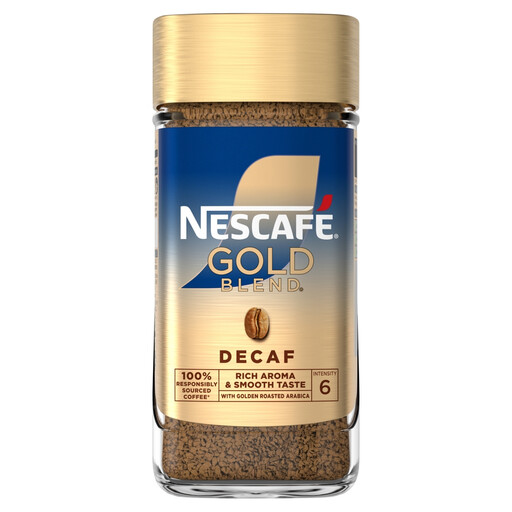
A 190g instant decaf option for a hot-water mug. NESCAFÉ describes Gold Blend Decaf as smooth and well-rounded; that is the brand’s flavour description, not a comparative taste result.
 No image available
This 100g instant decaf option has hot-water preparation directions. Kenco describes its Decaf as balanced; check the pack if you need product-specific caffeine information.
 No image available
A 300g decaffeinated soluble coffee for repeated kettle-and-mug breaks. NESCAFÉ describes Original Decaf as bold; consider whether this pack size fits how often you make coffee.
 No image available
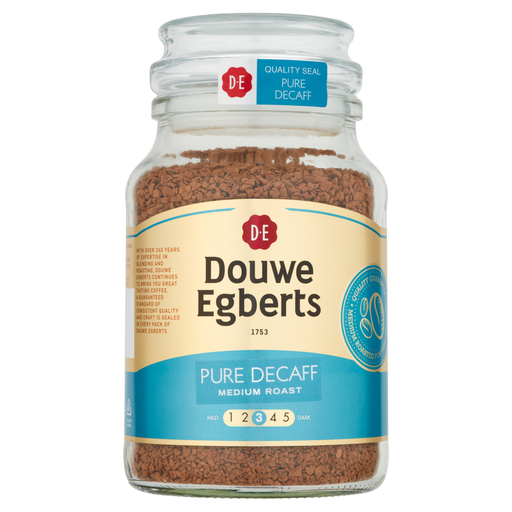
A 190g freeze-dried instant decaf option. Check the pack’s directions for your preferred hot mug: the product descriptions give mixed serving cues. Do not assume decaffeinated means caffeine-free.
 No image available
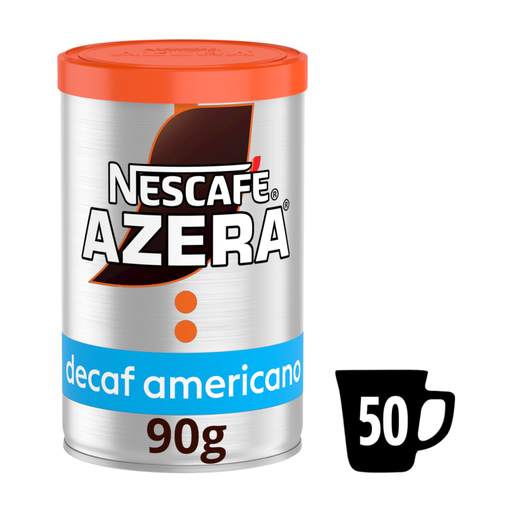
This hot-water decaf option comes in a 90g tin, not a jar. Its stated blend contains decaffeinated soluble coffee and 5% decaffeinated roast and ground coffee.
No. NESCAFÉ’s UK FAQ says decaffeinated coffee can still contain small traces of caffeine. If strict avoidance matters, check information for the particular product and seek individual professional advice where appropriate.
Follow the directions on your particular jar: instant coffee is prepared with hot water rather than brewed as ground coffee. NESCAFÉ’s directions for Gold Blend Decaf specify one teaspoon with 200ml of hot water, but directions can differ between products.
Choose an instant jar for an add-water-and-stir routine. Coffee bags require brewing, so choose that format only if you have time for its pack directions and prefer that method.
Follow the storage and best-before information on the jar you buy. Check its current physical label for ingredients and allergens rather than relying on an older product listing.