What should you check before buying?
Start with the ingredient, then read the caffeine statement on the same product and serving basis you intend to use. Preparation format matters too, but a convenient drink is not necessarily a caffeine-free one.
| Priority |
What to check |
Your needs |
| Leaf source |
Read the ingredient list for green tea, mulberry leaf or nettle. Check whether a product described as “matcha” is tea-leaf matcha or a powder prepared in a similar way. |
I want to know whether I am buying green tea or a caffeine-free alternative, even if both can make a whisked green drink. |
| Caffeine and timing |
Check whether the label says caffeine-free or gives caffeine per gram or per serving. Clearspring states approximately 32mg per 1g of its Premium tea-leaf matcha; Tesco labels its Perfect Ted Original Matcha Concentrate as 30mg per serving. Those are different products and measurement bases. |
For a late revision break, I would rather choose a caffeine-free drink than add caffeine near bedtime. NHS Borders’ guidance for children and young people advises avoiding caffeine in the four hours before bed. |
| Decaf wording |
For a tea-leaf product sold as decaf, check the exact ingredients and any stated residual caffeine per serving. Do not read “decaf” as a promise of zero caffeine or assume a caffeine-free herbal powder contains green tea. |
I want the tea-leaf ingredient if I choose decaf matcha, rather than discovering that the green powder is made from another plant. |
| Preparation |
Check the pack’s directions for the drink or snack you plan to make. Wild Cornish Tea Co describes hot, iced and smoothie uses for its Nettle Matcha; a liquid concentrate has a different serving basis from a dry powder. |
A quick drink with my snack suits me better than a preparation I will not use, but I still need to check its caffeine status. |
Brands and product types to compare
A brand can sell both caffeinated matcha and other kinds of tea or green powder. Check the particular product rather than applying one label across its range.
Clearspring
Clearspring distinguishes its caffeine-free Kuwa Matcha, made from mulberry leaves, from its green-tea matcha powders.
- The Kuwa Matcha ingredient and caffeine-free description make its plant-based format clear.
- Its Premium tea-leaf matcha is not the same option: Clearspring states approximately 32mg of caffeine per 1g of dry powder.
Wild Cornish Tea Co
Its 50g Nettle Matcha is presented as a caffeine-free powder for hot or iced drinks and smoothies.
- The named nettle ingredient helps distinguish it from ground green tea.
- Choose it for the stated ingredient and drink format, not for claimed concentration or wellness effects.
Teapigs
Teapigs has a matcha collection, which can be considered when comparing tea-leaf products.
- Check the ingredients and caffeine statement for the particular matcha product; a decaf tea elsewhere in a range does not make matcha decaf.
JING Tea
JING Tea presents decaffeinated and naturally caffeine-free teas as distinct types within its tea range.
- That distinction is useful when reading a product’s tea-leaf ingredients and caffeine wording.
- Check a matcha product’s own details rather than assuming the description of a separate decaf tea applies to it.
A Joybuy matcha option
This roasted tea-powder option is for a revision drink when caffeine is acceptable. It is not a substitute for a clearly labelled caffeine-free mulberry- or nettle-leaf powder.
 No image available
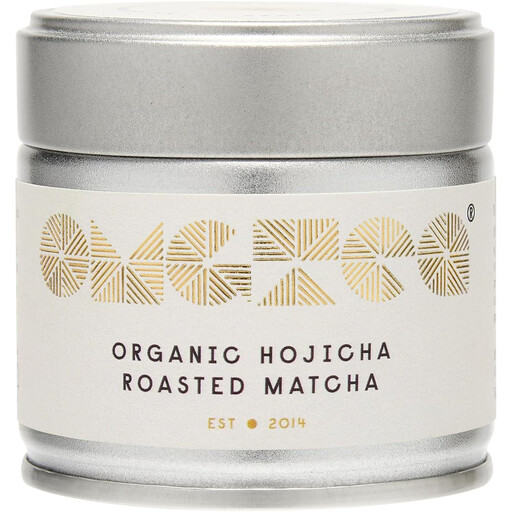
OMGTea Organic Hojicha Roasted Matcha 30g
For a revision break when caffeine is acceptable, this is an organic roasted matcha powder in a 30g pack. Check the pack’s caffeine information and the amount you plan to use if preparing it later in the day; roasting alone does not establish that a tea powder is decaf.
View on Joybuy
Questions about decaf matcha
Is caffeine-free “matcha” always made from green tea?
No. Conventional matcha is ground green-tea leaf, while Clearspring’s caffeine-free Kuwa Matcha is made from mulberry leaves and Wild Cornish Tea Co’s Nettle Matcha is made from nettle. Check the ingredient if tea-leaf matcha is what you want.
Should I choose ordinary matcha for late-night revision?
Ordinary matcha is not a caffeine-free choice. Clearspring states approximately 32mg of caffeine per gram for its Premium tea-leaf matcha, and NHS Borders’ sleep guidance for children and young people advises avoiding caffeine in the four hours before bedtime. Check the amount you would drink and consider a caffeine-free alternative for a late break.
How do I compare caffeine figures on matcha products?
Check the unit before comparing figures: caffeine per gram of dry powder is not the same basis as caffeine per prepared serving. Clearspring gives approximately 32mg per 1g for its Premium matcha powder, whereas Tesco labels its Perfect Ted Original Matcha Concentrate as 30mg per serving. Use the amount you will actually consume.
Is a matcha concentrate a decaf alternative?
Only if that particular concentrate’s label supports the claim. Tesco’s Perfect Ted Original Matcha Concentrate is labelled 30mg of caffeine per serving, so it is not a caffeine-free alternative.
What should I check on a product sold as decaf matcha?
Read the package or product details for the botanical ingredient, the caffeine or residual-caffeine statement and its serving basis. Then check the preparation instructions and any allergen information relevant to your purchase. “Decaf” and “caffeine-free” should not be treated as interchangeable descriptions.


