Who is this tea for?
The useful starting point is what you want in the cup: black-tea character, a particular flavour, or a pack that suits how often you make tea.
Evening black-tea drinkers
If you want a familiar winter mug while reducing caffeine later in the day, compare everyday decaf black tea with breakfast-style blends. Decaf does not necessarily mean caffeine-free: Twinings describes decaffeination as removing nearly all caffeine, while Nottingham and Nottinghamshire NHS patient information notes that very low levels may remain.
Households making tea regularly
Bag count and net weight help you choose a practical supply for home use. Check both on the exact pack rather than assuming that two boxes with similar names contain the same amount of tea.
Ingredient and sourcing-led shoppers
If organic ingredients, Fairtrade claims or a flavour addition matter to you, read the details for the particular blend. Clipper lists decaffeinated organically grown black tea for Everyday Decaf, while its Earl Grey Decaf also lists natural bergamot flavouring.
What should you check before choosing?
Choose the kind of drink first, then check caffeine wording, ingredients and pack details on the version you intend to buy.
| Priority |
What to check |
Your needs |
| Caffeine expectations |
Distinguish decaffeinated black tea from an infusion labelled caffeine-free. Read the exact product label; check an infusion’s ingredients too. |
I want a black-tea drink with less caffeine, but I may need a different product if avoiding caffeine entirely is essential. |
| Flavour |
Look for plain everyday black tea, a named breakfast blend or Earl Grey with bergamot. Check any brewing guidance for the exact blend. |
For a milky mug, I’d start with a black-tea blend. If I want a citrus note instead, I’d consider Earl Grey. |
| Household supply |
Compare bag count and net weight on each pack. Confirm how many bags are included when a listing gives weight alone. |
A larger pack may suit tea made every day; a smaller one lets me try a different blend without buying as many bags. |
| Ingredients and sourcing |
Read the exact ingredient list, flavour additions and product-specific organic or Fairtrade claims. Check current allergen information if relevant. |
I’d like to know whether I’m buying plain black tea or a flavoured blend, and whether the sourcing claims apply to this pack. |
| Storage |
Follow the pack’s storage instructions. If using a jar, check that it suits the amount of tea and can be kept where the pack directs. |
A jar would organise my tea at home, but it would not tell me whether the tea inside is decaf black tea or a caffeine-free infusion. |
Brand and range references
These examples help distinguish tea styles and product-specific claims; a brand name alone does not establish the details of every pack in its range.
Yorkshire Tea
An everyday decaf black-tea option for shoppers who already favour Yorkshire Tea’s style.
- Tesco describes its 160-bag, 500 g Decaf pack as decaffeinated black tea.
- Yorkshire Tea’s description of a flavour-packed bedtime brew is the brand’s own positioning, not a guarantee of flavour preference or complete caffeine removal.
Tetley
An everyday decaf option with several bag counts listed by Tesco.
- Tesco lists 40-, 80- and 160-bag decaf packs, giving households a choice of pack size.
- Check the ingredients and brewing directions for the Tetley pack you choose; a claim about another product in the range need not apply to it.
PG Tips
A familiar-name decaf black-tea option in several pack sizes.
- Tesco lists PG Tips decaf packs containing 40, 70 and 160 bags.
- Check the current pack’s weight and ingredients alongside its bag count when comparing variants.
Twinings
A range to consider when the named blend matters, including English Breakfast and Earl Grey decaf options.
- Twinings describes English Breakfast Decaffeinated as a blend of Assam, Kenyan and Ceylon teas and gives a two-to-three-minute brewing guide.
- Its English Breakfast product page gives differing decaffeination figures in separate sections; confirm current pack information if an exact caffeine figure matters.
Clipper
Product-specific organic ingredients and sourcing claims may matter to shoppers comparing Everyday Decaf with Earl Grey Decaf.
- Clipper lists decaffeinated organically grown black tea in Everyday Decaf; its Earl Grey Decaf also lists natural bergamot flavouring.
- Clipper’s Fairtrade statement for Earl Grey Decaf concerns that product’s sourcing, not its flavour or residual caffeine level.
Tesco
An own-label decaf tea route for shoppers comparing everyday pack sizes.
- Tesco lists its Decaff Original Tea as an 80-bag, 250 g pack.
- A retail listing does not establish how its flavour compares with another blend; check the current product details for the pack you want.
Decaf tea options on Joybuy
These tea-bag options include everyday decaf black tea, a Ceylon-style blend and a pack described as organic and Fairtrade. Compare their stated bag counts and weights with the kind of winter cup you want.
 No image available
Clipper Organic Fairtrade Decaf Everyday, 80 bags, 277 g
For an everyday decaf black-tea mug when organic and Fairtrade sourcing claims matter. The listing describes an 80-bag, 277 g pack and recommends cool, dry storage; check the current pack for its sourcing details and caffeine information.
View on Joybuy
 No image available
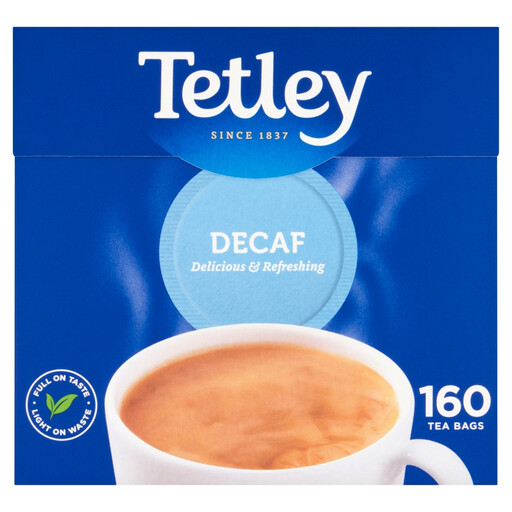
Tetley Decaf Tea, 160 bags, 500 g
An everyday decaf black-tea option for a household using tea bags regularly. The pack is listed as 160 bags and 500 g, with decaffeinated black tea stated in the ingredient information.
View on Joybuy
 No image available
Taylors of Harrogate Yorkshire Tea Decaf, 250 g
For a familiar Yorkshire Tea decaf black-tea blend. The listing states a 250 g net weight and describes the blend as bold; check the bag count if that determines how much tea you need.
View on Joybuy
 No image available
Tetley Decaffeinated Tea, 80 bags, 250 g
An 80-bag everyday option if you want fewer bags than the 160-bag Tetley pack. The listing states 250 g and suggests brewing for two to three minutes; check the current pack if precise ingredient wording matters.
View on Joybuy
 No image available
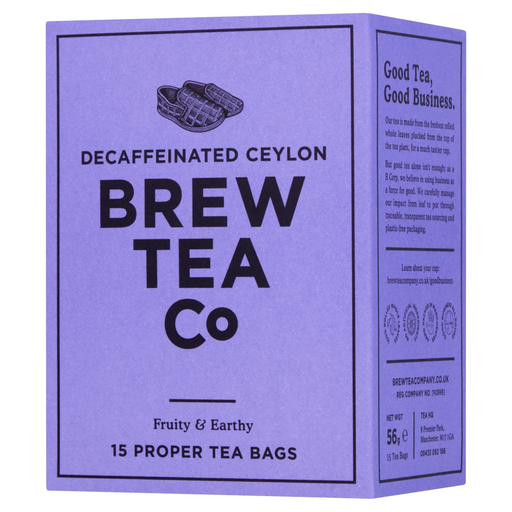
Brew Tea Co CO2 Decaffeinated Ceylon Tea, 15 bags, 56 g
A smaller pack for trying a decaffeinated Ceylon-style black tea. The listing states 15 bags and 56 g and describes organic black tea and a CO2 decaffeination method; check the current pack if its precise caffeine content matters.
View on Joybuy
Frequently asked questions
Is decaf tea completely caffeine-free?
Not necessarily. Twinings says decaffeination removes nearly all caffeine from tea, and Nottingham and Nottinghamshire NHS patient information notes that very low levels can remain in decaf drinks. Check the exact label if complete avoidance matters; a naturally caffeine-free infusion is a different kind of drink, so check its ingredients as well.
Which decaf tea should I try for a milky winter mug?
Start with everyday decaf black tea or a decaf breakfast blend if you want black-tea character with milk. Tesco describes Yorkshire Tea Decaf as decaffeinated black tea, while Twinings describes its English Breakfast Decaffeinated as a robust blend. The flavour you prefer will depend on the particular tea and how you brew it.
Do I need a jar to buy decaf tea?
No. A jar is a storage choice, not a type of decaf tea. Choose the tea’s flavour and pack size first; if you move the bags into a jar, retain the pack details you need and follow its storage instructions.
How long should I brew decaf black tea?
Follow the directions for your chosen blend rather than applying one time to every tea. Twinings recommends two to three minutes for its English Breakfast Decaffeinated, or four minutes for a stronger cup; Clipper gives two to five minutes for its Earl Grey Decaf.
What should I check if ingredients or allergens matter?
Read the current ingredient list and allergen information for the exact tea, especially if it has added flavouring. Clipper’s Earl Grey Decaf lists natural bergamot flavouring, whereas its Everyday Decaf lists decaffeinated organically grown black tea. UK government allergen guidance says food businesses must provide allergen information to consumers.


