Who is this for?
The deciding factor is what else the laptop needs to do alongside playing deck-building games.
Deck-builder-first players
If games such as Slay the Spire or Balatro make up most of your library, start with their published requirements and your everyday computing needs. A gaming label alone does not tell you whether extra graphics hardware will be useful.
Mixed-library gamers
If you also plan to play more graphically demanding PC games, assess the graphics processor, memory, storage and screen on the specific model. Gaming-laptop families such as Lenovo LOQ, Acer Nitro V and HP Victus contain different configurations.
Study or work users who game
If one laptop must handle daily applications and games, consider its size, screen, connections and warranty alongside game compatibility. A configuration that suits a desk setup may be less convenient to carry regularly.
What matters when choosing?
Check your planned games first, then decide how much wider-gaming capability and day-to-day portability you need.
| Concern |
What to check |
Who this matters to |
| Proportionate hardware |
Compare each planned game’s published processor, graphics, memory and storage requirements with the exact laptop configuration. |
If I mainly play deck-builders, I want a laptop that runs my games and everyday applications without choosing graphics hardware for games I do not plan to play. Around 45% of consumers put that proportionate fit first. |
| Wider gaming headroom |
Check the precise graphics processor, installed memory and SSD capacity against the other games and tasks you intend to use. |
When my library also includes demanding 3D games, I need to judge the laptop against those games, not just its deck-building use. For around 33% of consumers, wider gaming capability is the primary concern. |
| Everyday portability |
Compare the model’s size and weight, screen, keyboard, ports, supplied adapter and warranty. |
If I carry the same computer between study or work and gaming, its daily-use fit matters more to me than a higher gaming specification. That is the main priority for around 22% of consumers. |
Brands to consider
These ranges offer different configurations to examine; the range name is not a substitute for checking an individual laptop.
Lenovo
Lenovo LOQ is a gaming-laptop range to examine if you also want dedicated graphics for games beyond deck-builders.
- Lenovo UK lists LOQ examples with 16 GB DDR5 memory, SSD storage and NVIDIA laptop graphics.
- The cited LOQ configurations have different graphics processors, storage capacities and displays. Check the exact part number rather than applying one model’s specifications to another.
Acer
Nitro V 15 is Acer’s 15.6-inch gaming-laptop line for buyers considering a dedicated-GPU format.
- Acer says Nitro V 15 configurations can be offered with a GeForce RTX 5060 Laptop GPU and a Full HD display of up to 180 Hz.
- Those are range-level possibilities, not specifications shared by every Nitro V 15. Confirm the model code and installed components.
HP
HP Victus is a gaming-laptop family that can be considered for a wider game library alongside everyday use.
- One HP Store UK Victus 15 configuration lists 16 GB RAM, a 512 GB SSD, GeForce RTX 4050 graphics and a 144 Hz Full HD display.
- HP Support notes that components vary by configuration. Those figures do not describe every Victus laptop.
ASUS
ASUS positions TUF Gaming as a portable gaming-laptop family and ROG as a more premium gaming family.
- ASUS describes TUF Gaming models with gaming-focused displays and graphics options.
- That manufacturer positioning does not establish the specification or suitability of a particular model. Check its configuration and warranty against your intended games and daily use.
Joybuy gaming laptops
These models have dedicated graphics and are most relevant if deck-builders are part of a wider gaming or creative workload. For deck-building games alone, compare your games’ requirements before deciding whether this kind of laptop is necessary; the larger-screen and higher-spec options also warrant a closer look at portability.
 No image available
Lenovo LOQ Essential 15ARP11, Ryzen 7 170, RTX 5050
Consider this configuration if your plans extend beyond deck-builders to games for which dedicated graphics are relevant. The product name specifies 16 GB RAM, a 1 TB SSD and a 15.6-inch Full HD display at 144 Hz. Compare its complete configuration with your planned games before buying.
View on Joybuy
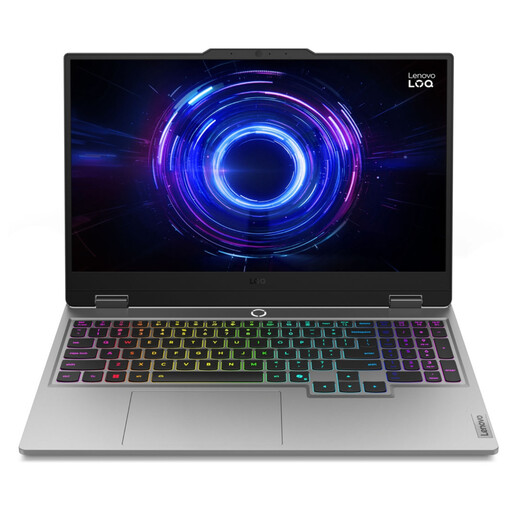 No image available
Lenovo LOQ 15IRX10, i5-13450HX, 24 GB RAM, 1 TB SSD
This is another model to assess for a broader gaming library, but check which graphics configuration the specific product page offers. Its product name identifies 24 GB RAM, a 1 TB SSD and W11H. Confirm the model designation and installed components before comparing it with your games’ requirements.
View on Joybuy
 No image available
Acer Nitro V 15 ANV15-52, i5-13420H, RTX 4050
Assess this model against any games you play beyond deck-builders. Its product name specifies 16 GB RAM, a 512 GB SSD and a 15.6-inch Full HD display. Check the exact display panel before ordering, as the product information gives conflicting 144 Hz and 165 Hz refresh rates.
View on Joybuy
 No image available
Lenovo Legion Pro 7 16IAX10H, RTX 5090, 83F5000UUK
Consider this configuration for planned demanding games or creative workloads beyond deck-builders, rather than for the deck-building category alone. Its product name specifies an Intel Core Ultra 9 processor, 64 GB RAM, a 2 TB SSD and a 16-inch screen. Check its weight, keyboard layout and warranty if it will also be a regularly carried laptop.
View on Joybuy
 No image available
HP OMEN 17-db1000na, Ryzen AI 7 350, RTX 5060
This larger-format model is worth comparing if you expect to play games beyond deck-builders and mainly use the laptop at a desk. Its product name specifies 16 GB RAM, a 1 TB SSD and a 17-inch Full HD screen. Check its carrying dimensions, keyboard, supplied adapter and warranty if it must also travel regularly.
View on Joybuy
Frequently asked questions
Do I need a dedicated graphics processor for deck-building games?
Not automatically: check the published requirements of the specific games you intend to play against the laptop’s exact processor, graphics and memory. Slay the Spire and Balatro are both deck-builders, but a shared genre does not give every game the same hardware requirements.
Should I choose a 512 GB or 1 TB SSD?
Choose the capacity around your complete collection of games, applications and files, not deck-builders alone. A 512 GB SSD leaves less room for additional local installs than a 1 TB SSD; check the capacity on the exact model you intend to order.
Can I cancel an online laptop order if I change my mind?
For UK distance sales, GOV.UK says sellers must tell customers they can cancel up to 14 days after delivery. Read the seller’s cancellation instructions and applicable return terms before ordering. A request about a faulty laptop is a separate matter: GOV.UK’s returns guidance says a seller may have to repair or replace an item if a fault is discovered after it has been accepted.
What should I do with an old laptop?
Use an appropriate electrical-waste recycling route rather than putting it in ordinary waste. GOV.UK says waste electrical products can be taken to a local household waste recycling centre; check your local authority or retailer for available collection arrangements.


