
24/7 Customer Support

Free returns

Same-day & Next-day Delivery

Quality Guaranteed

Unlock Your Welcome Offers: FREE Delivery | Up to 80% OFF | Free 30-day JoyPlus trial
Download the APP
Choosing decorating paint is not simply a matter of picking a colour. The wrong formula can peel from uPVC, show brush marks on woodwork or leave a ceiling with unwanted sheen. Whether you are refreshing a rented property, renovating a period home or upcycling furniture, matching the paint to the surface and conditions is essential.
A tin labelled “multi-surface” may be suitable for several materials, but that does not mean every surface needs identical preparation. Bare timber, previously gloss-painted doors, masonry, tiles and plastic each present different adhesion challenges.
Check the product description for the specific substrates covered. Paint for uPVC, tiles or radiators should state compatibility clearly rather than relying on vague wording such as “suitable for most surfaces”.
One-coat claims can be useful, but coverage depends on the existing colour, surface porosity, application thickness and whether the substrate is properly prepared. Dark colours, bare plaster and porous wood may still require additional coats or a suitable primer and undercoat.
Look for the stated coverage per litre and remember that manufacturers usually express this as an approximate figure. A rough, absorbent wall will use more paint than a smooth, previously painted surface.
Gloss paint reflects more light and can highlight dents, sanding marks and uneven woodwork. Matt paint disguises minor surface imperfections but may be less suited to areas needing frequent wiping. Satin paint and eggshell paint offer a middle ground, although the exact sheen varies by formulation.
For wall and ceiling paint, matt or ultra-matt finishes are commonly selected where a low-reflective appearance is preferred. For doors, skirting boards, furniture and trim, satin, eggshell or gloss paint may provide a more wipeable finish.
First identify the substrate:
Clean, dry and sound surfaces generally provide a more reliable base. Remove loose paint, grease and dust, and lightly abrade glossy coatings where recommended.
Choose the finish according to the room and level of contact:
For kitchens, hallways, children’s rooms and frequently handled doors, a wipeable finish may be more practical. For ceilings, an ultra-matt wall and ceiling paint can help minimise reflected light.
Compare coverage per litre, touch-dry time and recoat time rather than relying solely on pot size. For example, a 750ml tin may be appropriate for furniture or a door, while a 2.5L tin is more suitable for several doors, a room or substantial preparation work.
Water-based paint usually offers easier tool cleaning and lower odour during application, while solvent-based products may have different drying, ventilation and clean-up requirements. Read the label and technical data sheet before application. Keep windows open where suitable, wear gloves and eye protection, and avoid breathing spray or vapour.
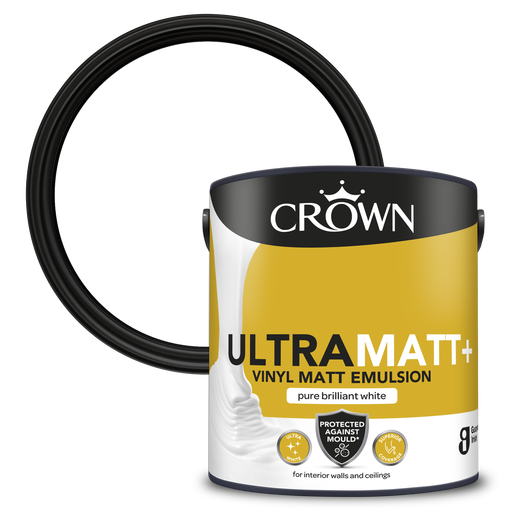
Why This Fits Their Persona: The 2.5-litre size suits a room refresh, while the pure brilliant white colour works across many wall and ceiling schemes.
Its stated use is for interior walls and ceilings, avoiding the mistake of using a trim or exterior coating on large plastered areas.
Ultra-matt finish, pure brilliant white colour and a water-based formulation marketed as 99% solvent-free.
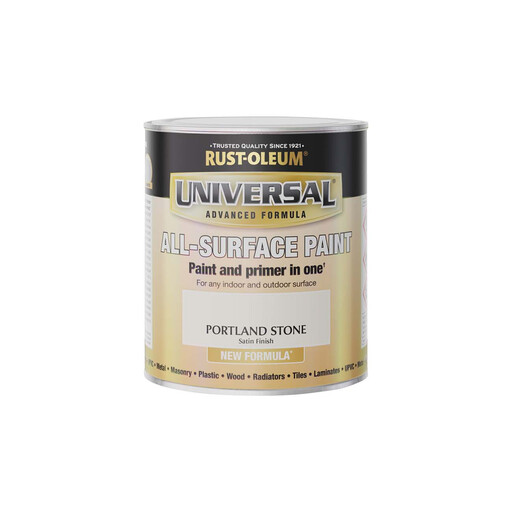
Why This Fits Their Persona: A practical option for decorators who want one product for varied indoor and outdoor items, including furniture, doors and garden features.
The listed compatibility includes wood, metal, masonry, plastics, tiles, radiators, uPVC and ceramics, making the intended scope clearer than a generic multi-use claim.
Satin finish, paint-and-primer formulation, up to 9m² per litre per coat and an approximate four-hour recoat time at 20°C.
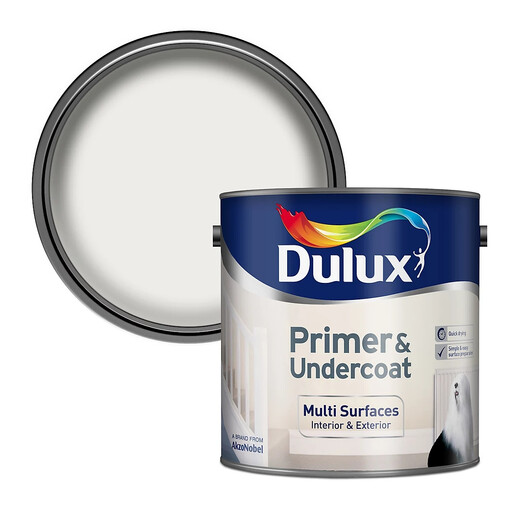
Why This Fits Their Persona: Its larger tin and broad substrate list suit landlords, renovators and decorators preparing several surfaces in one project.
The product specifies wood, metal and masonry use, while also noting that highly resinous wood and corroded metal need specialist primer.
Water-based primer and undercoat, stated coverage of up to 16m² per litre and a two-hour recoat time.
We have compiled a complete, real-time list of products that fully satisfy these strict selection criteria and UK safety regulations.
Only if the label specifically states both interior and exterior suitability. Interior emulsion may not withstand rain, frost or UV exposure, while exterior paint may not be appropriate for enclosed rooms. Always check the intended surface and environment.
It depends on the surface and product. Bare wood, stained timber, rust-prone metal and highly porous masonry commonly need preparation. Some multi-surface products combine paint and primer, but specialist substrates may still require a dedicated primer. Follow the manufacturer’s instructions rather than assuming a separate coat is unnecessary.
Multiply the surface area by the number of coats, then divide by the stated coverage per litre. Allow extra for porous, textured or uneven surfaces. Buying a little more from the same batch can also help maintain consistent colour across a larger project.