A dedicated camera can make sense when your phone cannot frame distant wildlife or sport, or when you want more control over a particular scene. Choose a compact for an easily carried zoom, a bridge camera for long reach without changing lenses, or a mirrorless kit when interchangeable lenses justify the extra equipment; a long zoom alone does not guarantee good results in dim light.
Who may benefit from a dedicated camera?
Distant-subject photographers
If you regularly photograph wildlife or sport from far away, compare built-in optical reach with the telephoto lens you would need for an interchangeable-lens camera. Panasonic and Sony’s published specifications illustrate how fixed-lens zoom ranges differ between models.
Low-light enthusiasts
If you photograph dim scenes, weigh the sensor and lens against the shutter speed needed for moving subjects. Nikon’s wildlife photography guidance notes that fast-moving animals can call for high shutter speeds.
Travel-light photographers
If you want optical zoom or camera controls but need to carry your kit all day, consider the complete camera-and-lens combination rather than body weight alone. OM SYSTEM’s stated body weight, for example, excludes the lens.
What should you compare before buying?
Start with the subjects you want to photograph: how far away they are, how much light is available and how much equipment you will carry. Then compare optical reach, aperture and the complete kit rather than relying on zoom alone.
| Concern |
What to check when buying |
Who this matters to |
| Distant wildlife or sport |
Compare equivalent optical focal lengths using the same still-image aspect ratio; check telephoto aperture and autofocus options for your subject. |
If I photograph wildlife or sport from a distance, I need enough optical reach to frame the subject and focus choices suited to it. Around 31% of consumers put distant-subject reach first. |
| Dim scenes |
Check maximum aperture at the focal length you will use, sensor specification and whether the intended lens is included. Stabilisation does not replace the shutter speed needed for a moving animal. |
When I photograph in low light, I want exposure choices that suit the scene without overlooking subject movement. Around 25% of consumers prioritise low-light control. |
| All-day portability |
Compare ready-to-shoot weight and dimensions, including the lens you will carry, and check the card needed for your intended recording mode. |
If I will carry a camera throughout a trip, I need a kit that is manageable for an ordinary day out. Around 25% of consumers put travel portability first. |
| Outdoor trips and complete kits |
Check protection for both body and lens, the exact kit contents, compatible batteries and cards, and airline rules if you are flying. |
For longer outdoor outings, I need to know whether the complete kit suits the conditions and power needs of the trip. Around 19% of consumers prioritise outdoor practicality and planning the complete kit. |
Buying pitfalls to avoid
-
Treating a bigger zoom number as proof of better distant photographs
Equivalent focal length, image aspect ratio and aperture at the telephoto end describe different considerations. Panasonic lists different equivalent ranges for the FZ82D’s stills and video, so figures are not always like-for-like.
Compare optical ranges for the same kind of recording and check the lens at the focal length you expect to use.
-
Weighing or budgeting for a mirrorless body as if it were a complete travel kit
A body’s weight does not include the lens, and a basic kit may not include the lens you need for distant wildlife. Nikon’s Z50II two-lens kit, for example, specifies the lenses included in that package.
Compare complete, clearly identified kits and check the package contents before buying.
A suitable additional lens, compatible card or spare battery may be needed; check what the selected package includes.
-
Assuming stabilisation and a long zoom will solve dim-light wildlife photography
Stabilisation addresses camera movement, while a moving animal may still require a fast shutter speed. Maximum aperture can also change across a zoom range.
Consider subject movement, available light and telephoto aperture together rather than judging reach in isolation.
Relevant camera brands
These examples cover different camera-and-lens approaches; model specifications should not be treated as a verdict on every product from a brand.
Panasonic
Panasonic’s TZ300 and FZ82D represent a compact zoom and a longer-reach bridge camera.
- Panasonic specifies a 24–360 mm-equivalent range and 1.0-type sensor for the TZ300; the FZ82D is specified at 20–1200 mm equivalent in 4:3 stills.
- The FZ82D has a 1/2.3-type sensor. Its reach specification alone does not establish its performance in dim light or with moving subjects.
Sony
Sony’s RX10 V is an integrated-lens option for buyers who want substantial reach without changing lenses.
- Sony specifies a 24–600 mm-equivalent f/2.4–4.0 lens and a 1.0-type sensor for this model.
- Compare its fixed lens with the reach you need; the specification does not make it a pocket camera or establish results in every shooting condition.
Nikon
Nikon offers both an interchangeable-lens Z50II kit and the fixed-lens COOLPIX P1100.
- Nikon’s Z50II two-lens kit specifies 16–50 mm and 50–250 mm lenses. Nikon specifies a 24–3000 mm-equivalent optical range for the P1100.
- The P1100’s lens cannot be exchanged, and its stated reach alone does not establish suitability for dim light or moving subjects.
OM SYSTEM
The OM-5 Mark II is an interchangeable-lens body presented by OM SYSTEM for travel and outdoor photography.
- OM SYSTEM states a weight of 418 g with battery and SD card, and IP53 weather sealing for the body.
- That weight excludes the lens. Check the chosen lens’s protection separately; the manufacturer’s specification is not an independent field test.
Canon
Canon’s EOS R50 is an APS-C interchangeable-lens option, while the PowerShot SX70 HS is a fixed-lens bridge camera.
- Canon specifies subject-detection autofocus for the EOS R50 and a 21–1365 mm-equivalent, 65× optical zoom for the SX70 HS.
- Canon specifies a 1/2.3-type sensor and f/3.4–6.5 maximum aperture for the SX70 HS; consider its use in dim conditions rather than treating zoom length as an image-quality score.
Joybuy camera choices
These Joybuy listings include compact-style zoom cameras and interchangeable-lens cameras for travel or distant-subject photography. Check each camera’s stated lens and kit contents against the framing you need.
 No image available
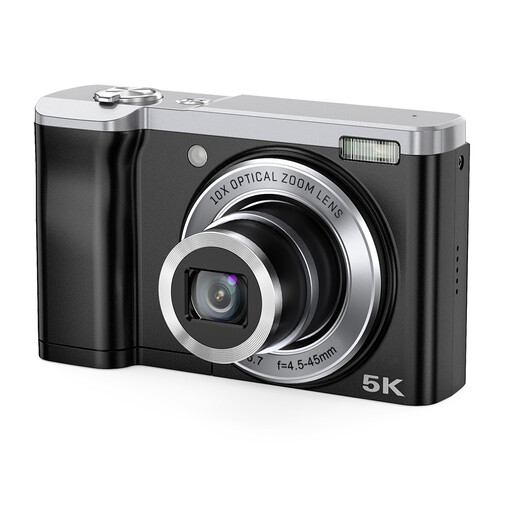
Songdian 5K Digital Camera, 10× Optical Zoom, Black
The stated 10× optical zoom may suit buyers looking for a compact camera with optical reach; check whether its range frames your usual distant subjects.
Stated details: 10× optical zoom, 5K, 56MP and front and rear cameras; black.
View on Joybuy
 No image available
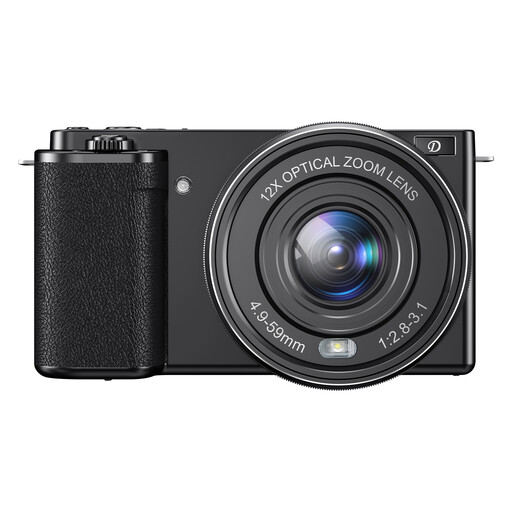
Komery W6 Camera, 12× Optical Zoom
The stated optical zoom is relevant if you want reach in a fixed-lens camera; check the range and handling against your intended subjects.
Stated details: 12× optical zoom, 4K, Wi-Fi and 64MP. The listing says the camera is not waterproof; keep it away from water and high humidity.
View on Joybuy
 No image available
Sony ZV-1 II Premium Hybrid Travel Camera
This travel camera may suit buyers prioritising a compact fixed-lens option over a long telephoto lens for distant wildlife or sport.
Stated details: 1-inch stacked sensor, wide-angle zoom lens, 20MP stills and 4K video. The listed lens is not a long-telephoto option for distant subjects.
View on Joybuy
 No image available
Sony Alpha ZV-E10 II K APS-C Camera with 16–50 mm f/3.5–5.6 Power Zoom Lens
An interchangeable-lens kit may suit travel buyers who want to choose lenses for different subjects; the supplied lens is not a long telephoto option for distant wildlife or sport.
Stated details: APS-C, 16–50 mm f/3.5–5.6 Power Zoom kit lens, 26 megapixels, 4K60p video and Real-time Eye Autofocus.
View on Joybuy
 No image available
Sony A6100 APS-C Camera with 16–55 mm Zoom Lens
This camera-and-zoom-lens combination may suit travel photography, but the stated lens does not provide long telephoto reach for distant wildlife or sport.
Stated details: APS-C, 16–55 mm zoom lens and fast autofocus.
View on Joybuy
Camera buying FAQs
Will image stabilisation freeze a moving bird in poor light?
No. Stabilisation is intended to reduce blur from camera movement; a fast-moving subject can still require a suitable shutter speed, with aperture and ISO choices supporting the exposure.
Can I take spare camera batteries on a flight departing the UK?
UK Civil Aviation Authority passenger guidance says to keep spare batteries in the cabin and protect them from damage. Check the airline’s rules for the specific battery and journey.
Does weather sealing on a mirrorless body protect every fitted lens?
No; a body’s weather-sealing specification does not establish protection for every lens. OM SYSTEM specifies IP53 sealing for the OM-5 Mark II body, so check the exact lens and its use instructions before relying on the complete kit outdoors.
What if a camera bought online arrives faulty or I change my mind?
For eligible UK online purchases, GOV.UK guidance says consumers can normally cancel up to 14 days after delivery without giving a reason. Faulty-goods remedies are separate: official guidance describes a short-term right to reject non-conforming goods within the applicable 30-day period, subject to statutory conditions. Check how the rules apply to the seller and purchase.


