Who might need a dedicated camera?

Wildlife and sports travellers

If animals are distant or athletes move quickly, consider optical reach and subject tracking together. Nikon UK’s wildlife guidance recommends a long lens for animals that cannot be approached; the size of that lens matters when travelling.

Low-light and creative-control travellers

Night streets, indoor scenes and dawn or dusk photography can make lens choice as important as camera choice. Nikon UK advises considering a wide-aperture lens in low light, so compare the lens you would actually carry rather than the body alone.

Adventure and wet-weather travellers

Mounted or hands-free recording calls for different checks from ordinary travel stills. Confirm the exact camera’s water rating, any required housing and the conditions that apply to attached accessories before taking it into water.

What matters when choosing?

Keep using a phone

Choose it when: Everyday convenience matters more than photographing distant or fast-moving subjects.

Trade-off: It may leave you wanting more optical reach or control in the situations discussed by Which?.

Compact camera

Choose it when: You want an all-in-one camera with optical zoom but do not want to pack separate lenses.

Trade-off: Its fixed lens limits your options if a trip calls for substantially longer reach or a different lens for low light.

Interchangeable-lens camera

Choose it when: Wildlife, sport or low-light photographs are important enough to justify selecting a lens for them.

Trade-off: The lenses add packing bulk, and a standard travel zoom may not meet a distant-wildlife brief.

Action camera

Choose it when: Mounted, hands-free or water-oriented activity footage is the main reason to add a camera.

Trade-off: Water-use conditions vary by model and configuration, and this route does not replace a telephoto setup for distant stills.

ConcernWhat to checkWho this matters to
Distant or moving subjects Compare optical zoom or the intended telephoto lens, then check the exact model’s subject-tracking options. If wildlife stays far away or sport moves too quickly to frame, I need reach without taking a kit I will leave behind; around 29% of consumers put distant-subject reach first.
Low light and exposure control Check the lens’s maximum aperture at the focal length you plan to use and whether that lens is included. For indoor scenes or evening photographs, I want to manage exposure and motion blur rather than rely only on phone processing; around 29% of consumers prioritise low-light and creative control.
Practical carry size Compare the complete camera-and-lens kit, including the lenses and accessories you intend to pack. On a trip with a lot of walking, I need a camera I will actually take out with me; roughly 21% of consumers make ease of carrying their primary concern.
Water and active use Confirm the exact water-depth or weather-protection conditions and whether your activity requires a housing or mount. For water activities or hands-free recording, I need the camera’s stated protection to fit how I will use it; about 21% of consumers put active or water-oriented capture first.

Buying pitfalls to avoid

  • Choosing a body before the lens that addresses your subject

    A camera body alone does not provide the reach for distant wildlife or the wide aperture that may help in low light. Nikon UK’s guidance treats long lenses and wide-aperture lenses as answers to different shooting needs.

    List the farthest and darkest scenes you expect, then compare the body with the specific lens you would take. Check the lens’s coverage, aperture and combined carry weight.

    A suitable telephoto or wide-aperture lens may mean packing another lens beyond a basic kit.

  • Equating weather sealing with underwater protection

    Weather sealing and a stated waterproof depth describe different conditions. Canon UK advises checking the equipment used in heavy rain, while GoPro’s depth guidance is specific to the HERO13 Black and its housing.

    Read the instructions for the exact body, lens and attached accessories. For water use, confirm the depth limit and whether a protective housing is required.

  • Judging portability by body weight alone

    A small body can become a bulky travel kit once its lenses and other equipment are included. Nikon UK describes both lenses in its Z50II two-lens kit as retracting, but they remain two lenses to carry.

    Assess the full kit you intend to pack. Before flying, check your airline’s current cabin-bag and battery rules.

Relevant brands for reference

Sony

Sony’s RX100 VII illustrates the compact-camera route for travellers considering one camera with optical zoom.

  • Sony specifies a 24–200mm equivalent zoom and subject tracking for the RX100 VII.
  • Check the exact compact model: that zoom range and tracking specification do not apply to every Sony camera.

Canon

Canon’s EOS R50 illustrates a compact-bodied APS-C interchangeable-lens option.

  • Canon specifies an RF mount, animal tracking and an approximately 375g ready-to-shoot weight for the EOS R50 with card and battery.
  • That body weight excludes the lens; wildlife reach and the protection of a complete kit depend on the equipment chosen.

Nikon

Nikon’s Z50II two-lens kit illustrates a travel setup spanning a standard zoom and a telephoto lens.

  • Nikon UK says both lenses in that kit retract for portability.
  • A standard travel zoom alone should not be assumed to provide the reach needed for distant wildlife; assess the lenses and packed kit together.

GoPro

GoPro’s action-camera range is relevant to mounted and water-oriented outdoor recording.

  • GoPro states that the HERO13 Black is waterproof to 10m without a housing.
  • GoPro specifies a protective housing for depths to 60m on that model; do not apply those limits to another model or configuration.

Joybuy camera choices

These choices cover camera-and-lens kits for travel stills, a compact camera for lighter packing and an action camera for active recording. Choose by the subjects and conditions of your trip rather than treating the formats as interchangeable.

Sony Alpha 7 III camera with 28–70mm zoom lens

Sony Alpha 7 III with 28–70mm zoom lens

Consider this full-frame camera-and-lens kit for travel stills when you are willing to carry a separate-lens system.

The supplied 28–70mm zoom is not a long telephoto lens; check what additional lens you would need if distant wildlife or sport is the priority. Confirm protection for the exact body-and-lens combination before using it in rain.

View on Joybuy

Sony ZV-1 II compact travel camera

Sony ZV-1 II compact travel camera

Consider this all-in-one compact when carrying a separate lens kit is less appealing than taking a camera with a built-in wide-angle zoom.

Its title specifies a 1-inch stacked sensor, 20MP stills and 4K video. Check whether its zoom frames the subjects you expect: it is not a long-telephoto choice for distant wildlife. The product information says it is not water-resistant, so protect it from rain and water.

View on Joybuy

Sony A6700 camera with 16–50mm lens

Sony A6700 APS-C with 16–50mm lens

Consider this interchangeable-lens travel kit if you want a supplied zoom to start with and the option to assess other lenses for particular subjects.

The supplied 16–50mm lens does not establish long-telephoto reach for distant wildlife. Check the weight of the complete kit before packing, and confirm the exact body-and-lens guidance before wet-weather use.

View on Joybuy
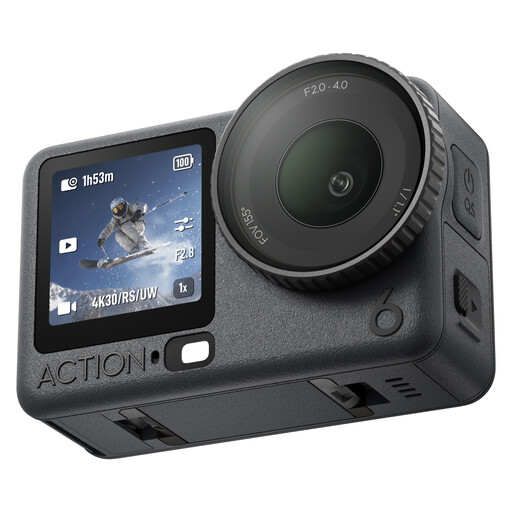
DJI Osmo Action 6 Standard Combo action camera

DJI Osmo Action 6 Standard Combo

Consider this action camera when active or hands-free recording matters more than framing distant wildlife with a telephoto lens.

The product title specifies a 1/1.1-inch sensor, variable aperture and 4K video. Before water use, confirm the exact model’s instructions, seals and activity limits rather than relying on a depth claim alone. Check how to obtain the DJI Mimo app if you need it.

View on Joybuy

Frequently asked questions

Can I take a camera in hand luggage when flying from the UK?

Usually, yes: GOV.UK says camera equipment can generally travel in hand or hold luggage. Check your airline’s current baggage and battery requirements, and charge electronic devices so they can be switched on if requested at security.

Does a weather-sealed camera work underwater?

No underwater suitability follows from weather sealing alone. Protection depends on the exact body and lens; Canon UK advises checking the equipment before shooting in a downpour even for its cited weather-sealed models. For underwater use, look for the applicable depth rating and housing instructions.

What lens should I take for wildlife while travelling?

A long telephoto lens is worth considering when animals cannot be approached. Nikon UK recommends a long lens for distant wildlife, but its reach must be weighed against the lens’s size, weight and whether you will carry it on the trip.

Do I need a wide-aperture lens for night photography?

A wide-aperture lens is particularly useful to consider when limited light makes shutter speed and motion blur difficult to manage, as Nikon UK explains. Check its maximum aperture alongside its focal length and the size of the kit you would carry; it is not a requirement for every daytime travel photograph.

Can an action camera go underwater without a housing?

Only when the exact model and configuration are rated for the depth you need. GoPro states that the HERO13 Black is waterproof to 10m without a housing and requires its protective housing for depths to 60m. Check its doors, seals, accessories and care instructions before use.