Who may benefit

Travellers photographing distant wildlife, sport or landmarks

If you cannot move closer to the subject, prioritise genuine optical reach, stabilisation and autofocus rather than digital-zoom claims. Which?, Sony, Canon UK and Nikon UK all identify optical reach or relevant lens coverage as important for these situations.

City-break and evening travellers wanting more image control

For indoor, after-dark or mixed-light photos, compare sensor format and the lens aperture you will use. Which?, Canon UK and Nikon UK point to low-light capability, exposure control and background blur as reasons to consider a dedicated camera route.

One-bag travellers who will only carry a camera they use

A fixed-lens compact or an APS-C body with one compact or travel zoom can be easier to carry than a multi-lens setup. Sony, Canon UK and Nikon UK provide examples of these lower-change routes.

Buying priorities

Phone-first travel

Choose it when: Everyday daylight photos and having a camera already in your pocket matter more than extra reach or lens control.

Trade-off: Which? identifies low-light capture, optical zoom and creative lens control as areas where a dedicated camera can offer more.

Fixed-lens compact

Choose it when: You want a single small camera with optical zoom and do not want to pack or change lenses.

Trade-off: Its focal-length and aperture range are fixed, so it cannot later take a longer telephoto or brighter specialist lens.

Mirrorless with planned lenses

Choose it when: You want manual control and the option to use one travel zoom now or add a telephoto lens for frequent distant subjects.

Trade-off: A second lens adds carrying bulk, protection needs and lens-change time while travelling.

Priority What to check Your needs
Low-light control Check the exact sensor format, maximum aperture at the focal length you need and autofocus specification. A larger sensor alone does not guarantee the same result in every scene. I want more control over detail, visible noise and depth of field for interiors, evenings and mixed light.
Optical reach Compare the stated optical focal-length range or optical-zoom figure. Confirm lens compatibility if a telephoto lens may be needed later, and check how stabilisation is specified. I need to frame wildlife, sport or distant architecture without relying on crop-based digital zoom.
All-day practicality Match the zoom range to your usual scenes, then compare body-plus-lens weight on a like-for-like basis. Check whether the lens retracts or whether protective storage will add bulk. I want enough coverage for common travel scenes without frequent lens changes or a kit that stays in the hotel.
Focus and upgrade route Confirm the exact camera's subject-detection modes, electronic viewfinder and lens mount. Check mount compatibility before choosing an additional lens. I want a camera that can follow people or animals now, while leaving room to develop beyond phone photography.

Common buying pitfalls

  • Treating digital zoom as equivalent to optical reach

    For wildlife, sport and distant landmarks, true optical focal length is what changes how tightly you can frame the subject. Which? distinguishes optical zoom from phone cropping, while Sony lists optical and digital zoom separately for the RX100 VII.

    Compare the optical focal-length range or optical-zoom figure first. Treat digital-zoom figures as a separate feature rather than equivalent distant-subject detail.

  • Choosing a body before planning the lens route

    The lens determines much of the practical difference between a compact, a one-lens mirrorless kit and a two-lens setup. Canon UK and Nikon UK show broad travel-zoom coverage, while Nikon's two-lens kit separates walkaround and telephoto coverage.

    List the subjects you expect to photograph most often, then choose the lens route before the body. A one-lens kit suits travellers who will avoid lens changes; add a telephoto route only when distant subjects are a recurring priority.

    A later telephoto or brighter lens can add carrying weight and another item to protect while travelling.

  • Assuming a travel zoom solves every low-light problem

    The Canon RF-S 18-150mm and Nikon Z DX 18-140mm travel zooms have variable f/3.5-6.3 maximum apertures. At longer focal lengths, the narrower aperture can make exposure and freezing movement more difficult in low light.

    For frequent night scenes, indoor sport or low-light portraits, compare the maximum aperture at the focal length you will actually use. Consider a brighter lens only when that use justifies its additional bulk.

  • Packing spare camera batteries without checking flight rules

    The UK Civil Aviation Authority advises passengers to carry spare batteries and power banks in cabin baggage because lithium-battery fires in the hold are a significant safety risk.

    Keep spare batteries in cabin baggage and check your airline's battery and baggage requirements before departure.

Relevant brand references

Canon

A relevant APS-C RF-mount mirrorless route for travellers who want to start with a compact body and one wide-to-telephoto travel zoom.

  • Canon UK lists the EOS R50 at approximately 375 g with card and battery, with a 24.2 MP APS-C sensor, RF/RF-S compatibility and tracking for people, animals and vehicles.
  • Canon UK specifies 29-240 mm equivalent coverage and a claimed 4.5-stop optical stabiliser for the RF-S 18-150mm lens.
  • The RF-S 18-150mm has a variable f/3.5-6.3 aperture and is not dust or moisture resistant according to Canon UK specifications.

Nikon

A DX-format Z-mount mirrorless route with a choice between one 18-140mm travel zoom or separate standard and telephoto lenses.

  • Nikon states that the Z50II offers high-ISO image quality, autofocus and an electronic viewfinder for bright, dark or changing conditions.
  • Nikon specifies a 7.8x 18-140mm range, claimed 5-stop VR and 315 g weight for the NIKKOR Z DX 18-140mm f/3.5-6.3 VR.
  • A Z50II kit with 16-50mm and 50-250mm VR lenses adds a second lens for travellers whose telephoto needs justify the extra equipment.

Sony

A fixed-lens compact route for travellers who value meaningful optical zoom without carrying an interchangeable-lens system.

  • Sony specifies a 1.0-type 20.1 MP sensor, 24-200 mm equivalent f/2.8-4.5 lens, 8x optical zoom, optical SteadyShot and electronic viewfinder for the RX100 VII.
  • The fixed lens avoids extra lenses but cannot be replaced with a longer telephoto or brighter interchangeable lens.

Joybuy product options

Joybuy product options for travel still photography beyond a phone, including compact cameras, optical-zoom cameras and interchangeable-lens models.

Sony Alpha ZV-E10 II K APS-C mirrorless camera with 16-50 mm kit lens

Sony Alpha ZV-E10 II K APS-C Camera with 16-50 mm Lens

A one-lens APS-C route for travel stills and subjects such as people, animals or birds, with room to add E-mount lenses later.

Stated specifications include a 26 MP APS-C sensor, 16-50 mm f/3.5-5.6 power-zoom kit lens and Real-time Eye AF for people, animals and birds.

The included lens may not provide enough reach for consistently distant wildlife or field sports. The supplied record also states that an electronic viewfinder is unavailable and that a memory card is not included.

View on Joybuy

Sony ZV-1 II compact travel camera

Sony ZV-1 II Compact Travel Camera

A fixed-lens compact option for city breaks, interiors, evening scenes and travellers who want to avoid lens changes.

The supplied record states a 1-inch sensor, 18-50 mm f/1.8-4 lens, RAW capture, manual modes, built-in ND filter and Real-time Eye AF for people and animals.

The fixed 18-50 mm lens is not a substantial optical-reach route for distant wildlife, sport or landmarks. The camera is stated not to be water-resistant.

View on Joybuy

Sony A6100 APS-C mirrorless camera with 16-55 mm zoom lens

Sony A6100 APS-C Camera with 16-55 mm Zoom Lens

An interchangeable-lens travel option for general scenes, portraits and moving subjects when you want more control than a phone provides.

Stated specifications include a 24.2 MP APS-C sensor, 425 phase- and contrast-detection AF points, a tilting touchscreen, Real-time Eye AF, Real-time Tracking and Sony E-mount compatibility.

Confirm the exact included lens, its aperture and stabilisation before buying. The supplied record contains conflicting portability information, and no weather resistance is stated.

View on Joybuy
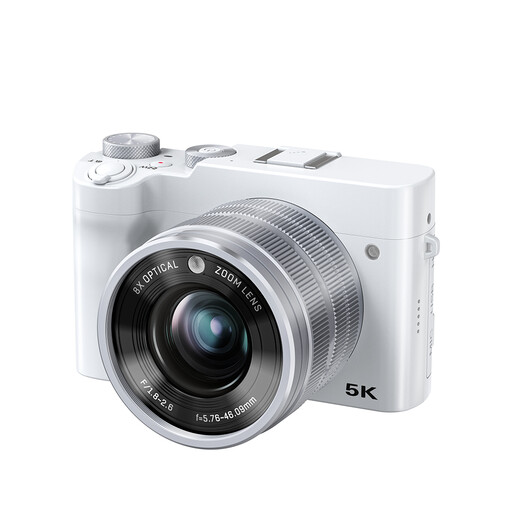
Songdian digital camera with 8x optical zoom

Songdian Digital Camera with 8x Optical Zoom

A standalone option for distant landmarks or occasional subjects that cannot be approached, with a stated 8x optical zoom.

The supplied record lists autofocus, manual zoom and focus control, electronic stabilisation, Wi-Fi transfer, a touchscreen and front and rear lenses.

Check sensor size, lens aperture and the conditions for the stated night-vision feature before relying on it for low-light photography. The camera is stated not to be waterproof.

View on Joybuy

Frequently asked questions

When is a dedicated camera materially better than a phone for travel photos?

A dedicated camera is most worthwhile when you regularly photograph in low light, need true optical zoom for subjects you cannot approach, or want lens and depth-of-field control. If immediate sharing and everyday daylight snapshots are your priority, a phone remains the lower-bulk route.

Should I choose a compact camera or a mirrorless camera for travel?

Choose a compact camera when a fixed lens and minimal packing matter most. Choose mirrorless when you need an APS-C sensor, interchangeable lenses or the option to add a longer telephoto or brighter lens later; the additional flexibility also means more equipment to carry.

Is one travel zoom enough for wildlife and sports?

One travel zoom can suit occasional or relatively close subjects, but it does not guarantee enough reach for all wildlife or field sports. If distant subjects are a principal reason for the trip, a two-lens kit with a dedicated telephoto zoom is the more suitable route if you accept the added carrying burden.

How should I pack camera batteries for a flight from the UK?

The UK Civil Aviation Authority advises passengers to take spare batteries and power banks in cabin baggage. Check your airline's rules before travelling, as camera battery capacity, carrier and destination requirements can vary.