
24/7 Customer Support

Free returns

Same-day & Next-day Delivery

Quality Guaranteed

Unlock Your Welcome Offers: FREE Delivery | Up to 80% OFF | Free 30-day JoyPlus trial
Download the APP
A deep fat fryer can make chips, battered fish, fried chicken and doughnuts more conveniently than a saucepan, but choosing the wrong model can create unnecessary work. Product pages often focus on wattage or capacity while saying less about oil handling, cleaning and realistic batch sizes.
Three common buying traps are worth avoiding:
For one or two people, a compact deep fryer with around 2 litres of oil capacity may be sufficient. The Tefal Oleoclean Compact, for example, is specified for 2 litres of oil and up to 0.8kg of food, or approximately three portions.
A family-size deep fryer generally provides more room for larger batches. Models such as the Morphy Richards 3.5-litre fryer are specified for up to 1kg of food, while the Tower 3-litre fryer is designed for family-style portions. Always check the manufacturer’s food guidance for fresh chips, frozen chips, fish and chicken rather than relying only on the headline oil capacity.
Also measure your worktop. A fryer may need space around the appliance for ventilation, and it should be stored away from water, children and flammable materials.
A deep fat fryer with adjustable thermostat gives you more control when switching between foods. Chips, fish and doughnuts have different cooking requirements, so a variable temperature dial is more useful than a single fixed setting.
The Tefal model provides a stated range of 150°C to 190°C, while the Tower fryer uses an adjustable thermostat and a 2300W heating element. Higher wattage can help the oil return to temperature after food is added, but overcrowding the basket can still lower the temperature and produce greasy results.
An immersed heating element places the heat closer to the oil and food. A cool zone beneath the element can also help prevent crumbs from burning in the oil, although regular filtering and replacement remain important.
Oil handling is one of the main differences between an electric deep fryer and a deep frying pan. Look for:
Automatic filtration can be particularly useful if you fry regularly. The Tefal Oleoclean Compact drains, filters and stores oil through its removable oil box. This does not remove the need to follow the instructions for oil changes, filtering and storage, but it can reduce mess and waste.
A deep frying pan is a different option. It can be used on gas, induction or electric hobs and is suitable for smaller amounts of oil, sautéing and everyday cooking. However, it does not provide the same enclosed basket, thermostat or controlled oil handling as a dedicated deep fryer. Never leave hot oil unattended, and allow it to cool fully before moving or disposing of it.
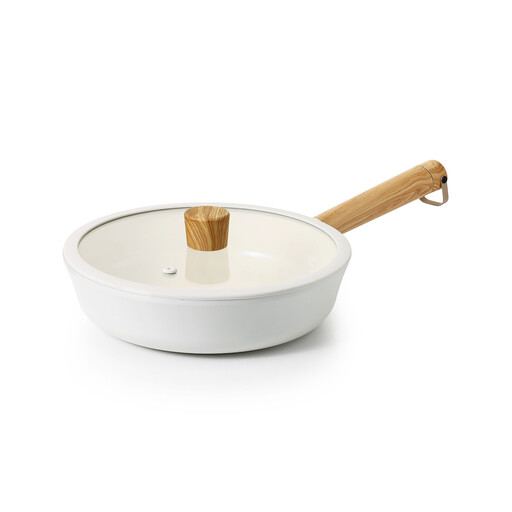
Why This Fits Their Persona: A practical choice for shoppers who want one pan for shallow frying, stir-frying and occasional deep frying on a UK hob.
It avoids buying a bulky appliance when controlled, smaller-batch cooking is the priority. Hand washing is recommended to help maintain the ceramic coating.
24cm pan with lid; compatible with gas, induction, halogen, ceramic and electric hobs.
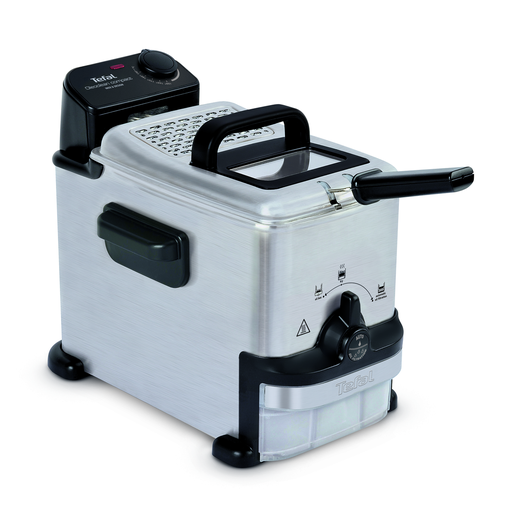
Why This Fits Their Persona: Suitable for regular home cooks who value oil management and a compact stainless-steel appliance.
Its automatic filtration system addresses the overlooked problem of draining and storing used oil between sessions.
150°C–190°C adjustable thermostat; removable parts, including the oil box and basket, are dishwasher safe except the heating element.
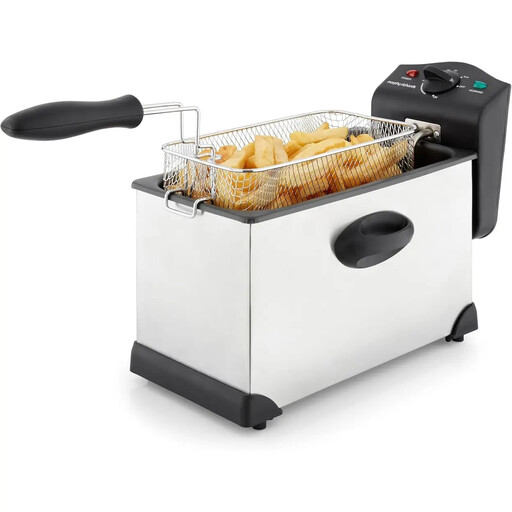
Why This Fits Their Persona: Designed for households preparing larger portions of chips, chicken, fish or snacks for family meals and gatherings.
The stated 1kg food capacity makes the cooking volume clearer than relying only on the 3.5-litre oil figure.
2000W power; removable oil pan and dishwasher-safe oil pan; variable temperature control and viewing window.
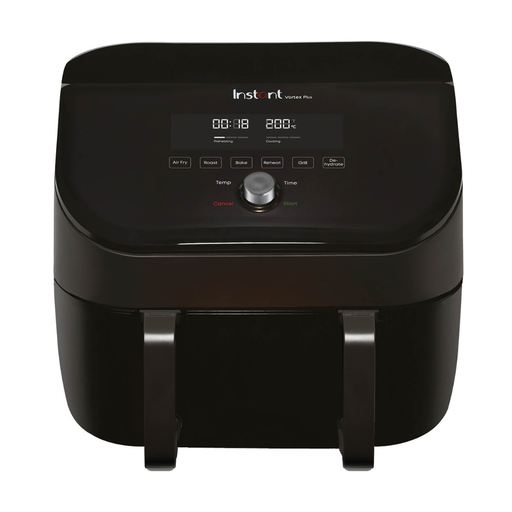
Why This Fits Their Persona: Useful for households that want crisp cooking with little or no added oil alongside roasting, baking and reheating.
It avoids paying for a dedicated oil fryer if your meals are mainly roasted, baked or air-fried rather than immersed in oil.
9-litre capacity; can operate as one large zone or two cooking zones with separate settings.
We have compiled a complete, real-time list of products that fully satisfy these strict selection criteria and UK safety regulations.
Running cost depends on wattage, cooking time, electricity tariff and the quantity of food prepared. A smaller fryer may heat less oil than a large oven cavity, but it still uses concentrated power during heating. Compare the appliance’s wattage with your tariff and avoid running a large fryer for very small portions.
There is no single schedule for every household. Oil life depends on the type of oil, cooking temperature, food crumbs and frequency of use. Filter it only as directed, store it appropriately if the appliance supports this, and replace it when it becomes dark, smells unpleasant, smokes at normal temperatures or affects food flavour.
An air fryer circulates hot air and generally uses little or no added oil, while a deep fat fryer immerses food in hot oil for a different texture. Choose an air fryer for versatile everyday cooking and reduced oil use; choose a deep fryer when traditional fried texture and batch frying are the main priorities.