
24/7 Customer Support

Free returns

Same-day & Next-day Delivery

Quality Guaranteed

Unlock Your Welcome Offers: FREE Delivery | Up to 80% OFF | Free 30-day JoyPlus trial
Download the APP
Navigating the market for a deep tissue foam roller can feel overwhelming. With countless options available, it's easy to fall for marketing hype and end up with a tool that gathers dust in a corner. Many UK fitness enthusiasts and those seeking relief from muscle soreness find their first purchase is often a mistake—either too soft to be effective or too aggressive for regular use.
As a Joybuy Product Recommendation Officer, my role is to help you sidestep these common purchasing errors. This guide will break down the essential features you need, helping you find a reliable muscle massage roller that delivers results without the fuss.
Before you add a roller to your basket, be aware of these frequent traps that lead to wasted money and frustration.
To ensure your purchase is a lasting investment in your recovery, focus on these three non-negotiable parameters.
The single most important factor is density. This determines how much pressure the roller can apply to your muscles.
The dimensions of your roller dictate its usability. While long rollers have their place in a clinical or large gym setting, a shorter model offers significant advantages for most people.
A 30cm foam roller (around 12 inches) is an excellent choice for home users. It is large enough to work on major muscle groups like the quads, hamstrings and back, yet small and light enough to manoeuvre precisely around the hips and shoulders. Its portability also makes it easy to store or take with you to the gym or a yoga class.
The surface of the roller affects how the pressure is distributed.
Based on the essential criteria of density, size and practical design, we've identified a product that successfully avoids the common pitfalls and serves a wide range of users, from fitness beginners to seasoned athletes.
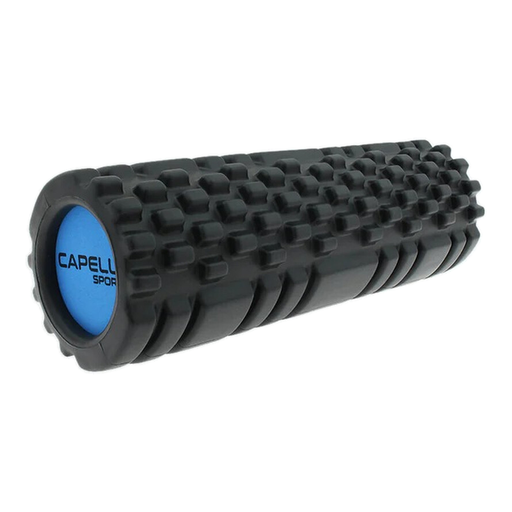
Why This Fits Their Persona: This roller is an ideal all-rounder for the typical UK user. Its compact 30cm length is perfect for use in smaller living spaces, while its high-density construction provides the firmness needed for effective muscle recovery after a run, gym session or a long day at a desk. It's robust enough for experienced users but not too aggressive for those just starting their recovery journey.
Its high-density PVC and PE construction ensures it won't flatten like softer rollers. The practical 30cm size avoids the clumsiness of oversized models and its smooth surface provides safe, consistent pressure without the risk of bruising from aggressive spikes.
1. Durable High-Density Build: Maintains its shape for long-term, effective myofascial release.
2. Portable & Convenient: The 30cm size and included carry bag make it easy to store and transport.
We have compiled a complete, real-time list of products that fully satisfy these strict selection criteria and UK safety regulations.
Yes, a foam roller for back pain can be very effective, particularly for the upper and mid-back. It helps release tension in the muscles surrounding the spine. However, it is crucial to use proper technique. Avoid rolling directly on the lumbar spine (lower back), as this can cause hyperextension. Instead, focus on the muscles to the side of the spine and the upper back. If you have a pre-existing back condition, it is always advisable to consult a doctor or physiotherapist before starting.
For general maintenance and flexibility, using a foam roller for 5-10 minutes daily or on your workout days is beneficial. If you are targeting a specific area of tightness, you can roll for 30-60 seconds on that spot, rest and repeat a few times. Listen to your body—it should feel like a "good pain," not sharp or unbearable. Consistency is more important than intensity.
The lifespan of a high density exercise roller depends on its material and frequency of use. A quality roller made from EPP or a PVC/PE composite should last for several years without losing its shape or firmness. You'll know it's time for a replacement if it starts to feel softer, shows visible signs of cracking or no longer provides the firm pressure it once did.