
24/7 Customer Support

Free returns

Same-day & Next-day Delivery

Quality Guaranteed

Unlock Your Welcome Offers: FREE Delivery | Up to 80% OFF | Free 30-day JoyPlus trial
Download the APP
For UK dog owners, carrying poo bags is part of every walk. Yet choosing the right pack can be less straightforward than it appears. Terms such as degradable, biodegradable, compostable and plant-based are often used together, even though they describe different materials and disposal routes.
A low-quality bag may split when lifted, lack enough room for a larger dog, or become brittle after being stored in a warm car. Before buying degradable dog poo bags, check the material, size, closure design and disposal instructions rather than relying on environmental wording alone.
A degradable bag may contain conventional plastic with an additive designed to accelerate breakdown under specific conditions. That does not necessarily mean it is suitable for home composting, food-waste collections or recycling.
Compostable dog waste bags are made to break down in defined composting environments, but certification and disposal guidance still matter. A bag marked EN 13432 is generally associated with industrial compostability requirements; it does not automatically mean the bag is suitable for a domestic compost heap.
A pack may look inexpensive but contain fewer bags than expected, while a bulk dog poo bags bundle can offer more practical value for multi-dog households, professional walkers or frequent users. Compare the total number of bags, not just the number of rolls or packs.
Also check whether the stated quantity refers to individual bags. For example, five packs of 100 bags provide 500 bags, whereas four rolls of 15 provide 60.
Strength depends on several details, including thickness, dimensions, material and how the bag is opened. A narrow bag may be uncomfortable to use with larger waste, even if the plastic feels thick. For dog waste bags for all breeds, look for a generous width and length, secure closure and enough material to turn the bag over your hand safely.
Plant-based dog poo bags commonly use cornstarch or other renewable materials. Benevo bags, for instance, are listed as made from cornstarch and EN 13432 certified, with packaging made from recycled card. Eco Green Living and Adios Plastic products are also listed as compostable, with stated standards or home-composting guidance.
By contrast, degradable plastic bags should be treated according to their label. Do not place used bags in plastic recycling, and do not flush them down the toilet. In the UK, pet waste is usually placed in general waste unless your local authority provides specific instructions. Even where a product is described as compostable, confirm that the relevant council or composting facility accepts dog waste.
Dimensions provide a more useful comparison than vague descriptions such as “extra strong”. Examples in the available range include:
Larger dimensions can be more convenient for big dogs or households with multiple pets. Thickness may help reduce the chance of tearing, but sharp objects, overfilling and excessive pulling can still cause punctures.
Tie-handle dog waste bags are useful when you want to seal the bag quickly after collection. They can also make a full bag easier to carry to a bin. Tear-off rolls are compact and fit many standard dispensers, although you should check compatibility before ordering refill packs.
Scented dog poo bags may help mask odours during a walk, while unscented versions may be preferable for owners who dislike added fragrance. Antibacterial dog poo bags should be understood through their product description and packaging; an antibacterial label does not remove the need for handwashing after use.

Why This Fits Their Persona: A straightforward 100-bag option for owners who want degradable material, easy dispensing and a manageable quantity for regular UK walks.
The product listing specifies degradable material and an approximate 15cm x 30cm size, making the specification easier to assess than a general eco label alone.
100 bags per pack; easy tear-off design; listed antibacterial and degradable material.
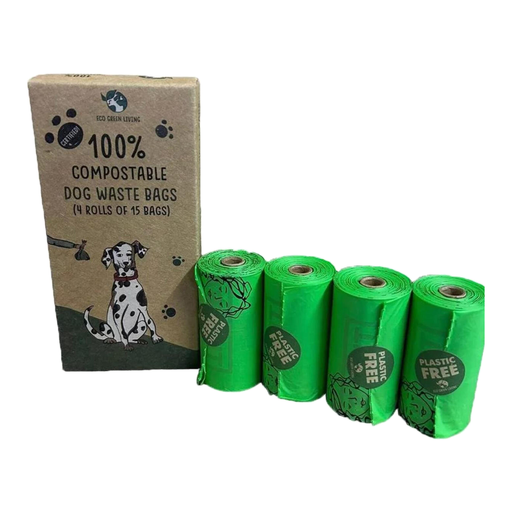
Why This Fits Their Persona: Suitable for owners prioritising stated compostability standards, a larger format and water-resistant construction.
Its listing gives dimensions of 23cm x 33cm and identifies EN 13432, EN 7P2045 and ASTM D6400 standards. Disposal acceptance should still be checked locally.
60 bags; large size; product listing describes the bags as water-resistant, leakproof and extra thick.
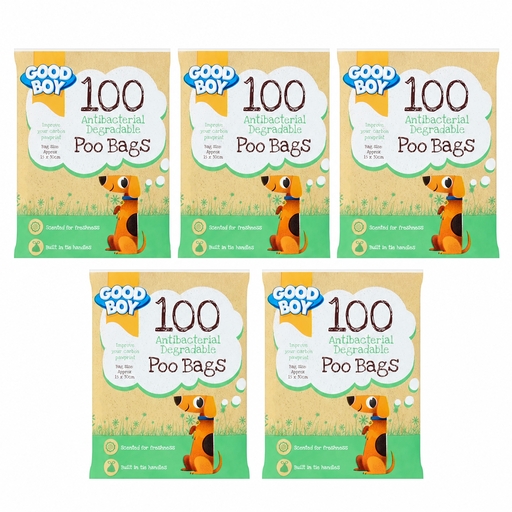
Why This Fits Their Persona: Designed for multi-dog households, dog walkers and pet-care users who need a larger ongoing supply.
The bundle states both the quantity and approximate dimensions, avoiding uncertainty about whether the pack can support frequent use.
500 bags in five packs; built-in tie handles; fresh-scented finish; listed as suitable for dogs of all sizes.

Why This Fits Their Persona: A practical choice for shoppers seeking plant-based, plastic-free bags with clearly stated compostability information.
The listing identifies cornstarch material, EN 13432 certification and specific stated breakdown times, rather than using only a broad “eco-friendly” description.
120 bags; 33cm x 22cm format; recycled-card rolls and packaging are listed.
We have compiled a complete, real-time list of products that fully satisfy these strict selection criteria and UK safety regulations.
Not automatically. “Biodegradable” can refer to degradable plastic or other materials that require particular conditions. Only use a bag in home composting if the packaging specifically states home compostability and your local guidance permits pet waste. Do not use compost containing dog waste for edible crops.
Shelf life varies by material and storage conditions. Heat, sunlight and moisture may affect bag performance, so store rolls in a cool, dry, shaded place and follow the manufacturer’s packaging guidance.
The cost per use depends on the total quantity, bag size and how often your household walks its dogs. Calculate the pack price divided by the number of individual bags. Bulk packs can reduce the frequency of reordering, while smaller packs may suit occasional users who want to avoid storing rolls for too long.