
24/7 Customer Support

Free returns

Same-day & Next-day Delivery

Quality Guaranteed

Unlock Your Welcome Offers: FREE Delivery | Up to 80% OFF | Free 30-day JoyPlus trial
Download the APP
As a Joybuy Product Recommendation Officer, my role is to help you navigate the crowded market and make informed choices. When it comes to tackling the damp, condensation and mould that are all too common in UK homes, a dehumidifier can feel like a necessity. However, choosing the right one is often confusing. Misleading marketing and technical jargon can easily lead to a purchase that doesn't solve your problem.
This guide cuts through the clutter, highlighting the common pitfalls to avoid and the key features that truly matter for a British home.
Before you spend your money, be aware of these frequent marketing traps that can result in an ineffective and frustrating purchase.
caravan dehumidifier. Many people buy one for a cold, damp room only to find it barely collects any water.quiet dehumidifier is essential for a bedroom or living area, but "quiet" is subjective. Without a specific decibel (dB) rating, this claim is meaningless. A unit that sounds fine in a shop can become an irritating hum in the stillness of your home at night.To ensure you get a machine that works for your specific needs, focus on these three non-negotiable parameters.
The technology inside the unit is the single most important factor determining its performance in your home.
dehumidifier for drying clothes indoors, as the warm air it expels helps speed up the process.small dehumidifier or mini dehumidifier models. They are very quiet and use little energy but have a very low extraction rate. They are only suitable as a moisture absorber for very small, enclosed spaces like wardrobes, cupboards or on a window sill to act as a condensation remover.Ignore the headline extraction rate and focus on the recommended room size, usually given in square metres (m?). A portable dehumidifier with a small capacity will struggle to make an impact in a large, open-plan living area.
Equally important is the water tank capacity. A larger tank means you empty it less often. For unattended use, such as in a holiday home or utility room, look for a model with a continuous drainage option, which allows you to attach a hose to empty water directly into a drain.
For any dehumidifier for bedroom use, check the decibel (dB) rating. A model operating at under 40dB is generally considered quiet enough not to disturb sleep. Also look for practical features like a laundry mode, a timer and an automatic shut-off function that stops the unit when the tank is full.
Based on these practical criteria, here are a few options from our catalogue matched to common UK household needs.
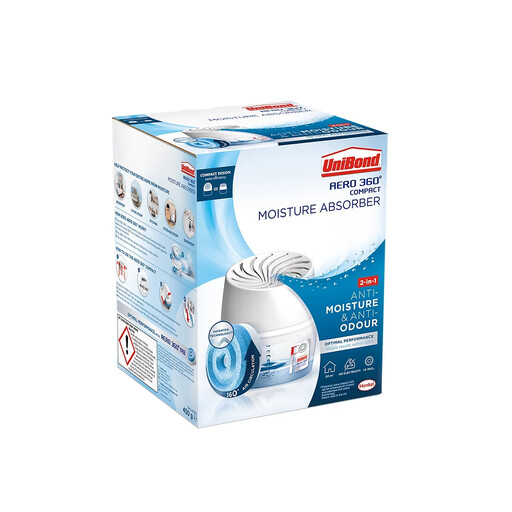
Why This Fits Their Persona: This is the ideal starting point for someone dealing with minor condensation on a window sill or mustiness in a wardrobe. It requires no electricity and is a simple, low-cost solution for a very specific problem area where a full electric unit would be excessive.
It completely sidesteps the pitfalls of electricity costs, noise levels and misleading extraction rates. Its purpose as a passive moisture absorber is clear and it doesn't pretend to be a whole-room solution.
Silent, electricity-free operation. Its compact, spill-proof design makes it safe and discreet for small spaces like window sills, bathrooms and caravans.
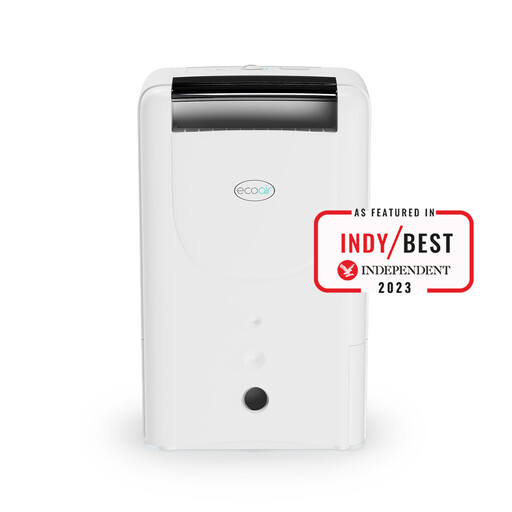
Why This Fits Their Persona: This is a workhorse for the typical UK home. Its desiccant technology provides consistent performance even in chilly rooms, and the dedicated laundry mode is a significant benefit for anyone drying clothes indoors during the damp winter months.
By using desiccant technology, it directly solves the "cold room performance flaw" that makes compressor models ineffective in unheated spaces. Its performance is reliable across a wide range of British temperatures.
Excellent low-temperature performance and a dedicated laundry mode. It's lightweight and portable, with simple rotary controls that are easy for anyone to use.
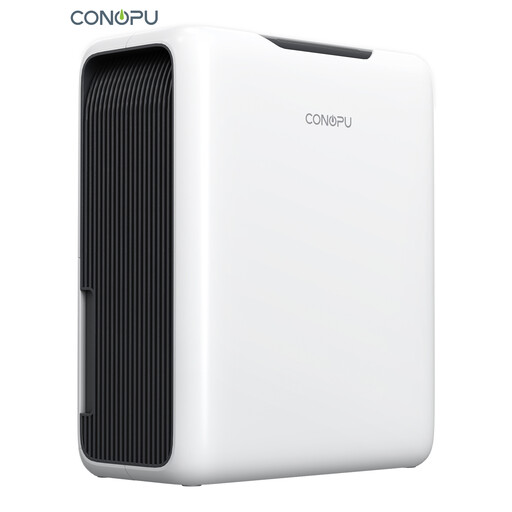
Why This Fits Their Persona: This model is designed for occupied spaces where noise is a major concern. Its Peltier technology and specified low noise level of around 30dB make it suitable for a bedroom, nursery or home office, helping to manage damp without disrupting sleep or concentration.
It counters the "whisper quiet" myth by providing a concrete decibel rating. The inclusion of a sleep mode and the ability to turn off the display lights shows a design focus on creating an undisturbed environment.
Very quiet operation (approx. 30dB) and a large 3L tank for its class, reducing how often it needs emptying. Features an automatic defrost function for stable performance in cooler conditions.
We have compiled a complete, real-time list of products that fully satisfy these strict selection criteria and UK safety regulations.
The running cost depends on the unit's power consumption (wattage), how many hours you use it per day and your electricity tariff. For a rough idea, a 250W (0.25kW) dehumidifier running for 8 hours would use 2 kWh of electricity (0.25 kW x 8 hours). At an average electricity rate of 25p per kWh, this would cost approximately 50p per day. Energy-efficient Peltier models and desiccant models on an 'eco' setting will cost less, while powerful compressor or desiccant units on a 'laundry' or 'turbo' mode will cost more.
For general room dehumidifying, place the unit in a central location at least 15-20cm away from walls and furniture. This ensures good airflow into the machine. If you are targeting a specific problem like condensation on windows, placing the dehumidifier nearby can be effective. Always keep doors and windows closed in the room where the dehumidifier is operating.
A dehumidifier is a tool for prevention, not a cure for existing mould. It works by reducing the airborne moisture that mould needs to grow, which helps to stop new patches from forming and existing ones from spreading. However, it will not kill or remove mould that is already on your walls or surfaces. This must be cleaned off separately using an appropriate mould and mildew remover.