
24/7 Customer Support

Free returns

Same-day & Next-day Delivery

Quality Guaranteed

Unlock Your Welcome Offers: FREE Delivery | Up to 80% OFF | Free 30-day JoyPlus trial
Download the APP
Condensation on windows, musty odours and slow-drying laundry are common reasons to look for a dehumidifier. However, choosing a suitable model involves more than comparing the largest extraction figure on a product page.
As the Joybuy Product Recommendation Officer, I focus on practical specifications rather than promotional wording. The following guide explains the buying traps that can lead to poor value, the technical details worth checking and which types of home dehumidifier suit different UK households.
A rating such as 16 or 25 litres per day is usually measured in warm conditions with very high relative humidity. A typical UK bedroom, hallway or lounge may be cooler and less humid, so actual extraction can be lower.
Use the figure as a comparison between models, not as a guaranteed amount of water collected in your home. Room size, temperature, ventilation and laundry loads all affect performance.
A mini dehumidifier using Peltier or thermoelectric technology can be convenient for a wardrobe, cupboard or small bathroom. Its compact size and low-noise operation are useful, but extraction capacity is normally much lower than a compressor model.
For persistent condensation across a living room, basement or open-plan area, a small-footprint unit may run continuously without removing moisture quickly enough. Check the recommended room area and daily extraction rate before buying.
A water tank needs emptying when full, and a smaller tank may require frequent attention during heavy use. If the appliance is intended for a basement, utility room or regular laundry drying, look for continuous drainage and confirm that the hose can run downhill to a suitable drain.
Also check whether the filter is washable and whether there is enough clearance around the air inlet and outlet. A blocked filter or restricted airflow can reduce performance and increase operating noise.
For a small enclosed space, a unit removing several hundred millilitres per day may be adequate. For a bedroom, lounge or office, consider a compressor or larger electric dehumidifier in the approximate 10–16 litre class. Larger homes, basements and demanding laundry loads may require 20 litres per day or more.
Treat stated coverage as a guide. A home with cold external walls, frequent clothes drying or long-standing condensation may need more capacity than the floor area alone suggests.
A larger tank reduces emptying frequency, but tank size does not indicate extraction power. A dehumidifier with humidistat can switch or regulate operation around a selected humidity level, which may avoid unnecessary running.
To estimate running cost, multiply the appliance’s input power in kilowatts by your electricity tariff and the number of hours used. A “low-energy dehumidifier” label should be checked against the actual wattage, operating modes and expected usage rather than accepted without comparison.
For UK use, select a unit designed for the local electrical supply, use an earthed wall socket where required and follow the supplied instructions. Keep the appliance upright, leave suitable clearance around it and never place an electric unit where it may be splashed or submerged.
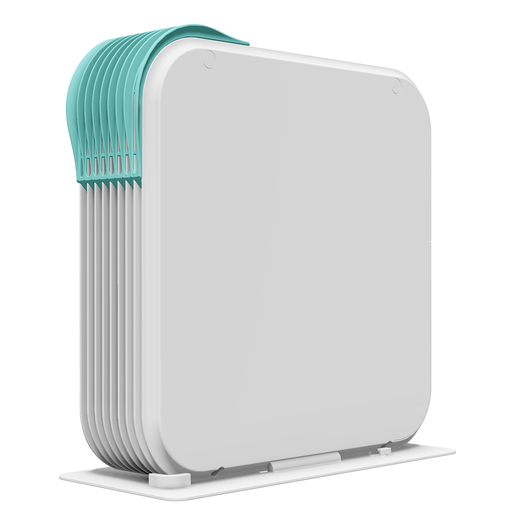
Why This Fits Their Persona: Its compact footprint suits renters, students and households dealing with localised condensation in a bedroom, office, wardrobe or utility space.
The 400 ml/day rating is clearly positioned for a small footprint, so it does not pretend to replace a high-capacity unit for a whole home.
Peltier technology, an 800 ml tank, low-noise operation and automatic shut-off when full.
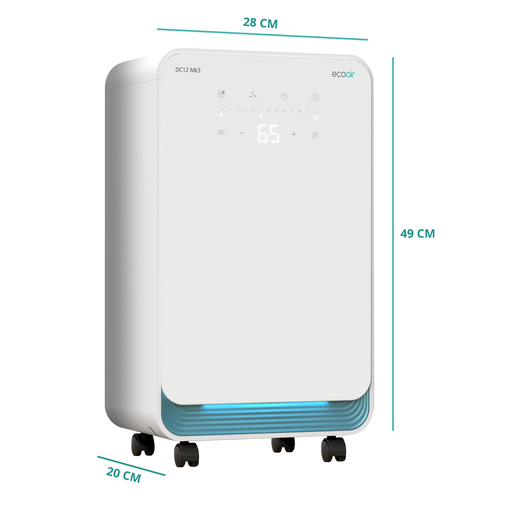
Why This Fits Their Persona: It offers controlled everyday moisture management for a medium-sized bedroom, lounge or home office where automatic humidity regulation matters.
The adjustable humidistat helps prevent relying on a fixed timer alone, while the continuous drain option addresses frequent tank-emptying.
Up to 12 litres/day extraction, a 2-litre tank, castor wheels and adjustable humidity control.
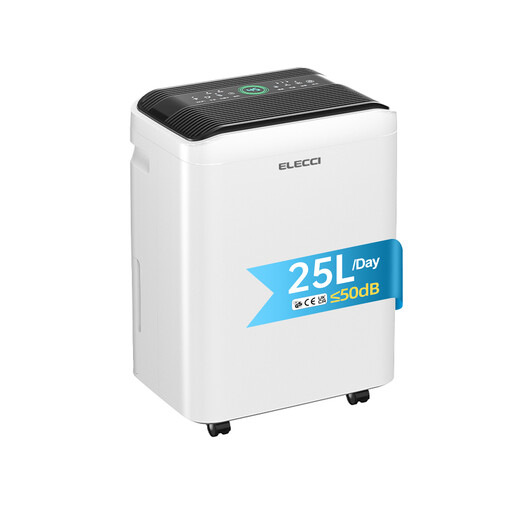
Why This Fits Their Persona: A larger home, basement, garage or frequent indoor laundry routine can benefit from higher stated extraction and flexible drainage.
The 4.8-litre tank and continuous hose drainage reduce dependence on frequent manual emptying during demanding use.
Up to 25 litres/day under stated test conditions, auto defrost, three fan speeds and a laundry drying mode.
We have compiled a complete, real-time list of products that fully satisfy these strict selection criteria and UK safety regulations.
Place it on a flat, stable surface with clear space around the air inlet and outlet. Keep it away from splashing water, curtains and furniture. For a bathroom, operate it after showering only when the room is suitable for the appliance and follow the manufacturer’s clearance and electrical instructions.
Running cost depends on wattage, electricity tariff, operating time and humidity conditions. A lower-powered mini unit may use less electricity per hour, but it may also remove considerably less moisture. Compare wattage with extraction capacity and use a humidistat or timer where available.
Lifespan depends on usage, ventilation and maintenance. Empty the tank safely, clean the washable filter as instructed and keep vents unobstructed. Before moving a compressor or desiccant model, switch it off, unplug it and empty the tank. If it has been tilted during transport, follow the manual’s required standing time before reconnecting it.