For condensation in a normally heated room, start by comparing compressor dehumidifiers; for a regularly cold or unheated space, compare desiccant models and check each model's operating range. A dehumidifier can manage airborne moisture, but persistent patches, rain-related damp or recurring mould also call for investigation of the cause and ventilation rather than reliance on an appliance alone.
Who is managing damp indoor air?
Households with recurring window condensation
If water repeatedly collects on windows or musty smells return in lived-in rooms, a room-scale dehumidifier may help manage airborne moisture. Energy Saving Trust also advises attention to ventilation and the cause of damp; an appliance will not repair a building defect.
People drying laundry indoors
Indoor clothes drying adds moisture to the room. Look for a suitable drying mode and a tank-emptying or drainage arrangement you can use in that space; confirm the exact model's features before choosing.
Users of cold or unheated spaces
For a garage, cellar, workshop or conservatory, check the usual room temperature before comparing extraction figures. Meaco and EcoAir position desiccant models for colder conditions, but the operating range and other specifications still depend on the model.
What matters when choosing?
Decide whether you are managing airborne condensation or a damp problem that needs investigation. Then match the appliance technology and water-disposal setup to the room.
Compressor dehumidifier
Consider for: General moisture control in a normally heated room, as described in Meaco's household guidance.
Bear in mind: Cold-room suitability depends on the model's stated operating range; headline extraction figures need comparable test conditions before they can be compared directly.
Desiccant dehumidifier
Consider for: A regularly cold or unheated space; Meaco and EcoAir position their desiccant ranges for low-temperature use.
Bear in mind: Power input, noise and water capacity vary by model and operating mode, so check the specific appliance rather than assuming a common running pattern.
| Concern | What to check | Who this matters to |
|---|
| Condensation or underlying damp |
Look at the pattern of moisture before choosing capacity: recurring window condensation differs from a concentrated patch, a low-wall tidemark or damp that worsens after rain. Consider ventilation as well as moisture removal. |
If damp keeps returning, I want to know whether I am dealing with everyday condensation or a fault that needs attention. Around 31% of consumers put identifying the underlying cause first. |
| Cold-room operation |
Compare the technology and the exact model's operating-temperature range against the room's usual temperature, not just its litres-per-day rating. |
In an unheated garage or conservatory, I need an appliance specified to work at the temperatures the space reaches. Around 25% of consumers prioritise cold-space suitability. |
| Indoor laundry |
Check for a laundry mode and a manageable tank or supported drainage option; confirm that a gravity hose has a suitable downward route. |
When I dry clothes indoors, I need a practical way to manage the added moisture without an unworkable emptying routine. Around 25% of consumers put laundry moisture first. |
| Everyday control and upkeep |
Check humidistat behaviour, tank handling, noise and care instructions for the exact model; compare stated power input under relevant operating conditions. |
For frequent use, I want controls and water handling that fit my daily routine. Around 19% of consumers prioritise lower-intervention operation. |
Mistakes to avoid
-
Using an appliance as the only response to persistent damp
A dehumidifier removes airborne moisture; it cannot repair a leak or stop rain entering a building. Recurring mould or a concentrated damp patch can remain even while the appliance is running.
Investigate where and when damp appears, address ventilation, and seek repair of suspected defects rather than treating a reduction in condensation as proof that the cause has gone.
-
Choosing by litres per day alone
An extraction figure does not, by itself, establish how an appliance will suit a cold room or compare with a figure measured under different conditions.
Check the model's working-temperature range and the conditions attached to its extraction rating, alongside the controls, tank, drainage and noise information relevant to your room.
-
Assuming continuous drainage works in any position
Gravity drainage needs a suitable route down to a drain. Pro Breeze advises that the hose for its supported setup should run straight down.
Check the chosen model's manual, hose arrangement and intended appliance position before relying on continuous drainage.
The position of a suitable drain may limit where you can place the appliance.
-
Skipping a model-and-batch recall check
The UK Office for Product Safety and Standards published an April 2026 recall concerning specified Ebac dehumidifier models and batches because of a sensor-assembly defect presenting a fire risk. It does not apply to every Ebac appliance.
Check the precise model and batch against official UK product-safety alerts before purchase and during ownership, and follow any instructions that apply to your appliance.
Dehumidifier brands for reference
Meaco
Meaco's UK range includes compressor models for general household use and desiccant models positioned for colder spaces.
- Both technologies are represented in the range, allowing a room-temperature-led comparison.
- Check the chosen model's operating range, extraction conditions, noise and warranty; range-wide positioning is not a specification for every unit.
Ebac
Ebac offers domestic dehumidifiers and says its Smart Control models adjust operation in response to humidity conditions.
- Automatic-control features may be relevant if you want less manual switching; check their behaviour on the exact model.
- The UK Office for Product Safety and Standards issued an April 2026 fire-risk recall for specified Ebac models and batches. Check the identifiers rather than assuming that all Ebac products are affected or unaffected.
EcoAir
EcoAir positions its desiccant range for moisture removal in colder spaces.
- Its low-temperature positioning makes the range worth examining for a cold room.
- That positioning is EcoAir's claim, not a model-by-model comparison; check power input, noise, controls and water handling.
Pro Breeze
Pro Breeze lists portable household models with humidity controls and drainage options.
- Its cited 12L model specifies a humidistat, a 1.8L tank and continuous drainage.
- Those features belong to that model, not the whole range. Check the working-temperature range and drainage instructions for whichever model you consider.
Joybuy dehumidifiers for indoor use
These models offer options for indoor moisture management, with laundry or drainage features identified on several listings. Check each model's room rating where stated and its temperature suitability for your space; this selection should not be taken as covering desiccant options for cold rooms.
 No image available
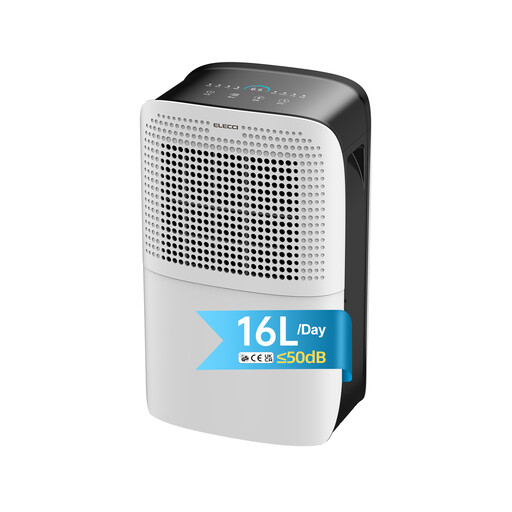
ELECCI 16L/D dehumidifier with drain hose
Consider for indoor moisture control and clothes drying where the listed room rating of up to 32m² fits. The title specifies a 3.1L tank, four modes, continuous drainage and a 24-hour timer. Check the operating-temperature range and noise for your room, and plan a suitable hose route.
View on Joybuy
 No image available
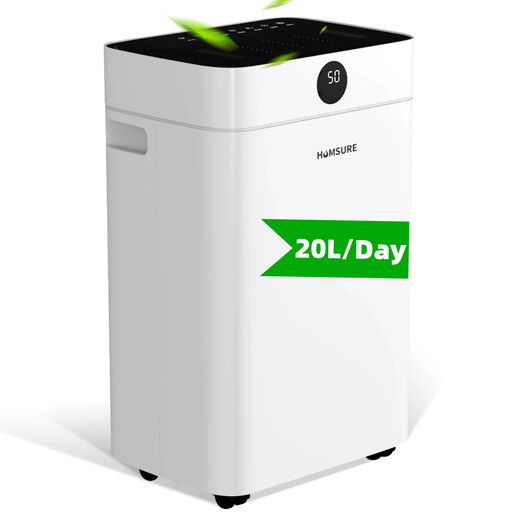
HUMSURE 20L/Day dehumidifier for rooms up to 50m²
Consider where the listed coverage of up to 50m² matches the intended room. The title specifies a 2.8L tank, a 24-hour timer and continuous drainage. Confirm the operating-temperature range and noise, and make sure the drainage arrangement suits the available drain.
View on Joybuy
 No image available
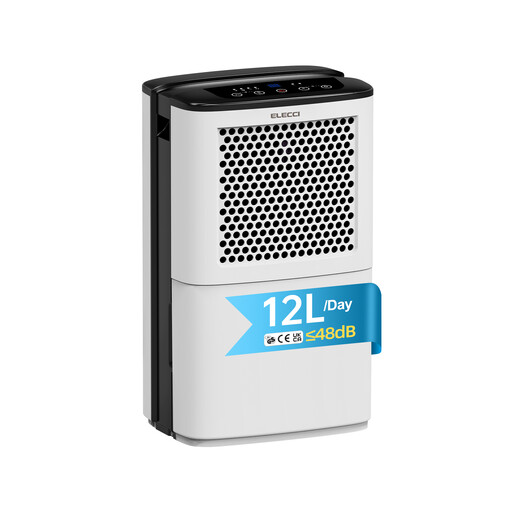
ELECCI 12L/D dehumidifier with drain hose
Consider for indoor moisture control where the listed room rating of up to 25m² fits. The title specifies a 3.8L tank, continuous drainage and a 24-hour timer. Check the room's temperature against the model's operating range, as well as its noise and the proposed drain route.
View on Joybuy
 No image available
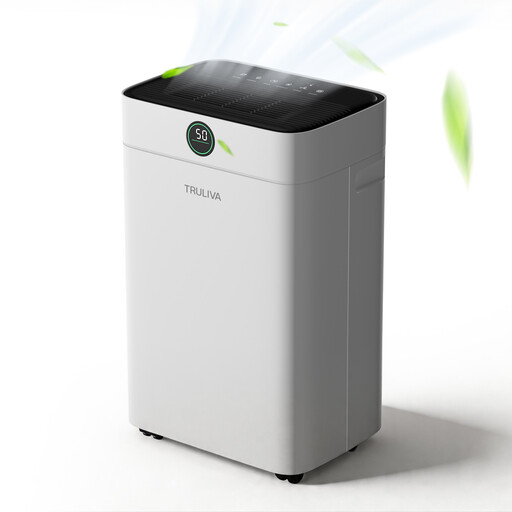
TRULIVA 25 L/Day dehumidifier with laundry drying
Consider for indoor moisture control when a laundry mode and hose drainage are useful. The title specifies a 2.8 L tank and continuous-drain hose. Its stated operating range is 5–35°C, with compressor defrost possible below 15°C; check that against the room's usual temperature. Confirm the room-size rating and humidity-control behaviour if those govern your choice, and do not assume the stated daily extraction rate in other conditions.
View on Joybuy
 No image available
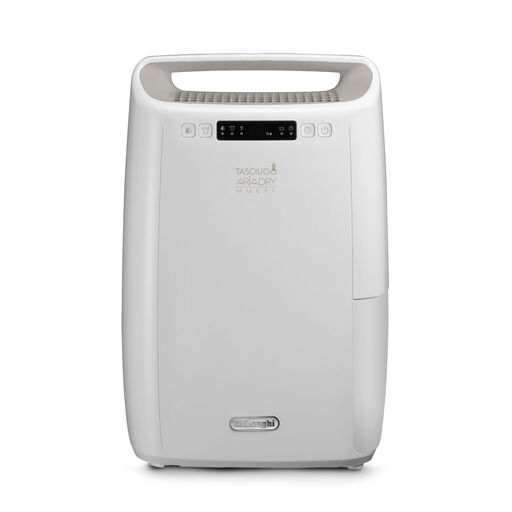
DE'LONGHI AriaDry Multi DEX214RF dehumidifier
Consider for indoor moisture management when a laundry function is useful. The title specifies 14 litres per day and a laundry function. Check the operating-temperature range for your room; if you plan to use hose drainage, confirm the hose arrangement before purchase.
View on Joybuy
Dehumidifier questions
Can a dehumidifier solve every kind of damp?
No. It can remove moisture from indoor air, but it cannot repair leaking plumbing, rain penetration or other building defects. Energy Saving Trust advises looking at damp causes and ventilation; investigate a persistent patch or damp that worsens after rain rather than relying on the appliance alone.
Should I choose a compressor or desiccant dehumidifier?
Compare compressor models for a normally heated room and desiccant models for a regularly cold or unheated space. Meaco and EcoAir position desiccant units for colder conditions, but check the exact model's operating range, noise and power input before deciding.
Can continuous drainage replace emptying the tank?
Yes, if the chosen model supports it and you can route its hose to a suitable drain as the manual requires. Pro Breeze advises that its gravity-drain hose should run straight down; a gravity arrangement does not provide pumped drainage.
How do I check whether a dehumidifier has been recalled?
Compare its exact model and batch number with the UK Office for Product Safety and Standards product-safety alerts and follow any matching instructions. Its April 2026 Ebac recall concerns specified models and batches, not every Ebac dehumidifier.


