
24/7 Customer Support

Free returns

Same-day & Next-day Delivery

Quality Guaranteed

Unlock Your Welcome Offers: FREE Delivery | Up to 80% OFF | Free 30-day JoyPlus trial
Download the APP
Waking up to condensation streaming down your windows, finding spots of mould in the corners of a room or dealing with that persistent musty smell are all common frustrations in many UK homes. Excess indoor humidity is more than just an annoyance; it can affect your comfort and your property. Choosing the right dehumidifier for home use can feel overwhelming with so many types and features available.
As the Joybuy Product Recommendation Officer, my role is to help you navigate the options. This guide is designed to provide clear, practical advice to help you find a suitable appliance that effectively tackles dampness, improves air quality and fits your specific needs.
Before looking at specific models, understanding a few key factors will ensure you select a unit that performs efficiently for your space.
The core technology of a dehumidifier determines where it works most effectively. There are two main types commonly found in UK homes, plus a third for smaller spaces.
Modern dehumidifiers come with a range of features designed for convenience and specific tasks.
Here are a few recommendations that address different household needs, from small bedrooms to large, damp living areas.
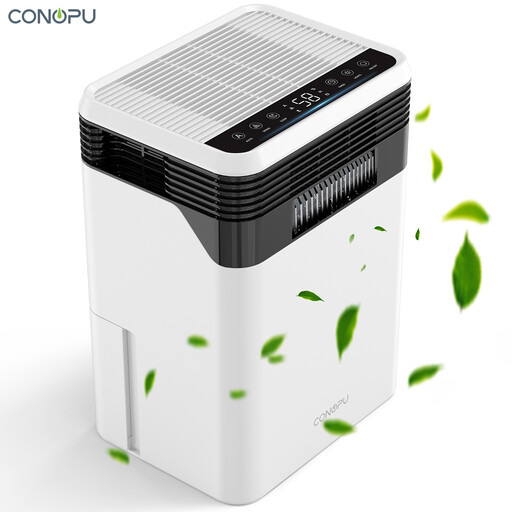
Why It Stands Out: This model uses advanced four-core semiconductor technology, making it remarkably efficient for its compact size. Its three-sided air intake design helps it to quickly and quietly reduce humidity in smaller spaces. The smart touch panel with a three-colour humidity indicator provides at-a-glance information about your room's air quality.
Pros:
Who is it for? This is an excellent choice for anyone needing a quiet dehumidifier for a bedroom, nursery, home office or wardrobe up to 30㎡. Its quiet performance and compact footprint make it unobtrusive yet effective.
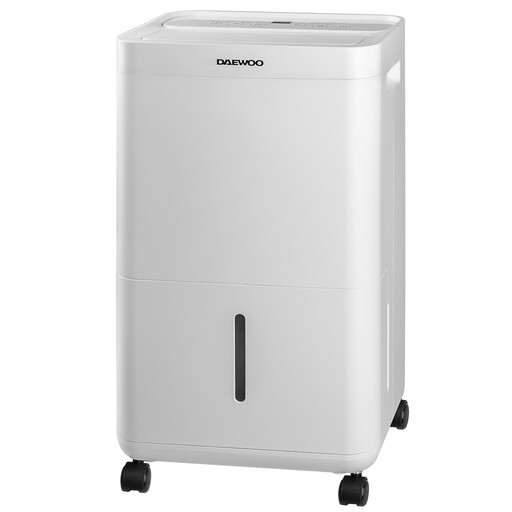
Why It Stands Out: This powerful compressor model is a 2-in-1 workhorse, tackling both high humidity and airborne particles. With an extraction capacity of up to 16 litres per day, it's built to handle significant damp issues in larger areas. The inclusion of an air purifier with a carbon filter adds another layer of benefit for improving indoor air quality.
Pros:
Who is it for? Ideal for households in damp properties or for those who frequently dry laundry indoors. If you need a powerful, multi-function unit for a large room dehumidifier that can make a noticeable impact, this is a strong contender.
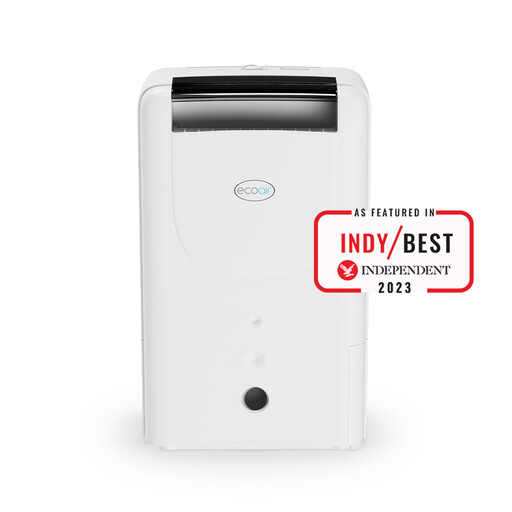
Why It Stands Out: As a desiccant model, the EcoAir DD1 Simple MK3 excels where compressor units often falter: in low temperatures. It maintains strong performance in unheated spaces like garages, boats or chilly utility rooms, making it a versatile low temperature dehumidifier. Its simple rotary controls are refreshingly straightforward and easy to use.
Pros:
Who is it for? This is the perfect solution for anyone needing to control damp in a cooler part of their home, such as a conservatory, basement or garage. It's also a great choice for those who value simplicity and portability.
These recommendations cover some of the most common needs, but the right appliance is always a personal choice. If you're looking for different capacities, features or designs, there are many other models to consider.
Explore our full range of Fans, Heating & Air Treatment solutions to find the perfect fit for your home.
1. Where is the best place to put a dehumidifier in a room? For optimal performance, place your dehumidifier on a flat, stable surface in the centre of the room, if possible. Ensure there is at least 20-30cm of clear space around all sides to allow for unrestricted airflow into the vents. Avoid placing it directly against a wall or behind large furniture.
2. Can a dehumidifier help with mould? Yes, it is a key tool in mould prevention. A dehumidifier for damp and mould works by reducing the level of moisture in the air. Since mould requires a damp environment to grow and spread, maintaining an indoor relative humidity level between 40% and 60% makes it much more difficult for mould to thrive.
3. Should I run a dehumidifier all the time? It depends on your home's humidity levels and the dehumidifier's features. Many modern units are equipped with a humidistat, which allows you to set a target humidity level. The dehumidifier will then automatically turn on and off to maintain that level, saving energy. For specific tasks like drying laundry, you would run it continuously until the clothes are dry.