Households drying laundry indoors often
If full washing loads regularly dry on an airer in your living room, extraction, air movement and a manageable tank or drain arrangement deserve attention.


For frequent laundry in a large, normally heated living room, start with a compressor dehumidifier that offers a laundry setting, humidity control and a workable way to manage collected water. If the room is regularly cool, consider a desiccant model instead; in either case, compare extraction figures under their stated test conditions and check noise, drainage and room suitability before choosing.
If full washing loads regularly dry on an airer in your living room, extraction, air movement and a manageable tank or drain arrangement deserve attention.
If the living room stays cool or is only lightly heated, check the appliance’s operating-temperature range rather than relying on its headline daily extraction figure.
A dehumidifier can help manage laundry moisture, but persistent damp, mould, leaks or faulty ventilation also need to be raised with the landlord or housing provider.
Start with the room’s usual temperature and the size and frequency of washing loads. Then check whether the appliance can run conveniently in a living room you also use.
Consider when: The room is normally heated and you dry substantial loads frequently.
Keep in mind: Allow floor space and check noise at the intended setting; rated extraction is measured under specified temperature and humidity conditions.
Consider when: You want a dedicated clothes-drying setting but your loads are less demanding.
Keep in mind: Confirm that the particular model’s room guidance, airflow and operating noise fit your space; a lower capacity label does not establish quieter operation.
Consider when: The laundry room is regularly cool or lightly heated. EcoAir positions its DD3 Classic MK3 desiccant model for winter use.
Keep in mind: Check the model’s operating range, power draw and noise rather than comparing its litres-per-day label directly with a compressor model’s.
| Concern | What to check | Who this matters to |
|---|---|---|
| Moisture removal and airflow | Compare rated litres per day alongside test temperature and humidity, airflow and the laundry setting. | If I dry full loads often, I need an appliance suited to the washing load and the larger room, not just a prominent capacity label. Around 42% of consumers put moisture removal and air movement first. |
| Cool-room operation | Check the operating-temperature range and the maker’s guidance for laundry use at your usual room temperature. | When my living room stays cool, I need to know the model is intended to operate in those conditions. For around 33% of consumers, cool-room suitability is the primary concern. |
| Noise and water handling | Check noise at the setting you expect to use, tank capacity and whether continuous drainage is practical. | If the appliance will run while I use the living room, I want tolerable noise without repeatedly interrupting a laundry cycle to empty the tank. Day-to-day convenience comes first for around 25% of consumers. |
Rated extraction figures may use different temperature and humidity conditions. They do not, by themselves, tell you how a model will suit your room and washing loads.
Compare each model’s test conditions, airflow, operating range and laundry setting before weighing up its capacity label.
A full tank can interrupt a long laundry run, while continuous drainage needs a suitable drain and a workable hose route.
Check tank capacity, automatic shut-off, whether a hose is included and the drainage instructions for the exact model.
Restricted air intake can hinder airflow. Manufacturer safety instructions also warn against obstructing the appliance.
Place it on a stable, level floor, keep water away from electrical components and follow the model manual’s clearance requirements.
Managing moisture from washing does not repair a leak or faulty ventilation. Persistent damp or mould needs attention beyond running an appliance.
Document and report continuing damp, mould, water ingress or ventilation faults to the landlord or relevant housing provider.
Its Arete Two 20L is a compressor model to examine for frequent laundry drying in a larger space.
Its DD3 Classic MK3 is a desiccant model worth examining when the laundry room is often cool.
Its compressor range offers several capacity tiers to compare for a normally heated room.
Its DEX214RF offers a compressor-model reference point for a dedicated clothes-drying setting and electronic humidity controls.
These dehumidifiers offer laundry or drying settings. The compressor models provide different stated capacity and room-coverage claims; the EcoAir desiccant model is an option to examine for a regularly cool room. Check each model against your actual room size, temperature and drainage arrangements.
 No image available
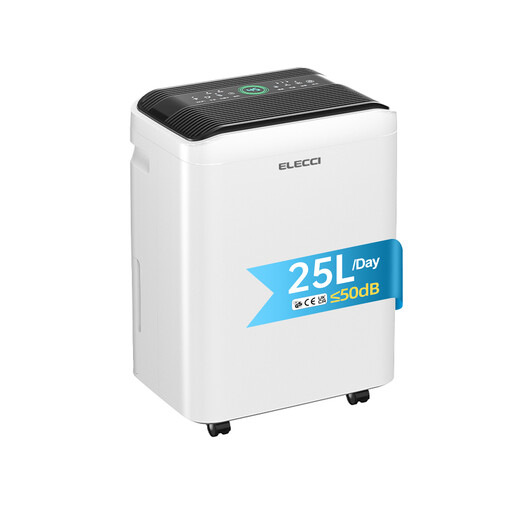
Consider this compressor model for frequent laundry in a living room that fits its stated coverage of up to 50m².
The listing states 25L/day at 30°C and 80% relative humidity, a laundry mode, a 4.8L tank and continuous drainage with a drain hose.
Check its operating-temperature range and noise at the laundry setting for your room.
 No image available
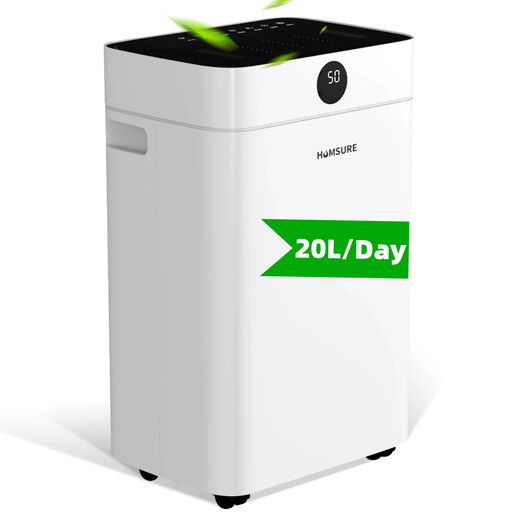
Consider its dedicated DRY mode for indoor laundry if the room fits the listing’s up-to-50m² coverage claim.
The stated 20L/day rating is at 86°F and 80% relative humidity. It has a 2.8L tank and a listed 1.2m drainage hose.
Check operating temperature, airflow and noise before choosing it for a cool or occupied living room.
 No image available
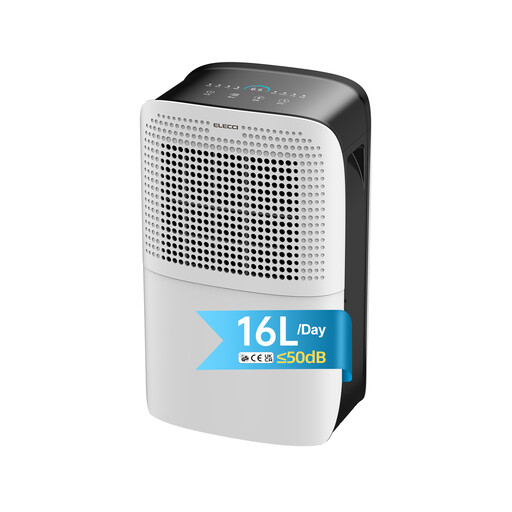
Its drying mode makes it relevant to indoor laundry; check the room dimensions against its stated coverage of up to 32m².
The listing rates extraction at 16L/day at 86°F and 90% relative humidity and describes a 3.1L tank, automatic shut-off and continuous drainage.
Check noise and operating temperature, particularly if the living room is cool or used while the appliance runs.
 No image available
This model has a laundry-drying mode and a drain-hose option for repeated use; confirm that it suits your large living room.
The listing states 25 L/day at 95°F and 90% relative humidity, a 2.8 L tank and an included 3.94 ft continuous-drain hose.
Check room coverage, operating temperature and noise during laundry operation. Follow the supplied setup instructions, including the stated upright standing period after unpacking.
 No image available
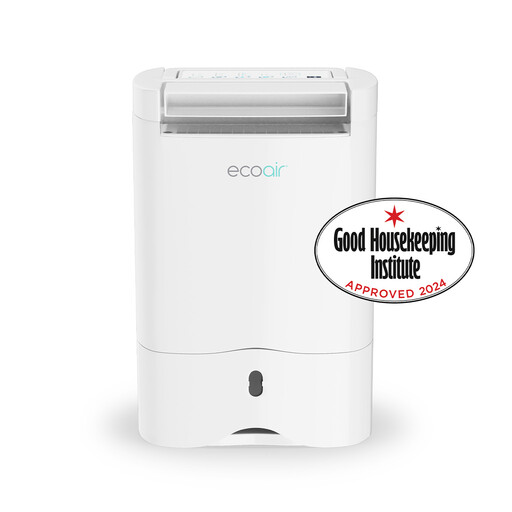
Consider this desiccant model if the living room is regularly cool; its listing describes low-temperature use and a laundry mode.
The listing states up to 10 litres/day extraction, a 3L tank with automatic shut-off and a continuous-drain option.
Check the operating-temperature range, room-size guidance, noise and whether a drain hose is included before deciding if it fits your space.
For moisture extraction in one room, Meaco’s Arete Two manual advises keeping doors and windows closed. Leave space between garments for air to circulate and follow your own appliance’s placement instructions; closing the room does not resolve persistent leaks or inadequate building ventilation.
No. A dehumidifier can help manage moisture from laundry, but it does not repair water ingress, faulty ventilation or another underlying defect. Document and report persistent damp or mould to the landlord or housing provider rather than relying on the appliance alone.
Choose an appliance intended for the market where you will use it, keep its instructions and follow the exact model’s electrical and placement guidance. Meaco’s Arete Two manual calls for an earthed outlet; also check the appliance’s instructions on damaged cords, keeping electrical parts dry and leaving air intakes unobstructed.
Continuous drainage is useful when repeated laundry runs would make tank-emptying inconvenient, provided there is a suitable drain and the hose can be routed as instructed. Confirm hose inclusion for the exact model: EcoAir lists a 1-metre hose with the DD3 Classic MK3, whereas Meaco lists continuous drainage for the Arete Two 20L but says its hose is not included.