What matters when choosing?
For a normally heated home, compare models intended for the space you want to serve and check how quietly they can run near the lounge. For a cold spare room, establish the minimum room temperature before choosing a unit; consider tank emptying and drainage once you know where it can be placed.
Everyday unit for a heated home
Consider when: The lounge is regularly occupied and the connected rooms are normally heated.
Trade-off: A quoted sound level applies to the named model and its stated conditions; it does not establish how quiet every compressor unit will be in your lounge.
Desiccant unit for a cold room
Consider when: The spare room is unheated or only heated intermittently, and the particular model is stated to operate at its likely temperature.
Trade-off: Power use can vary by mode: EcoAir states 300 W on low and 580 W on high for its DD1 Simple MK3.
| Concern |
What to check |
Who this matters to |
| Moisture across connected rooms |
Check the model’s stated room or home size and humidity controls; consider whether doors will be open during use. |
If moisture affects both rooms, I need a unit intended for the space it will serve, rather than just the spare room. Around 33% of consumers would put connected-room moisture control first. |
| Noise in the lounge |
Check the exact model’s quoted sound level and the operating mode behind it, along with available fan controls. |
When others are using the lounge, I do not want the unit’s operation to interrupt conversation or work; quiet shared-space use would be the main concern for around 25% of consumers. |
| A cold spare room |
Compare the room’s likely minimum temperature with the model’s published operating range and stated use. |
If the spare room is rarely heated, I need to know whether the unit is intended to run at that temperature. Around 25% of consumers would make cold-room suitability their primary concern. |
| Tank emptying and laundry |
Check tank size, drainage arrangements and any laundry mode; establish whether a suitable drain route is available. |
With frequent indoor drying or long running periods, I want to avoid repeated interruptions to empty the tank; for around 17% of consumers, that workload would decide the choice. |
Joybuy products for these room needs
These dehumidifiers cover different placement needs: models with stated room-size and drainage features, a smaller-room option, and a desiccant model to assess for a cooler spare room. Check each model’s operating temperature and sound conditions against your rooms before choosing.
 No image available
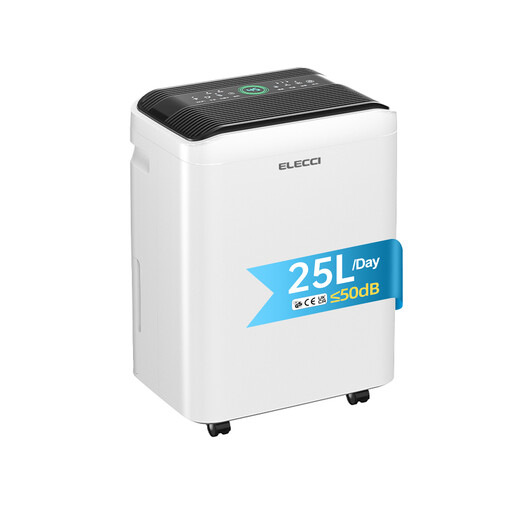
ELECCI 25L/D dehumidifier, 4.8L tank
Consider this model if the stated coverage of up to 50 m² fits the area you intend to serve and a drain hose could reduce tank emptying.
The product name lists three speeds, a 24-hour timer and continuous drainage with a hose. Check the conditions behind its 25L/day rating, plus its sound-rating mode and minimum operating temperature, before choosing it for a cool room beside the lounge.
View on Joybuy
 No image available
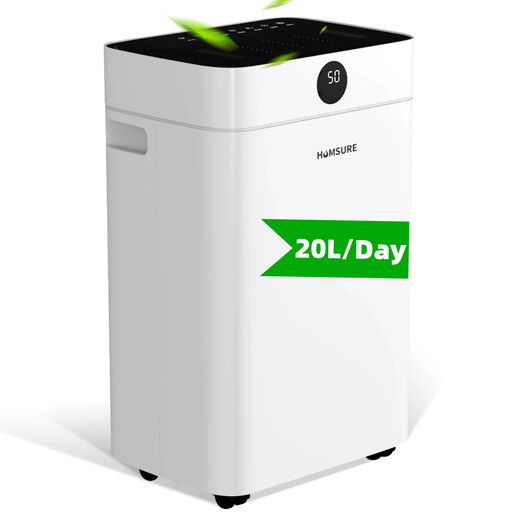
HUMSURE 20L/day dehumidifier, 2.8L tank
Its stated coverage of up to 50 m² may be relevant if you plan to serve more than the spare room and have a practical drainage route.
The product name lists a 24-hour timer, auto-defrost and continuous drainage. Check the conditions behind the 20L/day rating and confirm the model’s sound level and operating-temperature range for your placement.
View on Joybuy
 No image available
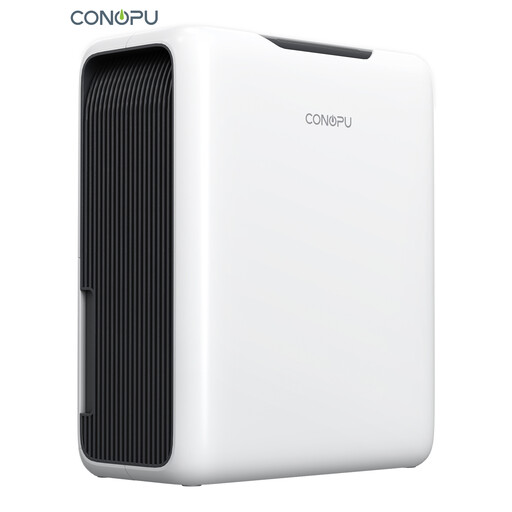
CONOPU CS13 dehumidifier, 3L tank
This smaller-room option is worth assessing if you intend to place the unit in a spare room within its stated 20 m² coverage, rather than relying on it for the whole connected area.
The product name identifies dual-semiconductor operation, an 800ml/day removal claim, a 24-hour timer and auto shut-off. Check the claim’s test conditions, sound-rating mode and temperature guidance if the room becomes cold.
View on Joybuy
 No image available
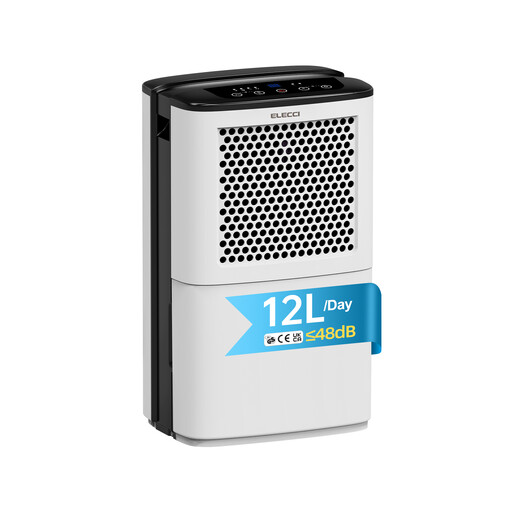
ELECCI 12L/D dehumidifier, 3.8L tank
Consider this variant for a room within its stated 25 m² coverage if you also want the option of draining water through a hose.
The product name lists a 24-hour timer, auto-defrost and continuous drainage. Check the conditions behind its 12L/day rating, along with noise and operating temperature, before placing it near the shared lounge or in a cold spare room.
View on Joybuy
 No image available
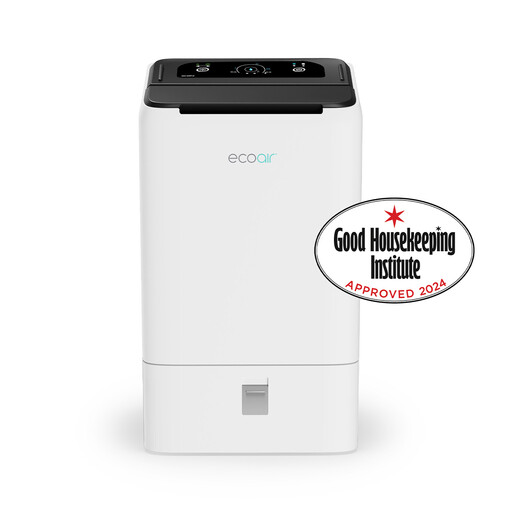
EcoAir DD2 Simple desiccant dehumidifier, 9L/day
This desiccant model is a route to examine if the spare room is cool or used intermittently; confirm that its stated operating range covers the room’s likely minimum temperature.
The product name lists a laundry mode and 9L/day extraction claim. Check the conditions behind that figure and the model’s sound rating before choosing it for use beside an occupied lounge.
View on Joybuy
Common questions
Can a dehumidifier replace vents or extractor fans?
No. UK government ventilation guidance explains that poor ventilation can trap moisture indoors, so keep designed ventilation usable and use a dehumidifier as an additional way to manage moisture.
Should I choose the highest litres-per-day figure?
Not without checking the conditions behind it. De’Longhi states the DEX214RF’s 14 L/day figure at 32 °C and 80% relative humidity; also assess the temperature of your spare room, the unit’s noise and its humidity and drainage controls.
What if the spare room is cold in winter?
Choose only after comparing its likely minimum temperature with the exact model’s operating range. EcoAir specifies 1–35 °C and describes unheated-area use for its DD1 Simple MK3; that specification does not automatically apply to other EcoAir models or to all desiccant units.
Can continuous drainage save me from emptying the tank?
It can reduce manual emptying if the exact model supports it and you can provide a suitable drain route. Check the hose and fittings for your chosen unit and follow its installation instructions.
If I rent and mould keeps returning, is a dehumidifier enough?
No. Use it for moisture management while the underlying cause is assessed, and report persistent damp, mould or leaks to your landlord or property manager. GOV.UK guidance for tenants in social housing in England addresses significant damp and mould hazards; do not assume the appliance resolves a property defect.


