What matters when choosing?
Decide whether the room is normally heated or stays cool, then compare capacity for its size and damp conditions. Noise, controls and water disposal determine how practical the chosen model will be in daily use.
Compressor dehumidifier
Consider when: The living room is normally heated and room size or persistent damp makes extraction capacity a priority; Devola places larger open-plan or particularly damp spaces in its 20–25-litre-per-day guidance.
Keep in mind: A daily extraction rating does not describe tank size or guarantee the same extraction at your room’s temperature and humidity.
Desiccant dehumidifier
Consider when: The living room stays cool or is only lightly heated; Meaco describes desiccant models as more effective in cooler environments.
Keep in mind: Technology alone does not establish fit for a very large or particularly damp room, so compare the exact model’s stated coverage and operating conditions.
| Concern |
What to check |
Who this matters to |
| Capacity for the room |
Measure the space and assess how persistent the damp is. Compare the model’s litres-per-day rating and stated operating conditions; Devola suggests 13–20 litres for typical living areas and 20–25 litres for larger open-plan or particularly damp spaces. |
If condensation keeps returning across a large living room, I need a unit sized for that moisture load rather than a compact-room label. Around 33% of consumers would put capacity fit first. |
| Cool-room operation |
Check the usual room temperature against the model’s operating range, then compare compressor and desiccant options under those conditions. |
When the room is only lightly heated, I want to know how the unit is intended to operate there before comparing its headline rating. For around 27% of consumers, cool-room suitability is the primary concern. |
| Tank and drainage |
Compare tank capacity separately from daily extraction, and confirm whether continuous drainage is supported and a suitable drain route is practical. |
I may run the unit regularly but cannot keep stopping to empty its tank. Reducing that interruption comes first for around 20% of consumers. |
| Noise and controls |
Check noise at the relevant setting and how the exact model’s humidistat or automatic control operates. |
If I use the living room while the dehumidifier runs, its sound and the need to adjust it matter throughout the day. Around 20% of consumers would prioritise comfortable, less hands-on operation. |
Joybuy products for this decision
These dehumidifiers offer different stated extraction ratings, tank sizes and controls for a large living room. Match each model to the room’s dimensions and temperature, then decide whether its noise and water-disposal arrangements suit regular use.
 No image available
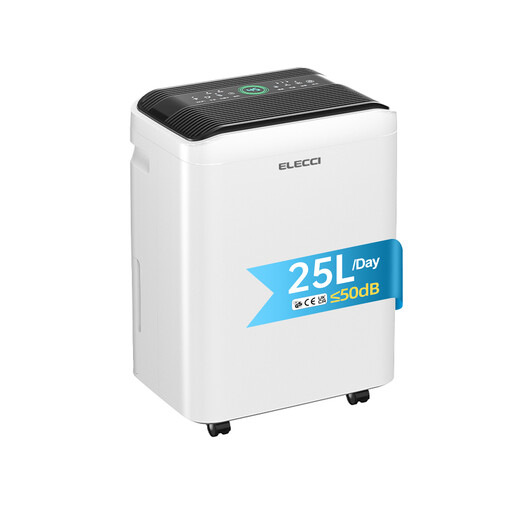
ELECCI 25L/D Dehumidifier, 4.8L Tank
Consider this model where its stated 50 m² room coverage fits the living room. The listing names a 25L/D extraction rating, 4.8L tank, three speeds and continuous drainage with a hose.
The extraction rating is stated at 30°C and 80% relative humidity; check suitability at your room’s usual temperature and the noise conditions if it will run while occupied.
View on Joybuy
 No image available
EcoAir DC26 Compressor Dehumidifier
Consider this model when comparing higher stated extraction ratings for a large or persistently damp living room. Its name specifies 26 litres per day, a 6.5L tank and humidistat control.
Check its stated room coverage, operating-temperature range and noise level against your space; the daily rating alone cannot establish performance in your room.
View on Joybuy
 No image available
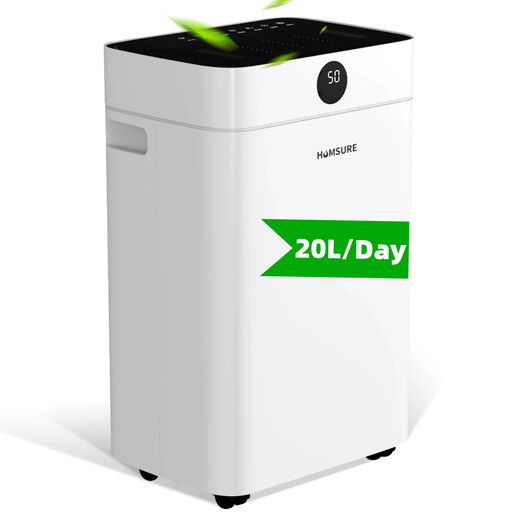
HUMSURE 20L/Day Dehumidifier, 2.8L Tank
Its stated coverage of up to 50m² makes this a model to compare with the dimensions of a larger living room. The name specifies 20L/Day extraction, a 2.8L tank, a 24H timer and continuous drainage.
The daily extraction figure is stated at 86°F and 80% relative humidity. Check operation at your room’s usual temperature and its noise level if the room is occupied during use.
View on Joybuy
 No image available
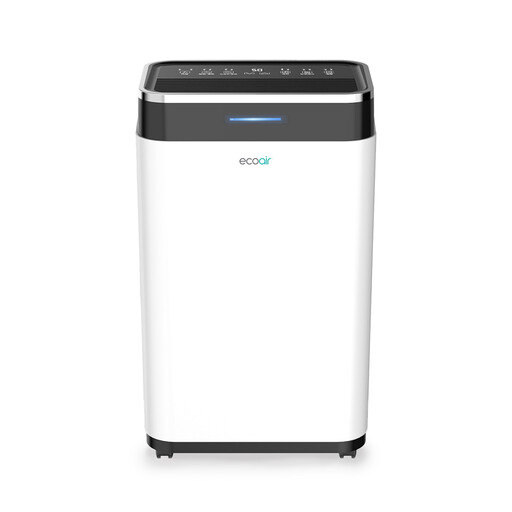
EcoAir DC18 MK2 Compressor Dehumidifier
Consider this 18-litres-per-day model for a normally heated living room if its capacity suits the room and moisture load. Its name specifies a 6.5L tank and humidistat control.
Compare its room coverage, operating-temperature range and noise level before choosing it for a particular large or frequently occupied room.
View on Joybuy
 No image available
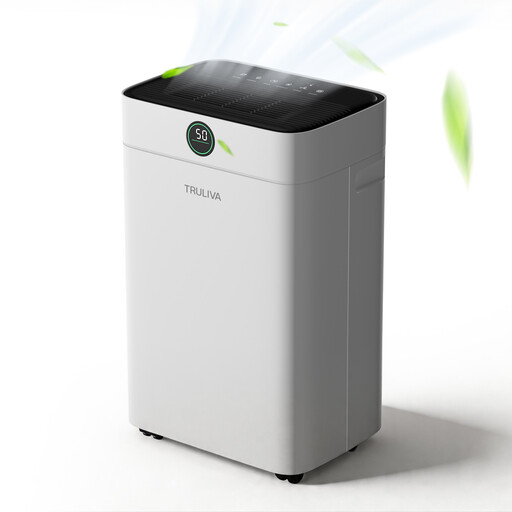
TRULIVA 25 L/Day Dehumidifier, 2.8 L Tank
This model’s stated 25 L/Day rating is relevant to compare for a particularly damp living room, while its 2.8 L tank makes the named continuous-drain hose worth considering where a drain route is practical.
The daily rating is stated at 90% relative humidity and 95°F. The listing recommends operation at 5–35°C and says the compressor stops to defrost below 15°C; check the room’s temperature, coverage and noise outside sleep mode before choosing it.
View on Joybuy
Common questions
What capacity should I consider for a large living room?
Start with the room’s dimensions and how persistent the damp is, not the tank size. Devola’s guide suggests 13–20 litres per day for typical living areas and 20–25 litres per day for larger open-plan or particularly damp spaces; check the exact model’s coverage and operating conditions before choosing.
Is a compressor or desiccant model more suitable?
For a normally heated living room, a compressor model is a relevant starting point; for a cool or lightly heated room, consider a desiccant model. Meaco distinguishes the two by warmer versus cooler operating environments, but the chosen model still needs sufficient stated capacity and suitable noise and drainage arrangements.
Can a dehumidifier replace ventilation?
No. A dehumidifier removes moisture from indoor air, whereas ventilation exchanges indoor air and moisture with fresh outdoor air, as GOV.UK explains. Investigate persistent damp or leaks rather than relying on the appliance to resolve their cause.
How can I avoid emptying the tank so often?
Consider continuous drainage if the exact model supports it and you can arrange a suitable drain route. Otherwise, compare tank capacity and full-tank shut-off separately from the litres-per-day extraction rating: a higher daily rating does not mean a larger tank.


