Small-flat laundry dryers
Consumers who regularly use an indoor airer in a heated bedroom or living area and need to manage the moisture it releases without taking up too much space.


For laundry dried in a normally heated small flat, start by comparing compact compressor dehumidifiers with a laundry mode and adjustable humidity control. If the drying room regularly falls below 10°C, consider a desiccant model instead: Meaco advises that compressor extraction can become less efficient in colder conditions. In either case, check noise, electricity use and how you will empty or drain the tank.
Consumers who regularly use an indoor airer in a heated bedroom or living area and need to manage the moisture it releases without taking up too much space.
Consumers whose dehumidifier would run near a bed, desk or shared living area. Noise at the setting they intend to use, electricity demand and humidity controls matter alongside extraction capacity.
Consumers drying clothes in an unheated or frequently cold room. Meaco advises that compressor extraction can become less efficient below 10°C, making appliance type worth checking.
Choose for the temperature of the room where the airer will stand, not just the flat’s average temperature. The two appliance types below address different drying conditions; features such as noise control and drainage still need checking on the exact model.
Consider when: Laundry dries in a normally heated room and a compact model with laundry and humidity controls suits the available space.
Bear in mind: A litres-per-day rating does not tell you how much water the unit will collect in your room; extraction can also fall in colder conditions.
Consider when: The laundry area often falls below 10°C. Meaco positions its desiccant models for colder spaces where compressor extraction can lose efficiency.
Bear in mind: That is manufacturer guidance, not a model-by-model comparison; check the particular unit’s electricity use and noise for your drying routine.
| Concern | What to check | Who this matters to |
|---|---|---|
| Laundry moisture | Look for a laundry mode and adjustable humidity control; compare extraction ratings with their stated test conditions. | If I dry clothes indoors regularly, I want to manage the moisture released into the room as well as dry the load. Around 33% of consumers put laundry drying and moisture control first. |
| Noise and space | Check noise at the setting you would use and measure the intended floor space, allowing for the model’s placement clearances. | With an airer near where I work or sleep, I need a unit I can place and run without undue disruption; around 27% of consumers make quiet, compact use their primary concern. |
| Running and emptying | Compare power information for the intended mode, tank capacity and full-tank shut-off; check whether your room permits safe continuous drainage. | Frequent laundry loads make electricity use and tank emptying part of my routine. For around 27% of consumers, keeping that ongoing burden manageable takes priority. |
| Cold-room extraction | Check the drying room’s winter temperature and the exact model’s operating range before choosing compressor or desiccant. | If my airer stands in an unheated room, I need an appliance suited to that temperature. Around 13% of consumers put cold-room operation first. |
Indoor laundry adds moisture, but persistent damp can also involve leaks, ventilation or building defects. GOV.UK guidance for England says underlying damp and mould issues need to be addressed.
Use the appliance to manage laundry-related moisture, and report persistent leaks, damp patches or mould to the landlord or managing agent rather than relying on the appliance alone.
An extraction rating depends on test conditions. For example, a Midea 12L/day Joybuy listing specifies its maximum at 30°C and 80% relative humidity; it does not promise that collection rate in a cooler flat.
Compare the rating conditions with your room temperature, then consider noise, power information and tank or drainage arrangements. Which? includes extraction, energy efficiency and quietness among its dehumidifier test dimensions.
Meaco advises that compressor models can lose extraction efficiency below 10°C and spend more time defrosting. A headline capacity alone may therefore be a poor basis for choosing one for an unheated space.
If the laundry room often reaches that temperature, compare desiccant options and check the exact model’s operating range, electricity use and noise.
Water collection can interrupt a drying session when a tank fills. Tank size and the moisture in the room both affect how often it needs emptying.
Check for full-tank shut-off. Consider continuous drainage only if the model supports it and you have a suitable, safe route to a drain.
Meaco lists 12L compressor models for smaller homes or flats and DD8L desiccant models intended for colder spaces.
Ebac’s range includes 12L compressor models with laundry mode and Smart AI Control.
Pro Breeze positions its 12L laundry-mode model for smaller spaces.
Devola lists compact and 12L compressor options, including models with laundry or sleep modes.
These options include compressor models for indoor laundry and desiccant models to consider for cooler drying spaces. Match the appliance to your room temperature, available space and tank-emptying routine rather than comparing litres-per-day figures alone.
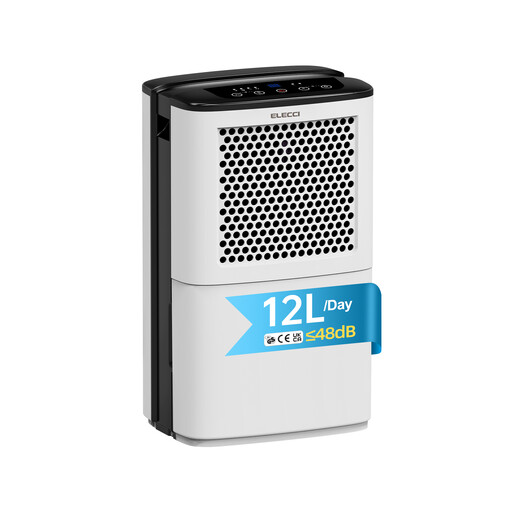 No image available
A compressor option for indoor laundry where a drying mode and a way to reduce manual emptying matter.
The listing states up to 12L/day extraction, adjustable humidity settings, 200W rated input and suitability for rooms up to 25m². It also lists continuous drainage and full-tank shut-off.
Check operating noise and temperature suitability for your intended room. Follow the listing’s instruction to leave the unit upright for two hours before first use or after it has been tilted.
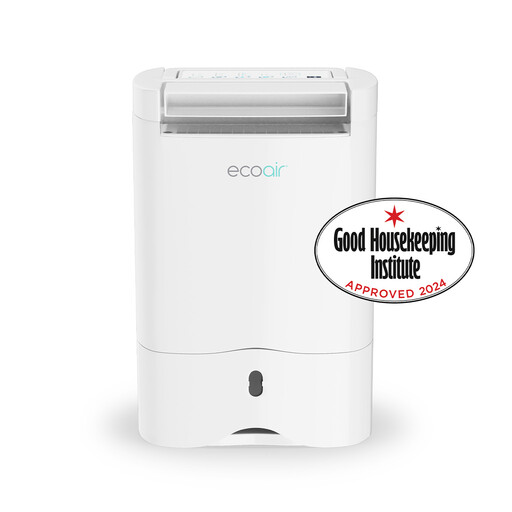 No image available
Consider this laundry-mode desiccant model if clothes dry in a cooler or unheated room and a slim body would suit the space.
The listing states up to 10L/day extraction, a 3L tank and a continuous-drain option.
Check its exact operating-temperature range, power use, noise and dimensions. Continuous drainage also needs a suitable, safe route to a drain.
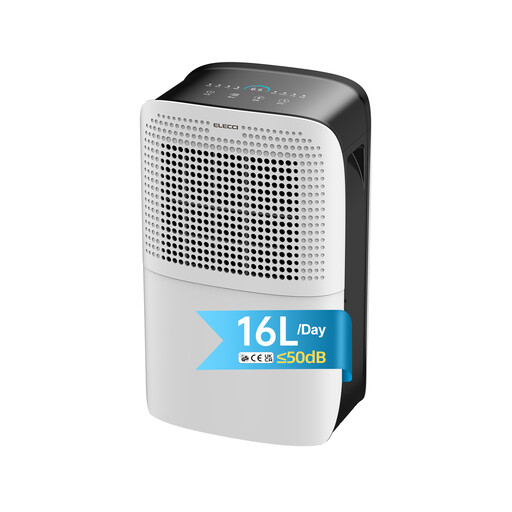 No image available
This compressor model has a drying mode and automatic humidity control, but its stated coverage is aimed at a larger room than some small-flat layouts.
The listing states up to 16L/day extraction, coverage up to 32m², 182W rated input, a 3.1L tank, full-tank shut-off and an included drain hose.
Measure the intended spot and check placement clearances, operating noise and temperature suitability before choosing the larger-capacity model.
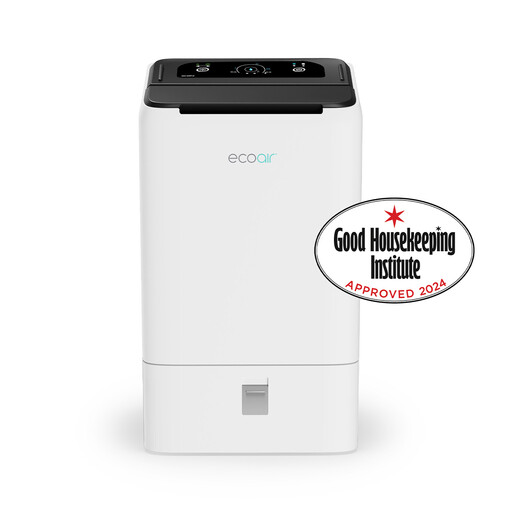 No image available
A desiccant laundry-mode option to consider for a cooler drying area, with a carry handle if the unit needs moving between rooms.
The listing states up to 9L/day extraction, continuous drainage and automatic full-tank shut-off.
Check tank capacity, wattage, operating noise and the exact temperature range against your room and laundry routine. Drainage requires a suitable, safe connection.
 No image available
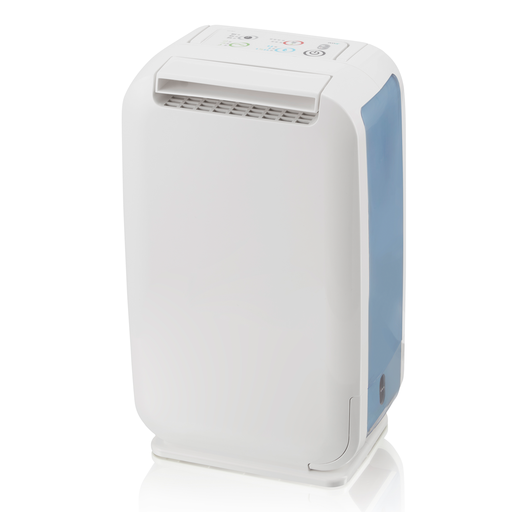
This compact desiccant model suits consideration when laundry dries in a small, often cold room and the unit may need carrying between spaces.
The listing states up to 6L/day extraction, a laundry mode, a 1.8L tank, a carry handle, full-tank shut-off and a continuous-drain option.
Check whether the tank-emptying frequency suits your routine, along with the model’s wattage, noise and exact operating-temperature range.
Usually, placing it in the same room makes sense if the product manual permits that position and you can maintain its required clearances. Use the appropriate laundry or humidity setting, and continue to manage ventilation: City of Winchester guidance notes that drying clothes indoors increases moisture in the home.
Start with compact compressor models for a normally heated drying room, but consider desiccant models if that room regularly falls below 10°C. Meaco advises that compressor extraction can lose efficiency in colder air; compare the exact models’ noise and electricity information before deciding.
A dehumidifier can help manage moisture released by laundry, but it cannot fix a leak or another underlying building problem. If you rent in England, GOV.UK guidance says landlords need to address underlying damp and mould issues; report persistent damp, leaks or mould to your landlord or managing agent rather than relying on the appliance alone.
Compare tank capacity and full-tank shut-off, then check whether the exact model supports continuous drainage. A drain connection can reduce manual emptying only where the room provides a suitable, safe route; it is not an automatic benefit of every dehumidifier.