People with a heated spare room
If condensation or mustiness affects a spare room that is normally heated, you may want moisture control without giving up much floor space or disturbing adjacent living areas.


For a normally heated spare room, start by comparing compact compressor dehumidifiers with humidity controls, a manageable tank and a noise level that suits nearby rooms. If the room is regularly cold or unheated, consider a desiccant model instead and check its operating range and power use. Neither type replaces ventilation or repairs to a persistent source of damp.
If condensation or mustiness affects a spare room that is normally heated, you may want moisture control without giving up much floor space or disturbing adjacent living areas.
If the room is rarely heated or becomes cold in winter, the dehumidifier’s stated operating-temperature range is an important part of the choice.
If you do not visit the room every day, tank capacity, automatic shut-off and a practical drainage route may matter as much as where the appliance fits.
Check how warm the spare room stays before comparing capacity claims: temperature can change which type is appropriate, while noise, placement and emptying determine how convenient it is to live with.
Consider it when: the spare room is normally heated and humidity control is a priority.
Bear in mind: check the exact model’s minimum operating temperature if the room cools substantially in winter.
Consider it when: the room is frequently cold or unheated; Pro Breeze recommends desiccant models for colder environments.
Bear in mind: compare power use at the setting you expect to use. EcoAir lists 420 W on low and 670 W on high for its DD3 Slimline.
| Concern | What to check | Who this matters to |
|---|---|---|
| Room fit and noise | Compare stated room coverage, dimensions and noise for the exact model and operating mode; allow the clearance its manual requires. | If the heated spare room is close to where I work or sleep, I want moisture control that fits without becoming a nuisance. Around 50% of consumers would put room fit and tolerable noise first. |
| Emptying and drainage | Check tank capacity and automatic shut-off, then whether a continuous-drain hose has a workable route. | When I seldom enter the spare room, a full tank could interrupt use before I notice it. For around 30% of consumers, reducing emptying and routine attention would be the main concern. |
| Cold-room operation | Compare the stated minimum operating temperature and rated power use at the intended setting. | If the room stays cold in winter, I need a model intended to operate at those temperatures rather than choosing by extraction rating alone. That would be the primary concern for around 20% of consumers. |
A dehumidifier removes moisture from the air, but a leak or building fault can keep adding moisture. Government home-ventilation guidance also notes that poor ventilation can trap moisture indoors.
Keep installed ventilation usable. Investigate recurring damp or mould, and report persistent problems to the landlord or managing agent if you rent.
An extraction figure does not tell you whether a model suits the room’s winter temperature, available floor space or nearby occupants. Power use can also vary by setting: EcoAir lists 420 W on low and 670 W on high for the DD3 Slimline.
Compare the exact model’s operating range, dimensions, noise, tank or drainage arrangement and rated watts alongside its extraction claim.
A room that is only occasionally heated may call for a different choice from a normally heated spare room. Pro Breeze recommends desiccant dehumidifiers for colder environments.
Check how cold the room becomes and compare that with each model’s stated operating range before choosing a type.
A tight position beside furniture can conflict with placement instructions, while a hose is useful only if water can reach a suitable collection point. Which? advises keeping most dehumidifiers at least 20 cm from walls or furniture, although model instructions may differ.
Measure the intended position, follow the model’s clearance and filter-care instructions, and check the hose arrangement before relying on continuous drainage.
Meaco positions its Arete One 10L for smaller spaces, including single rooms, studios and one- or two-bedroom homes.
EcoAir’s DD3 Slimline illustrates the desiccant route for a spare room that is cold or unheated.
Pro Breeze’s PB-D-06 illustrates a compact compressor option for a normally heated spare room.
These products offer different ways to address moisture in a small flat’s spare room. The EcoAir models are desiccant choices to examine for colder conditions; compare the other models against the room’s temperature, space and upkeep needs without assuming they use the same technology.
 No image available
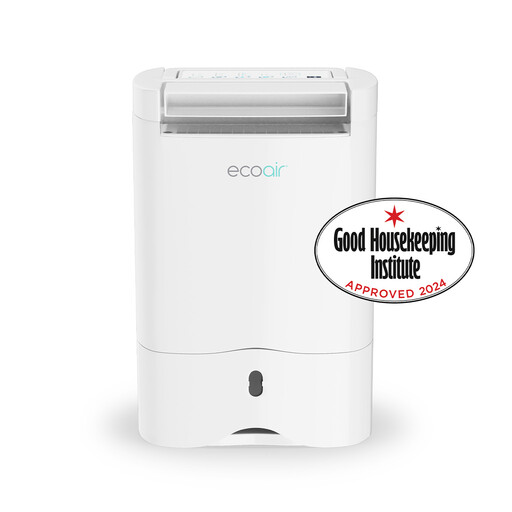
A desiccant option to consider if the spare room is regularly cold. The product name specifies 10 L/day extraction, a 3 L tank and a laundry mode; EcoAir specifies a 1°C–40°C operating range for the DD3 Slimline. EcoAir also lists 420 W on low and 670 W on high, so compare the setting you expect to use with your electricity tariff. Check the space and hose route before choosing continuous drainage.
 No image available
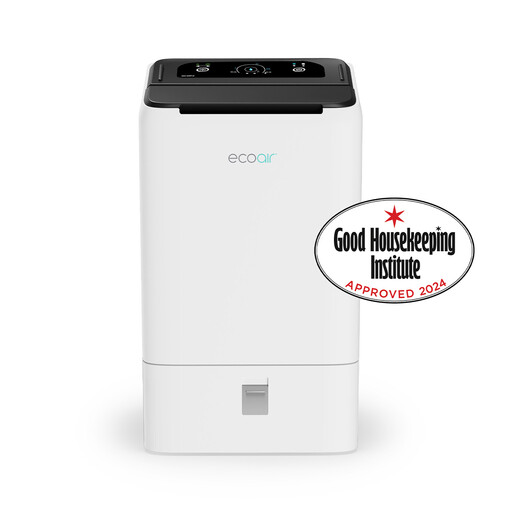
Consider this desiccant model if the spare room is cool and you want a laundry mode. Its product name specifies 9 L/day extraction. Compare the exact operating-temperature range, tank capacity, noise, dimensions, power use and any drain-hose requirements with the room before buying.
 No image available
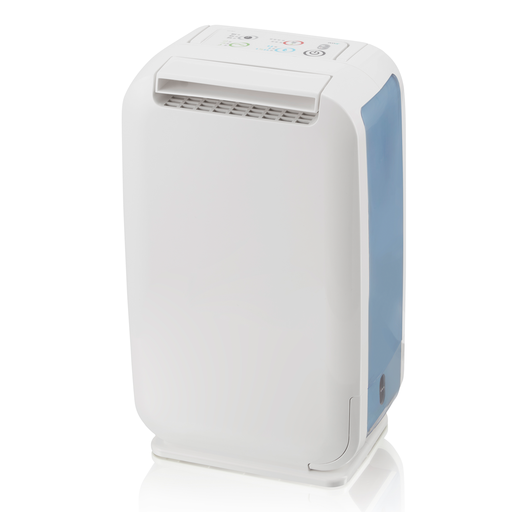
A smaller desiccant option to compare for a spare room with limited space. Its product name specifies 6 L/day extraction and a 1.8 L tank. If emptying frequency or use near a bedroom matters, check the drainage setup, dimensions and measured noise; also confirm its operating range and power use for the room’s conditions.
 No image available
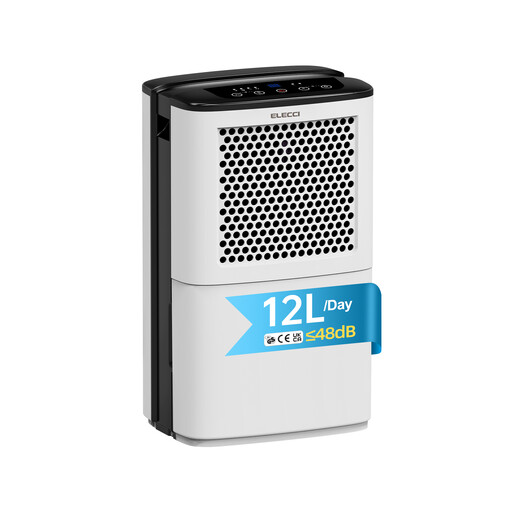
Consider this model if a larger tank and a supplied drain hose would make upkeep easier. Its product name specifies 12 L/day extraction, a 3.8 L tank, a 24-hour timer and coverage for rooms up to 25 m². Check the actual room size, hose route, dimensions, noise and minimum operating temperature before deciding whether it fits.
 No image available
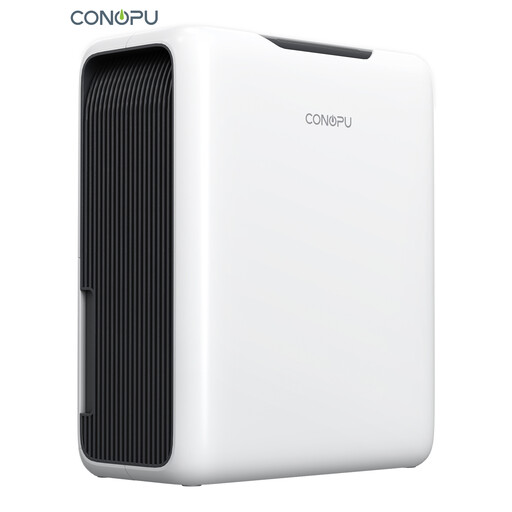
This semiconductor model is a different choice to assess for a compact spare room; do not treat its extraction claim as directly comparable real-room performance. Its product name states a maximum of 800 ml/day, coverage up to 20 m², a 3 L tank and a 24-hour timer. Check its operating-temperature guidance against the room’s winter conditions before choosing it for a cold space.
Choose according to the room’s temperature: start with a compressor model for a normally heated spare room, but consider a desiccant model if it is frequently cold or unheated. Pro Breeze recommends desiccant dehumidifiers for colder environments; whichever type you consider, check the exact model’s operating range.
No: a dehumidifier can reduce airborne moisture, but it cannot repair a leak or another continuing source of damp. Investigate the cause of recurring damp or mould rather than relying on the appliance alone.
No: ventilation and dehumidification serve different purposes. Government home-ventilation guidance explains that poor ventilation can trap moisture indoors, so keep installed ventilation usable even if you close external windows and doors while actively drying the spare room.
It may be possible if the model permits that arrangement and the hose has the required fall. Pro Breeze says its non-pumped hose setup needs the appliance and hose at least 15 cm higher than the sink or bucket; follow the instructions for the model you choose.
Yes: report persistent mould or recurring damp to your landlord or managing agent rather than treating a dehumidifier as a repair. Government guidance for England says landlords should assess damp and mould and identify the underlying issue; seek guidance specific to your nation if you rent elsewhere in the UK.