For a normally heated small flat, start by comparing compact compressor dehumidifiers with humidistats, paying attention to room coverage, noise and tank arrangements rather than the daily extraction figure alone. Meaco’s temperature guidance points towards a desiccant model if the problem room regularly falls below 10°C. Keep ventilation working and investigate leaks or building defects: a dehumidifier cannot repair them.
Who needs which features?
Residents dealing with everyday window condensation
If water collects on bedroom or living-room windows in colder weather, focus on the room you need to treat. A humidistat, stated room coverage, noise and a workable position for the appliance matter more than choosing by the largest extraction figure.
Households drying clothes indoors
Frequent indoor laundry adds moisture and can make tank emptying part of the routine. Check whether the exact model offers a laundry mode, and whether its tank or drainage arrangement works in your flat.
Residents with an unusually cold room
If the room with condensation regularly falls below 10°C, compare the operating guidance for desiccant and compressor models before focusing on their stated daily extraction rates.
What matters when choosing?
Start with the temperature and size of the room where condensation appears. Then consider moisture from laundry and whether the appliance will run near a bed, desk or seating area.
| Concern |
What to check |
Who this matters to |
| Everyday condensation |
Compare stated coverage with the room being treated, and check for a humidistat. |
I need to manage routine moisture in a normally heated flat without choosing capacity for a much larger space; roughly 36% of consumers put everyday condensation control first. |
| Indoor laundry |
Check tank capacity and whether a continuous-drainage option can reach a suitable drain. |
When clothes regularly dry indoors, I need an emptying routine I can keep up with; around 29% of consumers prioritise laundry-related moisture. |
| Cold-room operation |
Check the problem room’s temperature, particularly overnight, against the exact model’s operating guidance. |
If my room often drops below 10°C, I need a dehumidifier suited to those conditions; cold-room suitability comes first for roughly 21% of consumers. |
| Living-space disruption |
Compare dimensions, stated noise level and access to the tank where the unit will stand. |
With the appliance close to where I sleep or work, I need room to place and use it comfortably; around 14% of consumers make compact, quiet operation their primary concern. |
Mistakes to avoid
-
Assuming every damp patch needs a dehumidifier
Reading Borough Council identifies leaks, rain ingress, damaged guttering and gaps around windows among possible causes of damp. Removing moisture from the air will not repair a building fault.
Look for localised staining, tide marks or damp that follows rainfall, and arrange for the underlying problem to be investigated.
-
Blocking ventilation while the appliance runs
Government home-ventilation guidance explains that moisture can remain trapped indoors without effective ventilation and condense on cold surfaces.
Keep fitted extractor fans working and trickle vents unblocked where present, following the home’s ventilation instructions.
-
Choosing a compressor model without checking room temperature
Meaco’s guidance generally places compressor models in rooms above 10°C and desiccant models in colder conditions. The temperature of the problem room matters more than a headline extraction figure.
Check that room’s temperature, including overnight, and compare it with the exact appliance’s operating guidance.
-
Overlooking tank emptying and drainage
A full tank can interrupt operation, while continuous drainage is practical only if the selected model supports it and a hose can reach a suitable drain.
Check tank capacity, whether a hose is supplied and where the appliance can stand without obstructing airflow or creating a trip hazard.
Brands to consider for a small flat
Meaco
Meaco positions the MeacoDry Arete One 10L for single rooms, studios and one- or two-bedroom homes, with stated coverage of up to 42m².
- The Arete One 10L combines dehumidifier and air-purifier functions according to Meaco’s product information.
- Check the exact model’s dimensions and operating conditions, and whether you would use the air-purifier function.
Ebac
Ebac positions its Ebac 12 humidistat model for flats and small homes with up to two bedrooms.
- The cited Ebac 12 has a humidistat and a manufacturer-stated two-year warranty.
- Check the precise model: controls, tank arrangements and warranty terms can differ across the range.
Pro Breeze
Pro Breeze offers 12L compressor models with different tank sizes and placement requirements.
- Its 12L humidistat model lists coverage up to 20m², a 1.8L tank and continuous drainage; the separate 12L Compact lists a 2L tank.
- Compare the precise model and check whether a drainage hose is supplied and can be routed where you plan to use it.
Dehumidifiers on Joybuy
These choices cover room-scale moisture control, indoor-laundry routines and a desiccant option to compare for a colder room. Match each appliance to the temperature and area you intend to treat; a stated extraction rate alone does not establish how much water it will collect in your flat.
 No image available
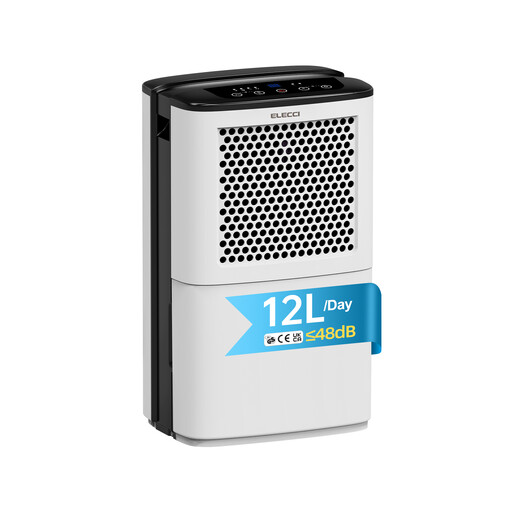
ELECCI 12L/day dehumidifier with 3.8L tank and drain hose
Consider this for a normally heated room where you can accommodate its tank or route the drain hose safely.
- Stated extraction: 12L/day; stated room suitability: up to 25m².
- 3.8L tank, continuous drainage, 24-hour timer and R290 refrigerant are listed in the product name.
- If it will run near a bed or desk, check the operating noise before choosing it.
View on Joybuy
 No image available
TRULIVA 25L/day dehumidifier with laundry drying and 2.8L tank
Its laundry-drying feature and drainage hose are worth comparing if you regularly dry clothes indoors.
- Stated extraction: 25L/day; 2.8L tank, drain hose and auto-defrost are listed in the product name.
- Check the suitable room area for your flat rather than treating the extraction figure as a measure of coverage.
- The stated noise figure below 50 dB applies to sleep mode; compare operating noise for the modes you expect to use.
View on Joybuy
 No image available
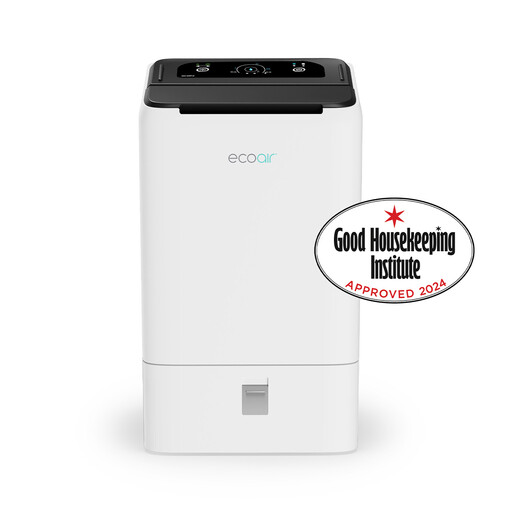
EcoAir DD2 Simple desiccant dehumidifier, 9 litres/day, white
Compare this desiccant model if the room with condensation regularly becomes cold; check the actual room temperature before choosing by technology.
- Stated extraction: 9 litres/day; the product name lists a laundry mode.
- Check room coverage, tank arrangements, humidity controls and noise against the place you intend to use it.
View on Joybuy
 No image available
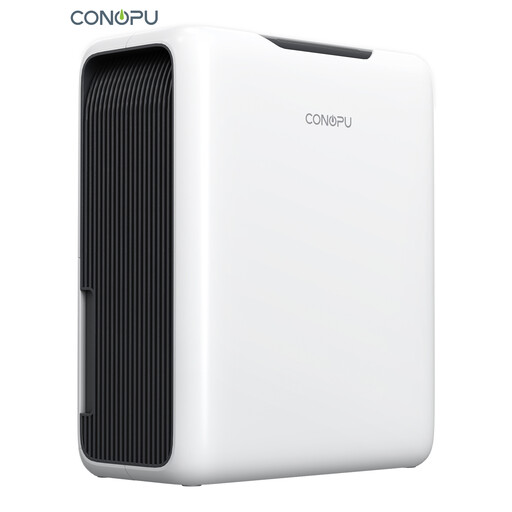
CONOPU CS13 dual-semiconductor dehumidifier with 3L tank
Consider this for an individual room that fits its stated area guidance, rather than assuming it will treat the whole flat.
- Stated extraction: 800ml/day; stated room suitability: up to 20m².
- 3L tank, 24-hour timer and automatic shut-off are listed in the product name.
- Check its operating-temperature guidance and whether its controls suit your preferred routine.
View on Joybuy
Common questions
Will a dehumidifier fix every cause of window condensation or damp?
No. It can remove moisture from indoor air, but it cannot repair a leak or building defect. Reading Borough Council identifies plumbing leaks, rain ingress, damaged guttering and gaps around windows among possible damp causes, so investigate persistent or localised patches.
Do I still need to ventilate my flat if I use a dehumidifier?
Yes. Government home-ventilation guidance explains that moisture can become trapped without effective ventilation and condense on cold surfaces. Keep fitted ventilation working while using a dehumidifier for additional moisture control.
Should I choose a compressor or desiccant dehumidifier for a small flat?
Use the temperature of the room you need to treat as a starting point. Meaco’s guidance generally suits compressor models to rooms above 10°C and desiccant models to rooms below 10°C; check the exact appliance’s operating guidance and the room’s temperature, particularly overnight.
If I rent, should I report mould or a repair concern before buying?
Report mould or a suspected repair issue rather than relying on a dehumidifier to resolve it. GOV.UK advises tenants to contact their landlord if a property needs repairs or has mould; check the housing guidance that applies where you live for the relevant responsibilities and next steps.


