For a normally heated spare bedroom, start with a model whose stated room coverage fits the space, then check its noise, humidity controls and tank-emptying needs. If the room is cold or unheated, prioritise an operating-temperature range that covers its usual conditions; a desiccant model designed for low-temperature use is one route. A dehumidifier can help control airborne moisture, but it does not repair leaks or replace appropriate ventilation.
Who is this for?
People managing spare-room condensation
If a spare bedroom has condensation, musty air or recurring damp, a dehumidifier may help manage airborne moisture while you check what is causing it. Energy Saving Trust also identifies ventilation as a way to reduce the risk of condensation, damp and mould.
People with a cold spare room
If the room is rarely heated, its winter temperature matters more than a headline extraction figure alone. Check the exact model’s operating range: EcoAir positions its DD1 Classic desiccant model for unheated spaces.
People using a unit near sleeping space
Declared noise, humidity control, tank capacity, full-tank shut-off and drainage options matter when a unit may run close to a bedroom or need regular attention. Compare those features on the particular model, not across a brand as a whole.
What matters when choosing?
Check the room’s usual temperature and moisture source before comparing extraction ratings. The manufacturer-stated ranges for Pro Breeze’s cited 12L compressor model and EcoAir’s DD1 Classic show why the exact model matters.
Compressor model for a heated room
Consider it when: The spare bedroom is normally heated and a room-sized unit with humidity controls suits its use.
Check: Pro Breeze specifies a 5–32°C working range for its cited 12L model, so do not assume it suits a room colder than that range.
Desiccant model for a cold room
Consider it when: The room is unheated or intermittently heated and low-temperature operation is the deciding need.
Check: EcoAir states a 1–40°C range for its DD1 Classic; confirm the range, power use and tank arrangements of the model you actually choose.
| Concern | What to check | Who this matters to |
|---|
| Cold-room suitability |
Compare the room’s winter temperature with the exact model’s operating range. |
If my spare room stays cold, I need a unit rated to operate at its usual temperature. Around 33% of consumers would put cold-room suitability first. |
| Persistent moisture or laundry |
Check stated room coverage, extraction conditions and whether a laundry mode or drainage option suits the intended use. |
When condensation keeps returning or I dry clothes nearby, I need moisture control that fits that repeated use. For around 25% of consumers, this is the primary need. |
| Noise and upkeep |
Check noise at the relevant setting, tank capacity, full-tank shut-off and humidity controls. |
If the unit will run near where I sleep, noise and frequent tank emptying could affect whether I use it. Around 25% of consumers would prioritise quiet, low-intervention use. |
| Cause of damp |
Look for leaks or ventilation problems, particularly if damp or mould persists or spreads. |
Before relying on an appliance, I need to know whether the room has a problem that needs attention. That would be the leading concern for around 17% of consumers. |
Buying pitfalls
-
Choosing by litres per day alone
An extraction rating does not, by itself, establish how much water a model will collect in your room or whether it suits a cold space.
Check the stated room coverage, operating-temperature range, rating conditions and noise alongside the extraction figure.
-
Treating the appliance as a repair
A dehumidifier removes airborne moisture but cannot fix a leak. Energy Saving Trust says ventilation lowers the risk of condensation, damp and mould.
Investigate persistent damp or mould and check ventilation. If you rent, report mould or a suspected repair need to your landlord, as GOV.UK advises.
Running the unit while the underlying problem remains also involves continuing electricity use.
-
Overlooking where the water will go
A tank needs emptying, while continuous drainage is useful only where the chosen model supports it and a suitable drain is practical.
Check tank capacity, full-tank shut-off, hose details and the drainage route before planning frequent or unattended use.
-
Reading a low noise figure as a promise of silence
Declared noise figures are model-specific; fan settings, cycling, vibration and placement can affect how intrusive a unit seems near a bedroom.
Check the setting used for the stated figure, the placement instructions and the retailer’s return terms before depending on overnight use.
Brands to consider
Meaco
The MeacoDry Arete Two 12L is a model to examine if bedroom-adjacent noise or laundry controls matter.
- Meaco states 35 dB declared noise and lists app control, an adjustable louvre and laundry timers for this model.
- Confirm how its stated noise is measured and whether its size and features fit one spare room; these specifications do not describe every Meaco unit.
EcoAir
The DD1 Classic is a desiccant model EcoAir positions for unheated spaces.
- EcoAir states a 1–40°C operating range and noise as low as 34 dB(A) for the DD1 Classic.
- Compare the exact model’s power use, tank and drainage arrangements with your room; the DD1 Classic’s figures do not apply to all EcoAir models.
Pro Breeze
Its cited 12L compressor model is a reference point for a normally heated, medium-sized bedroom.
- Pro Breeze lists coverage up to 15 m², 38 dB declared noise, a humidistat, a 1.8L tank and continuous drainage for this model.
- Its stated 5–32°C working range makes room temperature an important check before choosing it for a cold spare bedroom.
Dehumidifiers on Joybuy
These models cover different spare-bedroom needs, including room-sized moisture control, drainage or laundry features, and desiccant options listed for cooler rooms. Check each model’s temperature and noise details against the way you will use the room.
 No image available
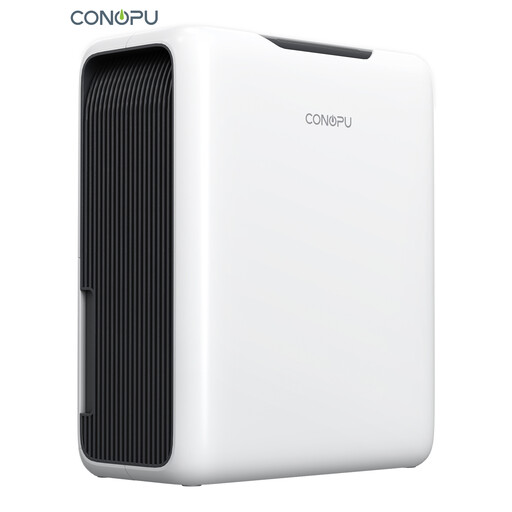
CONOPU CS13 dehumidifier, 3L tank
Consider it for a bedroom within the listing’s stated 20 m² coverage if a 3L tank suits your emptying routine.
The title states up to 800 ml/day extraction, a 24-hour timer and automatic shut-off. If the room gets cold, confirm the model’s operating guidance before choosing it.
Joybuy
 No image available
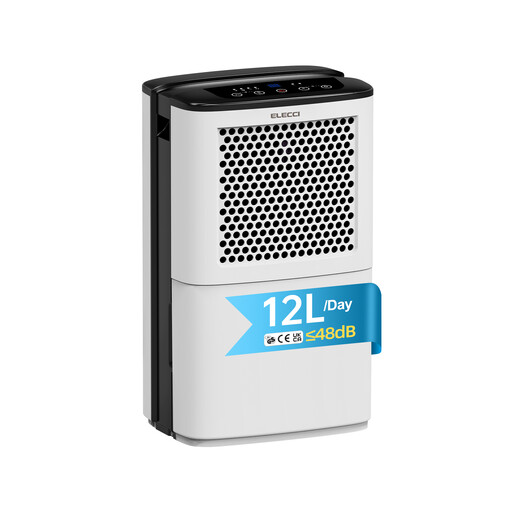
ELECCI 12L/D dehumidifier, 3.8L tank and drain hose
Consider it where the stated 25 m² room coverage fits and a drain hose could reduce manual emptying.
The title lists up to 12L/day extraction, continuous drainage and a 24-hour timer. Check its operating-temperature range and noise at the setting you expect to use.
Joybuy
 No image available
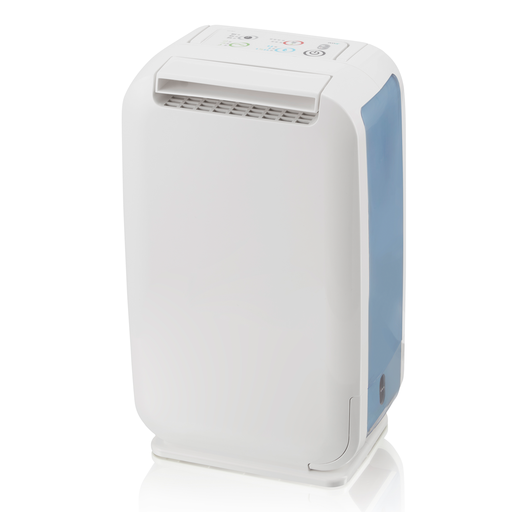
EcoAir DD1 Mini desiccant dehumidifier, 1.8L tank
Consider this desiccant model if low-temperature use is important, but match its exact operating range to your room.
The title states up to 6 litres/day extraction and a 1.8L tank. Check its noise figure and whether the tank arrangement fits your routine near sleeping space.
Joybuy
 No image available
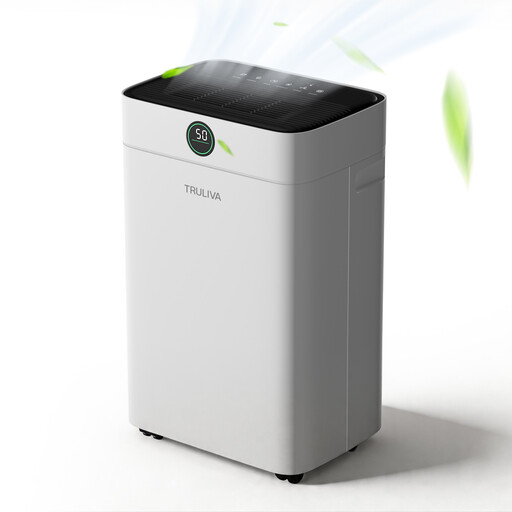
TRULIVA 25 L/day dehumidifier, 2.8L tank
Consider its laundry-drying function if clothes are dried in or near the spare bedroom, rather than choosing by the extraction rating alone.
The title lists a 2.8L tank, auto defrost and a continuous-drain hose. Check room coverage, operating temperature and noise at the intended setting before using it near sleeping space.
Joybuy
 No image available
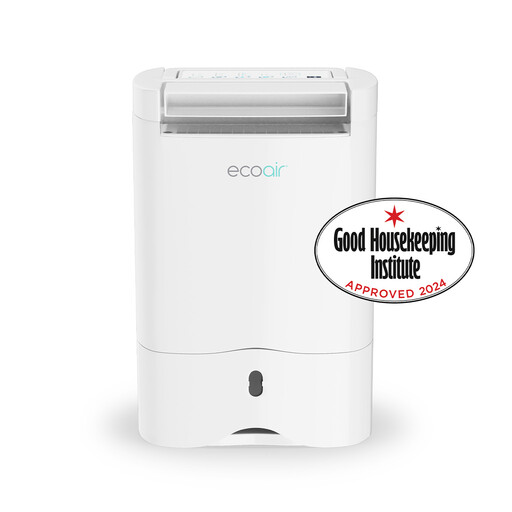
EcoAir DD3 Slimline desiccant dehumidifier, 3L tank
Consider it if a desiccant model and laundry mode fit how you use the spare room; confirm the exact temperature range for cold-room use.
The Joybuy listing states up to 10 litres/day extraction, a 3L tank, full-tank shut-off and continuous drainage. Check its noise figure if it will run near sleeping space.
Joybuy
Frequently asked questions
Should I choose a compressor or desiccant dehumidifier for a spare bedroom?
Choose according to the room’s usual temperature and the exact model’s stated operating range. Pro Breeze specifies 5–32°C for its cited 12L compressor model, while EcoAir states 1–40°C for its DD1 Classic desiccant model intended for unheated spaces; those ranges do not describe every model of either type.
Which features matter if it will run near a bedroom?
Check noise at the setting you intend to use, humidity controls, tank capacity and full-tank shut-off. If you want continuous drainage, make sure the particular unit supports it and that you have a practical route to a suitable drain.
Will a dehumidifier fix mould caused by a leak or poor ventilation?
No: moisture removal does not repair a leak or replace appropriate ventilation. Energy Saving Trust says ventilation lowers the risk of condensation, damp and mould, so investigate a persistent problem rather than relying on the appliance alone.
What should I do about mould in a rented spare bedroom?
Contact your landlord if the room has mould or you think repairs are needed, as GOV.UK advises private renters. Check the procedure that applies where you live, particularly in Scotland or Northern Ireland, rather than assuming the same process applies throughout the UK.


