Households with condensation after showers
If mirrors, tiles or nearby surfaces stay wet after bathing, a dehumidifier can support your existing extraction and ventilation. Consider where that moisture travels once it leaves the bathroom.


For shower moisture, consider a dehumidifier with humidity control in a dry area outside the bathroom, rather than assuming a standard portable unit is safe beside the shower. Size it for the connected space, check whether tank emptying or continuous drainage suits your routine, and keep using ventilation. Persistent damp may need a plumbing or building repair instead.
If mirrors, tiles or nearby surfaces stay wet after bathing, a dehumidifier can support your existing extraction and ventilation. Consider where that moisture travels once it leaves the bathroom.
Electrical Safety First identifies bathrooms as higher-risk places for electrical appliances. Check the exact dehumidifier’s instructions and plan a dry position outside the bathroom rather than assuming a portable model can operate in a wet area.
Repeated moisture loads make automatic humidity control and water collection worth considering. A continuous-drain option is useful only if the appliance and home layout allow a safe hose route to a suitable drain.
Decide where the appliance can stand safely before comparing extraction ratings. Then size it for the space connected to the bathroom and choose how you want to collect the water.
| Concern | What to check | Who this matters to |
|---|---|---|
| Safe placement | Read the exact model’s location instructions. Plan a stable, dry position outside the bathroom, away from splashes, with clear airflow and a safe cable route. | If I cannot keep an electrical appliance clear of shower water, I need a workable position in the adjoining space. Roughly 33% of consumers would put safe placement first. |
| Extraction and control | Compare stated room coverage and extraction conditions with the connected area, and check for adjustable humidity control. | When shower moisture reaches a landing or nearby room, I want a unit suited to that larger space rather than the bathroom floor area alone. Around 27% of consumers would prioritise extraction and humidity control. |
| Water collection | Check tank capacity and any continuous-drain facility, including whether the hose is supplied and can reach a suitable drain safely. | With several showers to manage, I would rather not stop the unit repeatedly to empty its tank. About 20% of consumers would make low-maintenance water collection their main concern. |
| Electricity use and noise | Compare the exact models’ input-power or energy-consumption figures, noise ratings and stated operating conditions. | If the dry position is near a room I use regularly, I need to consider both the sound and electricity used during operation. Roughly 20% of consumers would put these day-to-day effects first. |
A reference to bathrooms does not establish where an electrical appliance may safely operate. Meaco’s instructions for its DD8L Zambezi Z2 expressly say to dry a bathroom with that model positioned outside it; other models need their own instructions checked.
Use a dry adjacent location unless the exact appliance instructions permit your intended bathroom position. Keep the unit away from dripping or standing water.
A dehumidifier standing outside the bathroom may also be drawing air from a landing, hallway or connected room. A rating chosen solely against the bathroom’s size may not reflect the area it has to serve.
Compare the model’s stated coverage and extraction conditions with its intended dry location, and check whether its humidity control suits your routine.
Stafford Borough Council notes that damp from defective plumbing can remain wet whatever the weather. Removing moisture from the air does not stop water entering through a pipe or failed seal.
Check plumbing and shower or bath seals when damp persists, and arrange an appropriate repair. Use a dehumidifier as supporting moisture control, not as the repair itself.
Leaving water ingress unresolved can allow damage to continue.
Published extraction figures can refer to particular temperature and humidity conditions. De’Longhi, for example, states the DEP214 figure at 32°C and 80% relative humidity; that is not a promise of the same removal rate in your home.
Check each exact model’s test conditions alongside its tank, drainage and noise specifications before comparing options.
Meaco markets the Arete One 12L for smaller properties and describes it as a dehumidifier with air-purifier functionality.
Ebac lists compressor dehumidifiers with different controls across its home range, including humidistat and Smart Control options.
Pro Breeze lists a 12L dehumidifier with a built-in humidistat for smaller-room use.
De'Longhi lists the Tasciugo AriaDry Evo DEP214 with a humidistat, hygrometer and continuous-drain option.
These models offer tank collection and a continuous-drain option for managing moisture from showers. Choose for a suitable dry position outside the bathroom: check each model’s location instructions, the connected area it needs to serve and whether a hose can reach a drain safely.
 No image available
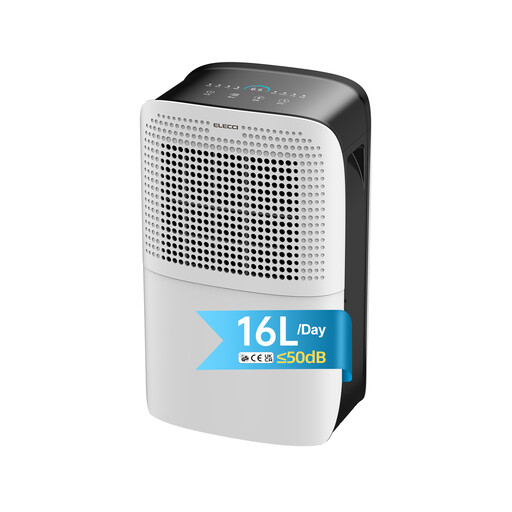
Consider this model if you need to manage shower moisture from a suitable dry position in a connected room. Its title lists a drain hose, continuous drainage, four modes and a 24-hour timer; check the exact instructions for placement and hose routing.
 No image available
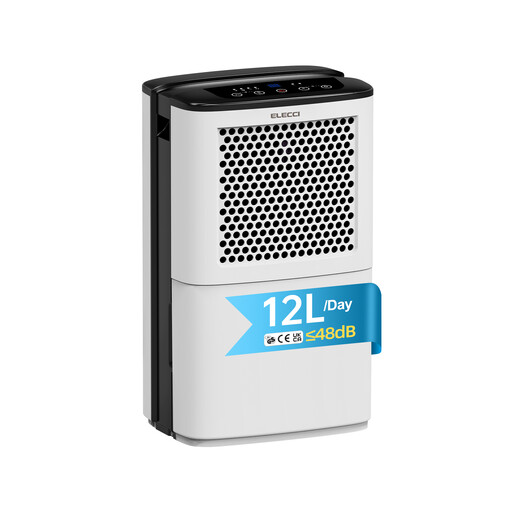
Consider this model for a connected area that fits its stated room-size guidance, subject to the exact placement instructions. Its title lists coverage for rooms up to 25 m², a drain hose, continuous drainage and a 24-hour timer; check that the drain arrangement suits your layout.
 No image available
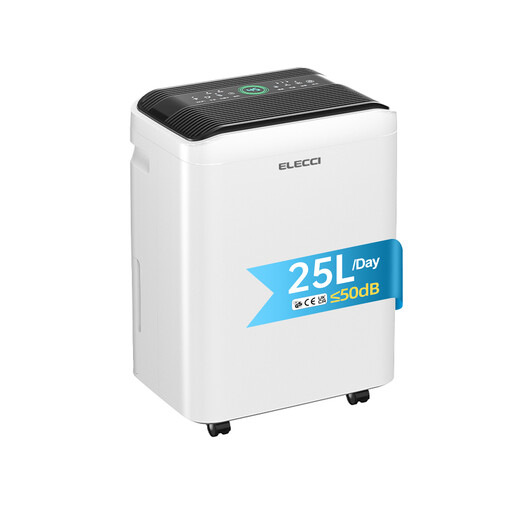
Consider this model when the intended dry placement serves a larger connected area and its stated coverage fits that space. Its title lists rooms up to 50 m², three speeds, a drain hose and continuous drainage. Confirm the safe operating location in the exact instructions.
 No image available
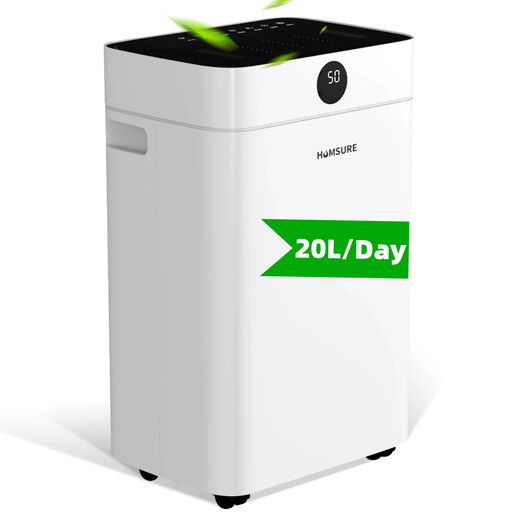
Consider this model if shower moisture reaches a larger connected room and you have a suitable dry operating position. Its title lists rooms up to 50 m², continuous drainage and a 24-hour timer. Check the exact location instructions and what the drain setup requires.
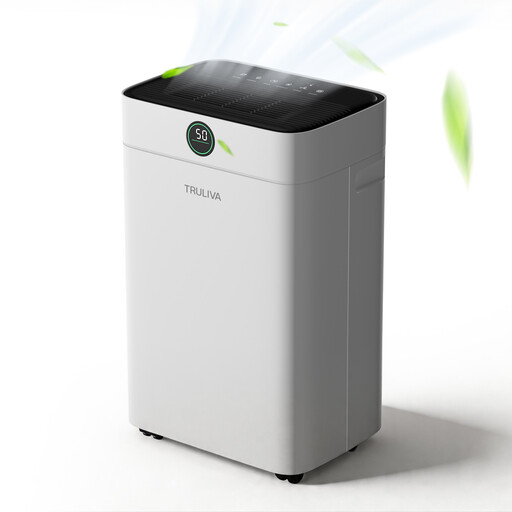 No image available
Consider this model where you can provide a dry location and a suitable route for collected water. Its title lists a continuous-drain hose and auto defrost. A mention of bathrooms in a product title does not establish permission to operate it inside one; follow the exact appliance instructions.
Do not assume a portable dehumidifier is suitable for use inside a bathroom. Electrical Safety First identifies bathrooms as higher-risk environments, while the instructions for Meaco’s DD8L Zambezi Z2 expressly say to place that model outside the room. Check your exact appliance’s instructions; if they do not permit the intended position, choose a dry adjacent location.
A stable, dry location outside the bathroom is a practical starting point for an ordinary portable model, subject to its instructions. Meaco suggests a landing so moisture can move towards the unit when internal doors are open; keep airflow around the appliance clear.
No. Continue using extraction or other appropriate ventilation to remove moisture from showers. A dehumidifier can support humidity control, but it cannot repair a leak or another cause of persistent damp.
Check for a leak, failed seal or other water ingress and seek an appropriate repair. Stafford Borough Council notes that damp caused by defective plumbing can remain wet regardless of the weather, so treating the air alone may leave the cause untouched.