For a normally heated spare room, start with a compressor dehumidifier with adjustable humidity control, then compare noise, tank capacity and drainage rather than relying on its daily extraction rating alone. If the room regularly falls below 10°C, consider a desiccant model: Meaco advises that compressor extraction can become less efficient in colder conditions. If damp or mould keeps returning, investigate its cause rather than relying on the appliance alone.
Who needs which approach?
People with a heated spare room
If the room is normally heated but develops condensation or feels musty, adjustable humidity control may suit regular use. Compare the stated noise level if guests also sleep there; check the operating mode behind any quoted figure.
People with a cold or little-used room
If the spare room is unheated or often drops below 10°C, compare desiccant models alongside any compressor model you are considering. Meaco advises that compressor extraction can become less efficient at those temperatures.
People managing recurring moisture or indoor laundry
Longer running periods can make tank capacity, full-tank shut-off and a practical drainage route more important. If damp or mould recurs, address its underlying cause as well as controlling moisture in the room.
What matters when choosing?
Start with the room’s usual temperature, then decide how much attention you can give to emptying the tank and whether the room is used for sleeping or work.
| Concern |
What to check |
Who this matters to |
| Humidity control and room fit |
Check the adjustable humidity settings, stated room suitability and conditions used for the daily extraction rating. |
I want the unit to manage moisture in a normally heated room without relying on a manual on-off routine. Around 37% of consumers put automatic humidity control and room fit first. |
| Cold-room operation |
Check the room’s typical winter temperature; if it often falls below 10°C, compare desiccant models and their power settings. |
My spare room is often unheated, so I need to choose a type suited to its colder conditions. Roughly 27% of consumers prioritise cold-room operation. |
| Tank emptying and drainage |
Compare tank capacity and full-tank shut-off; for continuous drainage, check the hose arrangement and route to a suitable drain. |
I may not check the room every day, especially when drying laundry indoors, and want a manageable way to collect the water. About 18% of consumers place drainage and tank maintenance first. |
| Noise and placement |
Compare noise figures at their stated operating modes and check dimensions and the manufacturer’s clearance instructions. |
Guests may sleep or someone may work in the spare room, so noise and a workable position matter to me. Around 18% of consumers make quiet, practical use their main concern. |
Common buying mistakes
-
Choosing by the largest litres-per-day figure
A daily extraction rating depends on temperature, humidity and test conditions. It does not promise that amount of water will be removed from a cooler spare room.
Compare the rating conditions and the room’s usual temperature. Meaco advises comparing desiccant models when a room regularly falls below 10°C.
-
Treating recurring damp as an appliance problem alone
A dehumidifier can reduce airborne moisture without fixing a leak, building defect or ventilation issue that allows damp or mould to return.
Investigate recurrent mould or visibly wet surfaces promptly. In a rented home in England, report the problem to the landlord or managing agent and keep a record of the report.
-
Overlooking the tank and drain-hose route
A tank can fill and stop the unit before a full day has passed, particularly when moisture levels are high. Continuous drainage is useful only where the hose can reach a suitable drain.
Check full-tank shut-off and the manufacturer’s drainage instructions. Place the unit on a stable, level surface and keep its air openings clear.
-
Assuming a running-cost claim applies to every room
Operating time depends on the humidity target and room conditions, while electricity use varies by model. A manufacturer’s comparison need not reflect your spare room.
Compare each model’s stated input power and controls, then consider your expected running hours and electricity tariff rather than treating a claimed saving as guaranteed.
Relevant brands for reference
These model examples illustrate different selection priorities; their stated figures and features come from the manufacturers.
Meaco
Meaco offers both the Arete Two 12L compressor model for domestic humidity control and the DD8L Pro desiccant model for colder spaces.
- Meaco lists app control and a 35 dB operating figure for the Arete Two 12L, and positions the DD8L Pro for rooms below 10°C.
- Check the operating conditions behind the noise figure and the DD8L Pro’s energy modes for your intended use; the two models address different room conditions.
Ebac
The Ebac 2650e is a compressor-model example for buyers interested in automatic humidity-responsive operation.
- Ebac says its Smart Control adapts extraction as humidity changes and states a four-year warranty for purchases made directly from Ebac.
- Check the applicable warranty terms for your seller and model. Ebac’s running-cost comparisons should not be assumed to apply to every room or electricity tariff.
De’Longhi
The DEXD216RF is a compressor-model example for indoor laundry or longer operation where continuous drainage is practical.
- De’Longhi lists a laundry function, continuous drainage, a 40 dB maximum noise figure and 285 W input power for the DEXD216RF.
- Its stated 16 L/day extraction is rated at 32°C and 80% relative humidity, not guaranteed for a cooler spare room.
Joybuy dehumidifiers for spare rooms
These products offer stated room-size guidance or drainage features for spare-room moisture control. Compare each model’s humidity controls and operating conditions with your room, particularly if it is cold or also used as a bedroom.
 No image available
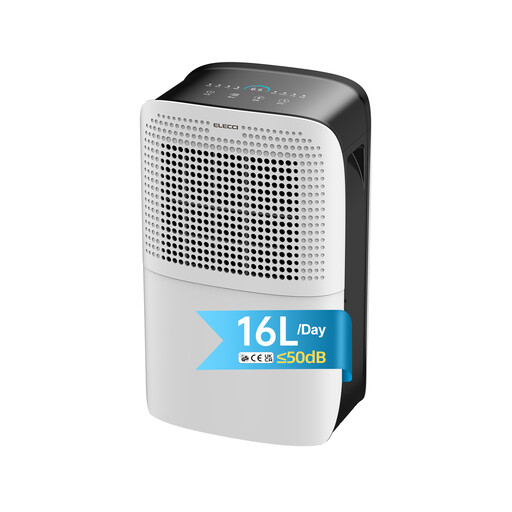
ELECCI 16L/D dehumidifier with 3.1L tank and drain hose
Consider this model if you want automatic humidity control and a drainage option for longer operation in a spare room.
The listing states suitability for rooms up to 32 m², a 3.1L tank and four operating modes. Its up-to-16 L/day extraction figure is rated at 86°F and 90% relative humidity, rather than typical spare-room conditions.
If guests sleep in the room or it is regularly below 10°C, check the noise figure and cold-room operating guidance before choosing it.
View on Joybuy
 No image available
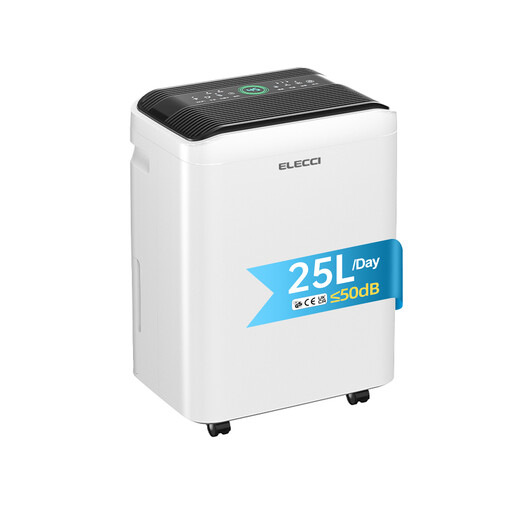
ELECCI 25L/D dehumidifier with 4.8L tank and drain hose
Consider this model if the spare room is also used for indoor laundry and has a workable drainage route.
The listing specifies a laundry mode, a 4.8L tank and room suitability up to 50 m². Its up-to-25 L/day extraction rating applies at 30°C and 80% relative humidity.
Check whether its humidity controls meet your needs. A pump is not included, so confirm that the hose arrangement suits your drain; also check operating guidance if the room is regularly cold.
View on Joybuy
 No image available
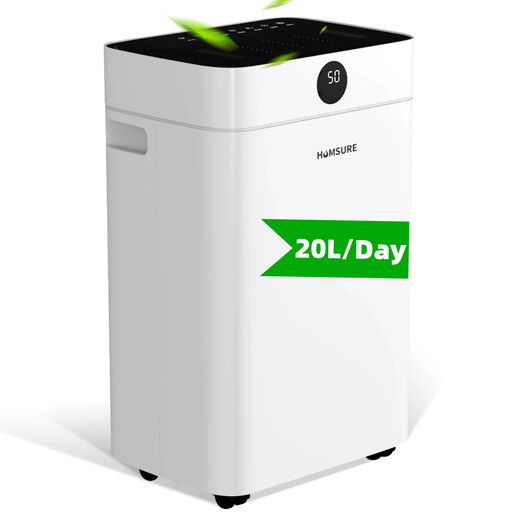
HUMSURE 20L/Day dehumidifier for up to 50 m²
Consider this model when adjustable humidity control and continuous drainage are priorities in a room that is not checked often.
The listing states a 2.8L tank, full-tank shut-off and an included 1.2 m drain hose. Its up-to-20 L/day extraction figure is rated at 86°F and 80% relative humidity.
Check that the hose reaches a suitable drain, and compare noise and cold-room operating guidance if the spare room is used for sleeping or left unheated.
View on Joybuy
 No image available
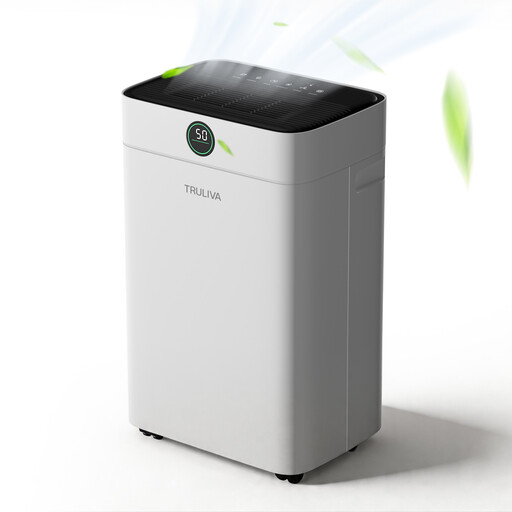
TRULIVA 25 L/Day dehumidifier with laundry mode and drain hose
Consider this model for a spare room used to dry laundry, provided its operating range fits the room.
It has a 2.8 L tank and a continuous-drain hose. The up-to-25 L/day extraction figure is stated at 95°F and 90% relative humidity, so it is not a promise of the same result in your room.
The listing recommends operation at 5–35°C and says the compressor stops to defrost below 15°C. Check the room’s usual temperature and the model’s humidity controls before relying on it for regular moisture management.
View on Joybuy
 No image available
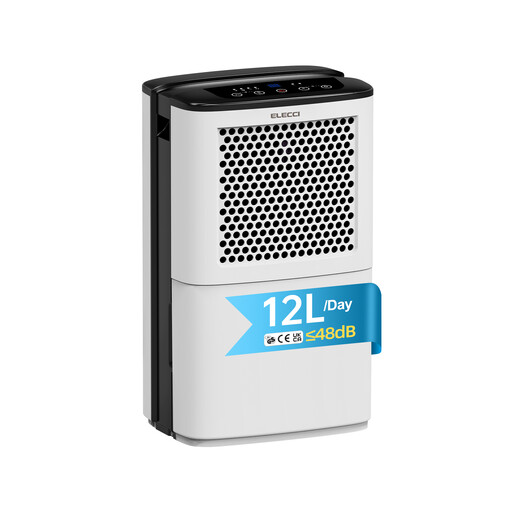
ELECCI 12L/D dehumidifier with 3.8L tank and drain hose
Consider this model for a spare room within its stated 25 m² coverage if you want an adjustable humidity target.
The listing specifies a 3.8L tank, full-tank shut-off and continuous drainage. Its up-to-12 L/day extraction figure is rated at 86°F and 90% relative humidity.
For a guest bedroom or a room regularly below 10°C, check its noise and cold-room operating guidance before buying.
View on Joybuy
Questions about spare-room dehumidifiers
Will a dehumidifier fix damp or mould in a spare room?
Not if an underlying cause continues to introduce moisture. A dehumidifier can help control airborne moisture, but recurring mould, leaks or building defects need investigation; UK government guidance for rented homes in England says landlords should identify and tackle the underlying issue promptly.
Should I choose a compressor or desiccant model for a cold room?
Compare desiccant models first if the room often falls below 10°C. Meaco advises that compressor extraction can become less efficient below that temperature and positions its desiccant models for colder spaces; still check the individual model’s operating guidance and power settings.
Do I need continuous drainage?
Continuous drainage is worth considering if the room is checked infrequently or the unit will run for long periods, provided the hose can reach a suitable drain. Otherwise, compare tank capacity and full-tank shut-off; even a tank that seems large enough can fill before the quoted daily extraction period ends.
How should I dispose of an old dehumidifier?
Check your local council’s electrical-equipment collection guidance or an available retailer take-back option. The collection route can vary locally; GOV.UK publishes Waste Electrical and Electronic Equipment guidance for manufacturers, importers and distributors, including retailers.


