For laundry in a normally heated room, consider a compressor dehumidifier; for a cold or unheated space, consider a desiccant model. That distinction reflects the operating contexts described by electriQ and EcoAir for their respective models, not a rule for every machine. Check the exact model’s temperature guidance, extraction rating, noise and water collection arrangement; if damp or mould persists, investigate its cause rather than simply choosing a larger unit.
Who this is for
People drying laundry in a cold space
If the airer is in a chilly utility room, conservatory or garage, the appliance’s stated operating conditions matter before its headline extraction rating. EcoAir positions its DD1 Simple MK3 desiccant model for winter and unheated spaces; check the conditions for any other model separately.
Households drying regular loads in a heated room
For an airer used routinely in a heated home, compare model-specific extraction ratings alongside tank emptying, drainage and humidity controls. electriQ describes its CD12LE/CD20LE compressor range as suited to normally heated environments maintained above approximately 12–15°C.
People drying close to living space
In a flat or shared room, consider where the airer and machine can stand, how easily the unit can be moved and whether its stated noise level suits the room. Meaco states a 35 dB figure for its Arete One 12L; it is a claim for that model, not a threshold for all dehumidifiers.
What matters when choosing
Start with the usual temperature of the laundry room, then weigh capacity and water collection against noise and safe placement. Recurring damp deserves a separate check for leaks or ventilation problems.
| Concern | What to check | Who this matters to |
|---|
| Cold-room suitability |
Compare the exact model’s operating-temperature guidance and laundry controls; do not choose by extraction rating alone. |
If my airer is in an unheated space, I need a machine intended to operate at its usual temperature. Around 27% of consumers put cold-room suitability first. |
| Capacity and water collection |
Compare extraction ratings under their stated conditions, then check tank size, full-tank shut-off and any compatible drainage option. |
With regular loads in a heated room, I want moisture removal that suits the laundry and a tank I can manage. Capacity and emptying are the main concern for roughly 33% of consumers. |
| Noise and placement |
Check the stated noise figure and whether the appliance and airer fit while leaving the manual’s required clearances. |
When laundry dries near where I live or sleep, I need a workable position without assuming a compact unit will be quiet. About 20% of consumers prioritise noise and placement. |
| Persistent damp |
Look for leaks, recurring mould and ventilation or extractor problems before treating laundry as the only moisture source. |
If damp remains after the washing is dry, I need to know whether a repair or better extraction is needed. Finding the cause comes first for around 20% of consumers. |
Buying pitfalls
-
Choosing by litres per day alone
An extraction figure belongs to a particular model and its stated conditions; it does not promise a drying time in your room. electriQ describes its CD12LE/CD20LE compressor models for heated environments above approximately 12–15°C, while EcoAir positions its DD1 Simple MK3 desiccant model for winter and unheated spaces.
Check the room’s usual temperature before comparing model-specific extraction figures, tank arrangements and controls.
-
Putting wet clothes on or too close to the appliance
Laundry can obstruct airflow and conflict with safety instructions. EcoAir’s DD1 Simple MK3 manual says not to place clothes on the appliance and specifies at least 40 cm between it and the laundry.
Use a separate airer and follow the clearance and supervision instructions for the exact model; EcoAir’s distance is not a universal specification.
-
Expecting a dehumidifier to fix a leak
A dehumidifier does not repair the source of persistent damp. South West London Healthier Together advises identifying causes that may include leaks or condensation from indoor clothes drying.
Investigate recurring damp or mould, maintain suitable ventilation and report repair issues where appropriate.
-
Treating an energy-saving or drying claim as a household result
Room conditions, laundry load and the chosen setting affect use, so a manufacturer’s claim alone cannot establish your drying time or electricity use.
Check the exact model’s electrical input and instructions, and use your expected operating hours and electricity tariff when assessing running costs.
Brands to consider for indoor laundry
Meaco
Meaco positions its Arete One 12L for flats and smaller properties and states a 35 dB noise figure for that model.
- The Arete One 12L has castors and an optional hose connection, according to Meaco.
- Check the exact drainage arrangement, operating conditions and current warranty terms before choosing it for a laundry room.
EcoAir
EcoAir offers desiccant and compressor ranges. It positions the 7.5 L/day DD1 Simple MK3 desiccant model for winter and unheated spaces.
- The DD1 Simple MK3 has Energy Saving, Turbo and Laundry settings, according to EcoAir.
- Its manual says not to leave Laundry Mode running unattended for a long period and requires laundry to be at least 40 cm away. Check other models’ own instructions rather than applying these rules to the whole range.
electriQ
electriQ’s CD12LE/CD20LE are compressor models whose manual describes use in normally heated domestic or office environments above approximately 12–15°C.
- The CD12LE/CD20LE range includes a digital humidistat, according to electriQ’s product information.
- The manual specifies an earthed 220–240 V / 50 Hz outlet and says not to use an extension cord. Confirm the exact variant’s capacity, tank and drainage arrangements.
Joybuy products for indoor laundry
These models include desiccant choices presented for cooler laundry spaces and compressor choices for heated-room drying. Compare each listing’s stated conditions and the exact manual before deciding where to use it.
 No image available
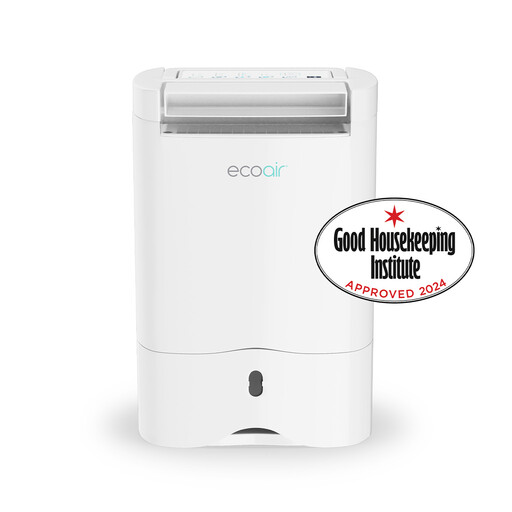
EcoAir DD3 Slimline 10 L/day Desiccant Dehumidifier
A desiccant option to consider when the laundry airer is in a cooler room; check the model’s stated operating-temperature range against that room. The listed variant has a laundry mode and a 3 L water tank. Confirm the drainage arrangement and the clearance instructions before use.
View on Joybuy
 No image available
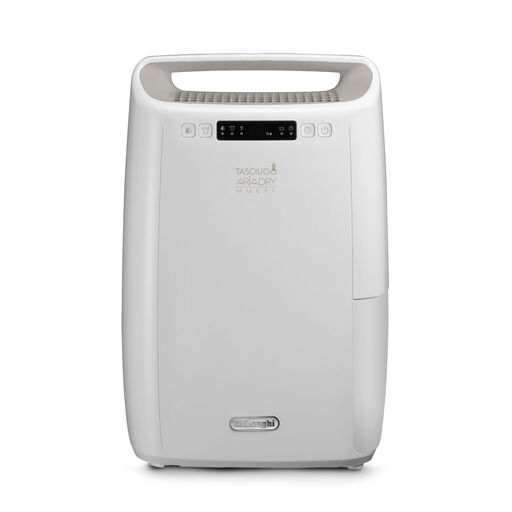
DE'LONGHI AriaDry Multi DEX214RF 14 L/day Dehumidifier
A compressor model to assess for routine laundry drying in a heated room. The listed variant has a laundry function and a stated 14 L/day extraction rating. Check its operating-temperature guidance and whether a compatible drainage hose is included if you plan to use continuous drainage.
View on Joybuy
 No image available
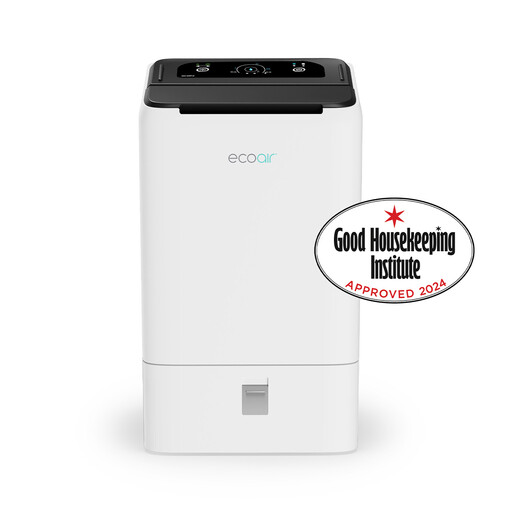
EcoAir DD2 Simple 9 L/day Desiccant Dehumidifier
A desiccant choice for a cooler laundry area, subject to the exact model’s operating-temperature guidance. Its listed 9 L/day rating and laundry mode provide starting points for comparison; check tank capacity and the manual’s placement instructions for your setup.
View on Joybuy
 No image available
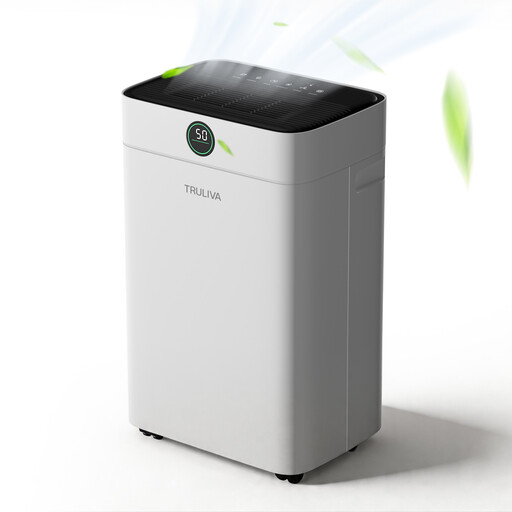
TRULIVA 25 L/day Dehumidifier with 2.8 L Tank
A compressor option to assess for a heated laundry area, with a laundry-drying mode and a continuous-drain hose in the listed variant. Its 25 L/day headline rating is stated at 90% relative humidity and 95°F, so do not treat it as a drying-room result. The listing says compressor operation stops below 15°C while defrosting; check your room temperature and the applicable electrical-input figure.
View on Joybuy
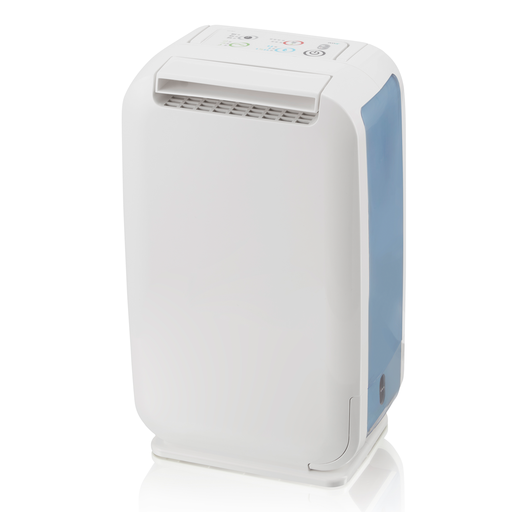 No image available
EcoAir DD1 Mini 6 L/day Desiccant Dehumidifier
A smaller desiccant option to consider if you move the appliance between laundry spaces. The listed variant has a 1.8 L tank and a carry handle. Check the exact operating-temperature range, noise figure and laundry-placement instructions rather than assuming it shares another EcoAir model’s specifications.
View on Joybuy
Common questions
Should I seal the laundry room while the dehumidifier runs?
Do not assume that sealing the room or blocking all ventilation is appropriate. Dacorum Borough Council advises using a bathroom with the door closed and suitable ventilation, such as a window or extractor, when drying clothes indoors; follow your appliance’s placement instructions too.
Can a dehumidifier fix recurring mould or a suspected leak?
No: a dehumidifier does not repair a leak or another underlying cause of damp. South West London Healthier Together advises identifying causes, including leaks and condensation from indoor clothes drying, and reporting repair or mould problems where relevant.
How close can the airer be to a dehumidifier?
Follow the clearance in the exact appliance manual. EcoAir specifies at least 40 cm between laundry and its DD1 Simple MK3 and says not to put clothes on that appliance; other models may have different instructions.
Can I use an extension lead or timer?
Check the instructions for your exact dehumidifier before planning either. The electriQ CD12LE/CD20LE manual specifies an earthed 220–240 V / 50 Hz outlet, prohibits an extension cord and warns against an external switching device such as a timer; those are instructions for those models, not a substitute for another model’s manual.


