For a normally heated shared lounge, consider a compressor dehumidifier with a humidistat, matching its stated room coverage to the lounge and checking noise and tank-emptying options. If the room stays cool, Meaco’s guidance suggests a desiccant model may be more suitable; check the exact model’s electricity use and noise. Neither type replaces ventilation or repairs to a source of damp.
Who needs to consider one?
Households managing lounge moisture
For households where moisture from showers reaches the shared lounge and condensation lingers, a dehumidifier can form part of a wider approach to moisture control. GOV.UK advises addressing ventilation and other causes of damp too.
People sharing a noise-sensitive room
When the lounge is used for conversation, television, work or rest, the model’s declared noise level and available controls matter alongside its extraction rating.
Residents with a cool communal room
If the lounge is lightly or intermittently heated, its usual temperature becomes important. Meaco distinguishes between compressor models for warmer household spaces and desiccant models for cooler conditions.
What matters when choosing?
Compressor dehumidifier
Consider when: The shared lounge is normally heated and you want a model with automatic humidity control.
Trade-off: Meaco advises that compressor units can spend more time defrosting in colder rooms, so check the exact model’s operating conditions.
Desiccant dehumidifier
Consider when: The lounge remains cool or is only lightly heated; Meaco says desiccant units generally work better at lower temperatures.
Trade-off: Check the model’s stated electricity use and noise rather than assuming they match those of a compressor unit.
| Concern | What to check | Who this matters to |
|---|
| Recurring moisture |
Match stated room coverage to the lounge and check for a humidistat; keep using appropriate ventilation. |
If condensation lingers after showers, I want to control moisture in the lounge without overlooking its cause. Roughly 36% of consumers put moisture control first. |
| Shared-room noise |
Check the declared dB level at the fan setting you expect to use and the available humidity controls. |
During conversation, work or television, I need the room to remain comfortable while the unit runs. Keeping noise and continual operation down is the first concern for roughly 29% of consumers. |
| Tank emptying |
Check tank capacity and whether the model supports continuous drainage with a suitable hose route. |
With frequent showers, I would rather not keep interrupting use to empty a tank, but I need somewhere safe for a hose to drain. Around 21% of consumers prioritise manageable emptying or drainage. |
| Cool-room suitability |
Compare the lounge’s usual temperature with the exact model’s operating range and technology. |
If the lounge stays chilly, I need a type suited to those conditions rather than judging it by its headline extraction figure. For roughly 14% of consumers, cool-room suitability comes first. |
Mistakes to avoid
-
Treating the appliance as the only fix for damp
A dehumidifier manages moisture in the air but will not repair a leak or correct poor ventilation. GOV.UK guidance links condensation with damp and mould.
Investigate recurring mould, leaks and ventilation problems while using the appliance for moisture control.
-
Choosing by litres per day alone
A headline extraction figure does not establish how a unit will perform at the lounge’s temperature or whether its stated coverage fits the room. Meaco notes that compressor units may spend more time defrosting in colder conditions.
Check the model’s operating conditions and room guidance, then compare its controls, noise and water-collection options.
-
Overlooking noise in a communal room
A stated noise figure needs its fan setting and measurement conditions to be useful when comparing models. Pro Breeze, for example, declares 38 dB for its UK 12L model, but that figure alone cannot establish how another model will sound in your lounge.
Compare model-specific figures on like-for-like settings and consider when people will be using the room.
-
Using a bathroom extension lead
Electrical Safety First warns against using extension leads to power appliances within a bathroom where there are no sockets.
For this lounge-based setup, keep the appliance in the dry shared room and use a suitable fixed socket. Ask a registered electrician about any electrical installation work needed in the bathroom.
Brands to consider
Meaco
Meaco offers both compressor and desiccant dehumidifiers, making its range relevant when lounge temperature affects the choice of type.
- Meaco positions its compressor models for warmer household spaces and its desiccant models for cooler ones.
- Its Arete One 12L information applies to that model; check the exact unit’s extraction conditions, noise, operating range and filter requirements.
Ebac
Ebac lists several capacity tiers across its dehumidifier series, including models with automated controls.
- Ebac identifies Smart AI Control on its 2000, 3000 and 4000 series, and app control on the 4000 series.
- Check noise, operating temperature and drainage on the particular model rather than assuming every series has the same features.
Pro Breeze
Pro Breeze’s UK 12L compressor model provides a concrete set of specifications to compare against a shared lounge’s size and emptying routine.
- For that 12L model, Pro Breeze states coverage up to 20 m², 38 dB noise, a 1.8 L tank and a continuous-drainage option.
- Those specifications do not describe every Pro Breeze model; assess the extraction rating under its stated conditions.
Joybuy products for these needs
These dehumidifiers offer compressor options for a normally heated lounge and a desiccant option to consider for a cooler room. Compare each model with the actual lounge size, temperature, noise tolerance and available drainage route.
 No image available
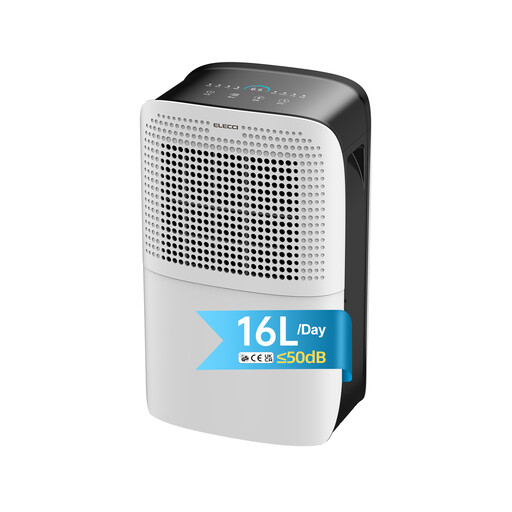
ELECCI 16L/D dehumidifier with drain hose, 3.1 L tank
Consider this compressor model for a normally heated lounge that fits its stated coverage; check its operating noise before choosing it for shared-room use.
The listing states up to 32 m² coverage, a 16 L/day extraction rating, four modes, a 24-hour timer, auto defrost and continuous drainage. A suitable hose route is needed to use drainage.
Joybuy
 No image available
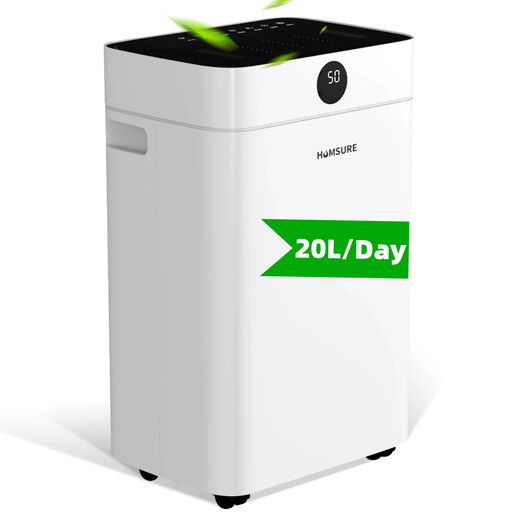
HUMSURE 20L/Day dehumidifier, 2.8 L tank
This compressor option is worth comparing if the shared lounge fits its stated room coverage and you want automatic humidity control; check its noise for occupied-room use.
The listing states up to 50 m² coverage, a 20 L/day extraction rating, a 24-hour timer and continuous drainage. Drainage requires a suitable hose route.
Joybuy
 No image available
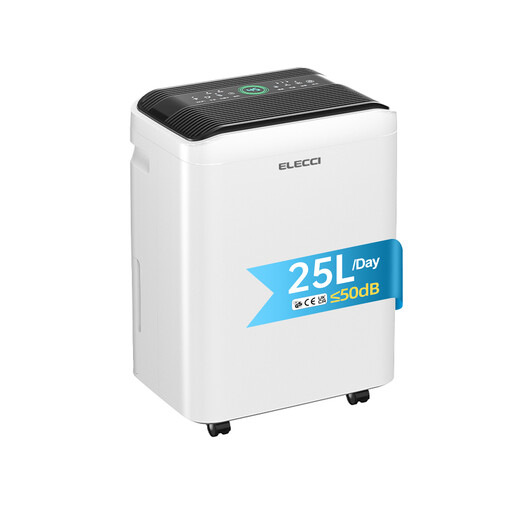
ELECCI 25L/D dehumidifier, 4.8 L tank
Consider this model if its stated coverage fits the lounge and tank size matters to your emptying routine; confirm whether its humidity controls meet your needs.
The listing states up to 50 m² coverage, three speeds, a 24-hour timer and continuous drainage with a drain hose. Its 25 L/day extraction figure is stated for 30°C and 80% relative humidity, not necessarily the conditions in your lounge.
Joybuy
 No image available
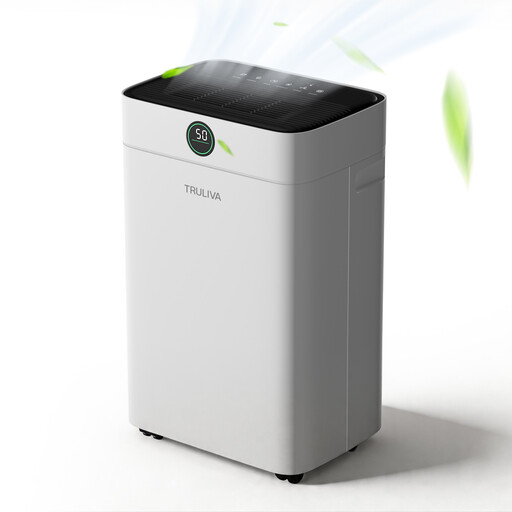
TRULIVA 25 L/Day dehumidifier with laundry mode, 2.8 L tank
This compressor model offers a continuous-drain hose for households seeking to reduce tank emptying. Check that it suits the lounge’s size and usual temperature.
The title lists auto defrost and a 25 L/day extraction rating. Its stated noise figure of below 50 dB applies to sleep mode; check the noise conditions for the mode you would use.
Joybuy
 No image available
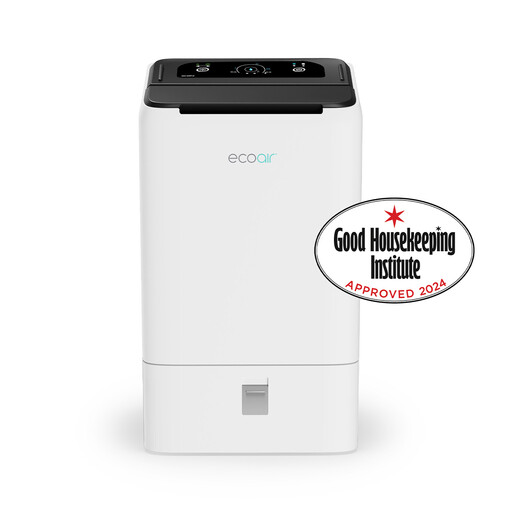
EcoAir DD2 Simple desiccant dehumidifier, 9 litres/day
Consider this desiccant model if the shared lounge stays cool. Check its room suitability, operating noise and electricity use against how and when you expect to run it.
The title states a 9 litres/day extraction rating and laundry mode. Confirm its tank capacity and controls if emptying frequency or automatic humidity targeting will decide your choice.
Joybuy
Common questions
Can a dehumidifier replace bathroom ventilation?
No. A dehumidifier can help manage moisture where it operates, but GOV.UK guidance connects condensation and damp with ventilation problems. Keep appropriate ventilation in use and investigate leaks or other causes if damp persists.
Should I put the dehumidifier in the bathroom after a shower?
For this shared-lounge setup, operate it in the dry lounge rather than powering it through a bathroom extension lead. Electrical Safety First warns against using extension leads for appliances in bathrooms where there are no sockets.
Will I need to empty the tank after every shower?
Not necessarily: emptying frequency depends on how much water the unit collects, its tank capacity and how long it runs. If frequent emptying would be difficult, check for continuous drainage on the exact model and make sure there is a suitable, safely routed hose path.
What can I do with an old dehumidifier in the UK?
Check the seller’s electrical-waste take-back arrangements when buying a replacement, or ask about local recycling. GOV.UK says retailers covered by take-back requirements must offer to accept waste equipment of the same type as the item purchased.


