People storing clothes in a heated hobby room
If the room normally stays warm, look for humidity control that can respond as conditions change. Check the appliance’s stated noise level if you also spend time working in the room.


Choose a dehumidifier according to the hobby room’s lowest usual temperature before comparing its advertised extraction rate. Electrical Safety First says compressor models generally work better in warmer rooms, while desiccant models suit cooler or unheated spaces; whichever type you consider, check its controls, water disposal and placement instructions. A dehumidifier can help manage humidity around stored clothes, but it does not replace ventilation or fix a leak.
If the room normally stays warm, look for humidity control that can respond as conditions change. Check the appliance’s stated noise level if you also spend time working in the room.
A garage-like space or hobby room that cools between visits calls for particular attention to dehumidifier type and the exact model’s operating-temperature range.
When clothes remain in storage between visits, tank-full shut-off, a practical drainage arrangement and accessible filters can matter as much as the advertised extraction rate.
Start with the temperature where the clothes are stored, then decide how the appliance will control humidity and collect water. Electrical Safety First distinguishes warmer-room compressor use from cooler-room desiccant use; the exact model’s instructions still govern its placement and operation.
Consider when: The hobby room is normally heated and remains within the model’s stated operating range.
Bear in mind: Electrical Safety First says compressor units generally work better and can be more energy-efficient in warmer conditions; do not assume the same extraction in a cold room.
Consider when: The room is cool or unheated while the clothes need protection.
Bear in mind: Electrical Safety First says desiccant units perform better in cooler conditions but may use more energy overall. Check the particular model’s controls and intended running pattern.
| Concern | What to check | Who this matters to |
|---|---|---|
| Stable humidity | Look for a selectable humidity target and automatic control; check the stated room suitability. | When clothes stay stored for weeks, I want moisture control that responds without running constantly at maximum power. Around 36% of consumers put stable storage humidity first. |
| Cold-room operation | Compare the room’s lowest usual temperature with the exact model’s operating range and dehumidifier type. | If my hobby room cools down between visits, I need a model suited to those conditions. Roughly 29% of consumers prioritise cold-room operation. |
| Noise and space | Check the stated noise level, dimensions and required clearance around the vents. | I also use the room for hobbies, so a disruptive or awkwardly placed appliance may not fit how I use the space. For around 21% of consumers, noise and physical fit come first. |
| Water handling | Check tank capacity and full-tank shut-off, or confirm that a suitable drainage route is available. | When I visit only occasionally, frequent tank emptying is difficult to manage. Water handling is the primary concern for roughly 14% of consumers. |
An advertised extraction rate does not establish how a dehumidifier will perform at the hobby room’s usual temperature. Electrical Safety First identifies different temperature strengths for compressor and desiccant types.
Find the room’s lowest usual temperature, then check the exact model’s operating range and controls before comparing extraction figures.
UK government ventilation guidance explains that poor ventilation can trap moisture. A dehumidifier does not repair a leak or remove the cause of persistent mould.
Keep ventilation working and investigate recurring damp or visible mould rather than relying on longer dehumidifier running time.
A full tank can interrupt collection, while a poorly routed hose or obstructed vent creates a separate maintenance problem.
Decide whether you will empty a tank or use an appropriate drain. Follow the model’s instructions for checking hoses, cleaning filters and leaving space around its vents.
A room used only occasionally may tempt you to leave an appliance running without checking its instructions. Electrical Safety First advises against unattended use unless the manufacturer specifies that it is safe.
Read the exact model’s unattended-use guidance and keep the appliance and cable clear of stored clothes and other obstructions.
Meaco offers compressor and desiccant models relevant to the heated-versus-cold-room decision.
Ebac’s domestic range includes models with automatic humidity control and a laundry mode.
Pro Breeze has a 12L compressor model with a humidistat and a continuous-drainage option.
These dehumidifiers offer different approaches to controlling moisture around stored clothes. Compare each model with your room’s temperature, the time you spend there and whether you can use continuous drainage; a laundry mode is useful mainly if you also dry washed items in the room.
 No image available
Consider this compressor model where you want humidity-responsive operation and a choice of tank or hose drainage. Its listing states a 5–35°C operating range, but says the compressor stops to defrost below 15°C; check what that means for your room’s coldest periods.
The advertised 25 L/day extraction is stated for 90% relative humidity and 95°F test conditions, not the conditions in your hobby room. The listing includes a laundry mode and drain hose; check the humidity-setting range and noise in the mode you expect to use.
 No image available
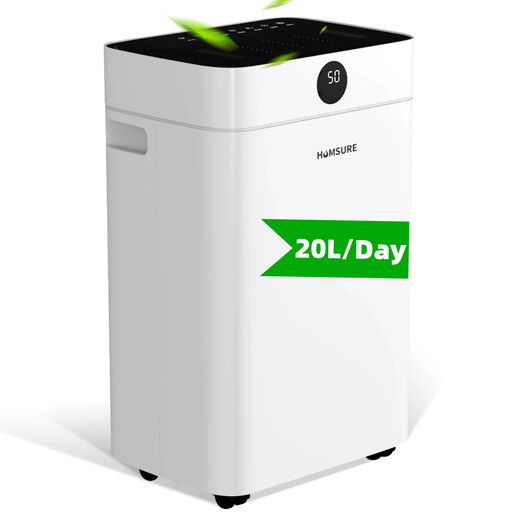
Consider this model if a selectable humidity target and either tank collection or hose drainage fit your storage routine. The listing states a 40–80% humidity setting range, full-tank shut-off and an included drain hose.
Its 20 L/day and up-to-50 m² figures are listing claims, not a prediction for your room. Before choosing it for a cold or actively used hobby room, confirm the technology, operating-temperature range and noise level.
 No image available
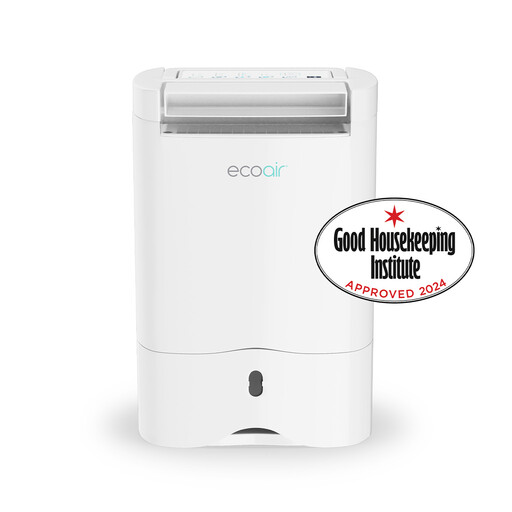
Its desiccant design makes the EcoAir DD3 Slimline a model to consider for a cooler hobby room, subject to its exact operating range. The listing describes a 3 L tank, full-tank shut-off, continuous drainage and a laundry mode.
The 10 litres/day figure is an advertised extraction rate, with no test conditions stated here. Check the temperature range, humidity controls and numeric noise level against how you use the room.
 No image available
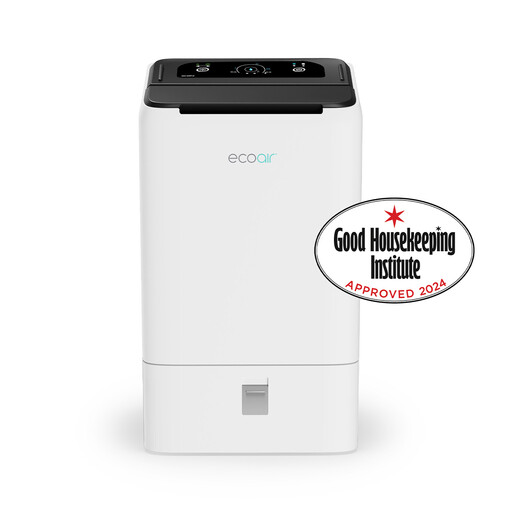
Consider this desiccant model if the hobby room gets cool and you also want a separate laundry mode for occasional drying. Its listing describes continuous drainage, tank-full shut-off and a carry handle.
The advertised 9 litres/day extraction rate does not establish performance at your room’s temperature. Check the exact operating range, humidity controls, tank capacity and noise level before deciding how it would fit your routine.
 No image available
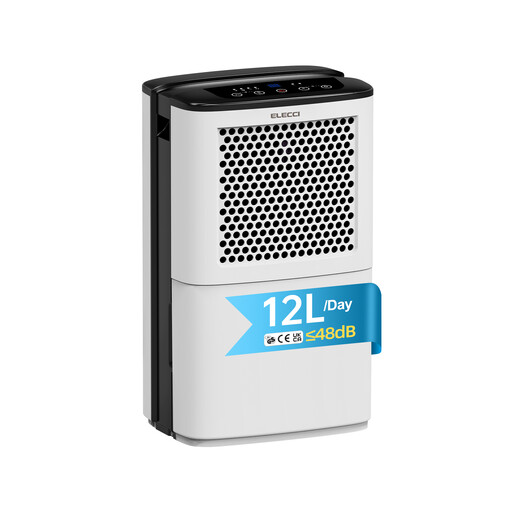
For a normally heated room, consider this model if adjustable humidity control and a choice of tank or hose drainage matter to you. The listing describes a 3.8 L tank, full-tank shut-off and an included continuous-drain hose.
Its stated 12 L/day extraction and up-to-25 m² room coverage do not establish results in your room. Check the operating-temperature range and noise level; the listing also instructs leaving the appliance upright for 2 hours before first use.
Choose by the room’s temperature while you need to protect the clothes. Electrical Safety First says compressor models generally work better and can be more energy-efficient in warmer conditions, while desiccant models perform better in cooler or unheated spaces but may use more energy overall. Check the exact model’s operating range.
No: a dehumidifier can help manage humidity, but it does not replace ventilation or fix the source of persistent damp. UK government ventilation guidance explains that poor ventilation can trap moisture; investigate leaks or recurring mould as well as considering an appliance.
Place it where air can circulate without clothes or furniture obstructing its vents, following the exact model’s clearance instructions. Electrical Safety First also advises keeping filters clear; check the tank or drainage hose regularly and empty the tank before moving the unit.
Do not assume unattended operation is suitable for every model. Electrical Safety First advises avoiding it unless the manufacturer specifies that unattended use is safe; follow the manual and keep the unit and cable clear of stored items.