What matters when choosing one?
Start with the coldest temperature the storage room reaches, then decide how you will control humidity and deal with collected water. Treat laundry settings as an additional requirement if you also dry washing in that space.
| Concern |
What to check |
Who this matters to |
| Ongoing moisture control |
Check for a controllable humidity setting and how the unit handles a full tank or continuous drainage. |
If my clothes stay in the room for weeks, I want moisture controlled without running the machine continuously at its strongest setting. Around 42% of consumers put this ongoing protection first. |
| Cold-room operation |
Compare the exact model’s stated operating-temperature range with winter conditions in the room; consider desiccant models for unheated spaces. |
When I store seasonal clothes somewhere unheated, I need a machine suited to the temperature that space actually reaches. For around 25% of consumers, cold-room operation is the primary concern. |
| Storage alongside indoor laundry |
Look at laundry-mode controls and timer options, then check that the appliance can be positioned clear of the airer. |
If wet washing regularly shares space with stored clothes, I need to manage that extra moisture without placing laundry against the appliance. Around 33% of consumers prioritise this combined use. |
Joybuy products for clothes storage
These models include compressor options to consider for normally heated rooms and one desiccant option for a cooler storage space. Match the exact model’s controls, operating conditions and drainage arrangement to where you keep your clothes.
 No image available
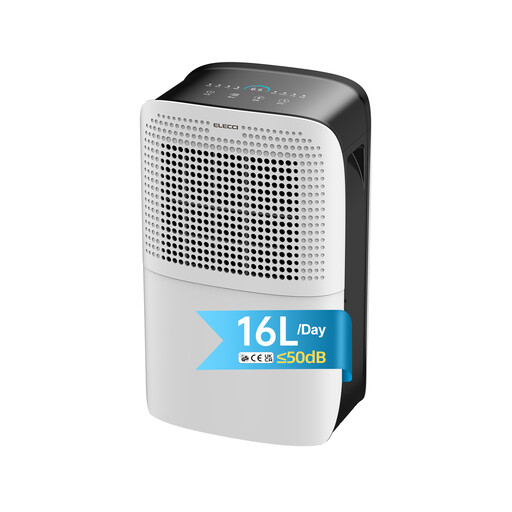
ELECCI 16L/D dehumidifier with drain hose
Consider this compressor model for clothes stored in a normally heated room, subject to checking its humidity controls and operating-temperature range.
The product title lists 16 L/day extraction, a 3.1 L tank, continuous drainage, four modes, auto defrost and a 24-hour timer. Check that a hose route is practical where the unit will stand.
Joybuy
 No image available
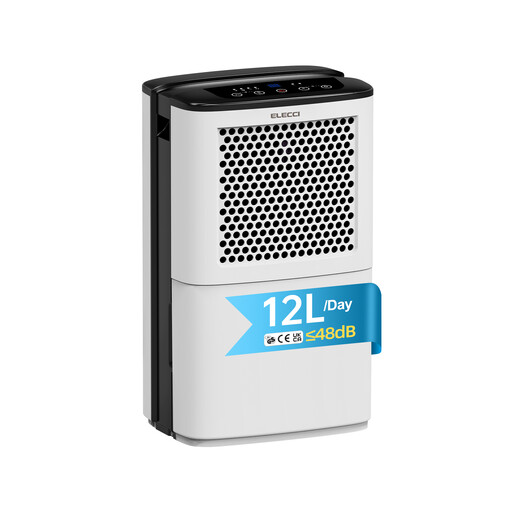
ELECCI 12L/D dehumidifier with drain hose
This compressor option is relevant to storage in a normally heated room; confirm its humidity controls and the lowest temperature at which you intend to use it.
The product title lists 12 L/day extraction, a 3.8 L tank, continuous drainage, auto defrost and a 24-hour timer. Decide whether tank emptying or a suitable hose route works better for the space.
Joybuy
 No image available
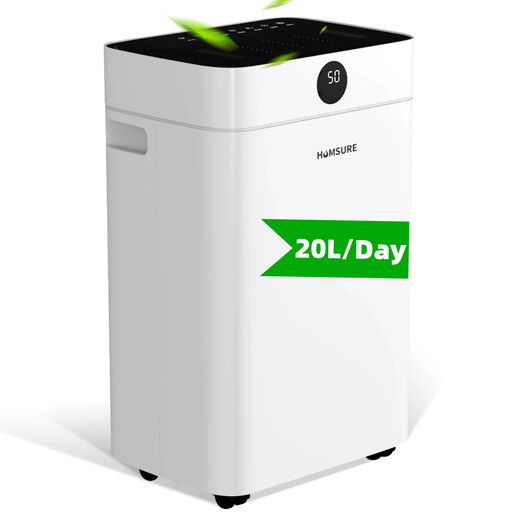
HUMSURE 20L/Day dehumidifier
Consider this compressor model where stored clothes are kept in a normally heated room; check its operating range before placing it somewhere cold.
The product title lists 20 L/day extraction, a 2.8 L tank, continuous drainage, auto defrost and a 24-hour timer. Check how its humidity settings work in any drying mode you plan to use.
Joybuy
 No image available
TRULIVA 25 L/Day dehumidifier with laundry drying
The listed laundry-drying function makes this compressor model worth considering if washing and stored clothes share a normally heated room.
The product title lists 25 L/day extraction, a 2.8 L tank, auto defrost and a continuous-drain hose. Before relying on it for ongoing clothes storage, check whether its humidity target is adjustable and whether the room stays within its operating range.
Joybuy
 No image available
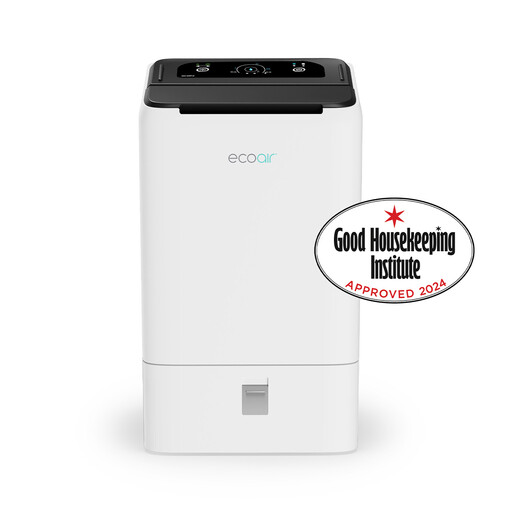
EcoAir DD2 Simple desiccant dehumidifier
This desiccant model is an option for a cooler storage room: EcoAir states an operating range of 1°C to 40°C for the DD2 Simple.
The product title lists 9 litres/day extraction and a laundry mode. EcoAir also lists automatic humidity control, but check whether you can set the particular target you want; confirm the tank capacity if you will not use drainage.
Joybuy
Frequently asked questions
Should I choose a compressor or desiccant dehumidifier for stored clothes?
Choose by room temperature: a compressor model generally suits a normally heated room, while a desiccant model is better suited to a cold or unheated space. Electrical Safety First notes that compressor units are generally more energy-efficient in warmer conditions, whereas desiccant units may use more energy overall; check the operating range of the exact model.
Can a dehumidifier go inside a wardrobe or beneath drying clothes?
Do not put it in a confined wardrobe unless its manufacturer permits that placement, and do not position wet clothes above or against it. Follow the model’s clearance instructions, keep vents unobstructed and prevent water from dripping onto the appliance.
Will a dehumidifier solve a recurring leak or mould problem?
No: it can help manage moisture in the air, but it cannot repair a leak, a building defect or inadequate ventilation. Investigate and address the underlying cause of persistent damp rather than relying on the appliance alone.
How should I look after a dehumidifier near stored clothes?
Keep its vents and filter clear, empty the tank as directed and follow the model’s cleaning instructions. Leave space around the unit so stored garments do not obstruct airflow, and empty the tank before moving it.


