What matters when choosing
Choose the technology for the room’s usual temperature, then check whether the particular model covers the space and can be used comfortably where people spend time.
Compressor
Consider when: The large living room is normally heated and a model’s stated coverage fits the space.
Allow for: Meaco says compressor extraction falls as temperature and relative humidity decline, so a headline capacity may not reflect everyday conditions.
Desiccant
Consider when: The living room stays cool; EcoAir markets its desiccant models for lower-temperature operation.
Allow for: That manufacturer claim does not establish which particular model will use less electricity or suit your room better. Compare model settings and expected runtime.
| Concern |
What to check |
Who this matters to |
| Large-room moisture removal |
Check stated coverage and the temperature and humidity used for the extraction rating. Account for moisture sources and doors open to other rooms. |
If condensation keeps returning across large windows, I need a unit suited to the space rather than a high headline figure alone. Around 50% of consumers put sufficient moisture removal first. |
| Comfortable everyday operation |
Compare sound levels at a stated setting and look for humidity control. Assess power input alongside likely runtime. |
When the living room is occupied, I want to manage moisture without an intrusive sound or unnecessary continuous operation. Quiet, controllable use comes first for around 30% of consumers. |
| Cool-room fit and underlying causes |
Check each model’s operating-temperature guidance. Investigate persistent or localised damp and whether ventilation is working. |
If the room stays cool or damp returns despite moisture control, I need to establish whether the appliance suits the conditions and whether something else needs attention. Around 20% of consumers make that their primary concern. |
Brands to consider
These ranges offer different models to compare; check the specifications of the particular unit rather than treating a brand name as a measure of living-room suitability.
Meaco
Meaco offers domestic dehumidifiers across several capacities and positions its Arete Two 20L for larger homes.
- Meaco lists app control and a 38 dB operating figure for the Arete Two 20L.
- Check the setting behind the sound figure and the extraction conditions behind its 20L rating before applying either to your living room.
Ebac
Ebac’s domestic compressor range includes several stated capacities and models with Smart Control.
- Ebac says its Smart Control responds to changing humidity, which may be relevant to regular operation.
- Check the controls on the exact model; a brand efficiency claim alone cannot establish your running costs.
EcoAir
EcoAir offers desiccant models relevant to cool-room comparisons, as well as compressor models.
- EcoAir says its desiccant models perform better at lower temperatures; treat this as the manufacturer’s claim for that range.
- Compare operating guidance, noise and power settings for the particular desiccant and compressor models you are considering.
De'Longhi
De'Longhi’s air-treatment range includes compressor dehumidifiers with different capacities and features.
- For its DEXD216RF, De'Longhi lists continuous drainage and 16L per 24 hours of extraction at 32°C and 80% relative humidity.
- That rated extraction does not establish how much moisture the model would collect in a cooler living room.
Joybuy product choices
These compressor dehumidifiers are choices to compare for living-room condensation. Match each model’s coverage and operating conditions to your space; if the room stays cool, also consider the desiccant route discussed above.
 No image available
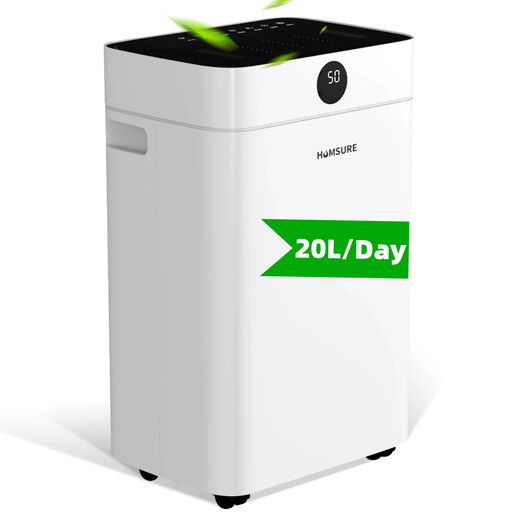
HUMSURE 20L/day dehumidifier for rooms up to 50 m²
Consider this model if its stated 50 m² coverage matches your living room. Its stated 20 L/day extraction is measured at 86°F and 80% relative humidity, so compare that rating with the room’s usual conditions.
The title specifies a 2.8 L tank, 24-hour timer and continuous-drainage option. Check the sound level for use while the room is occupied.
View on Joybuy
 No image available
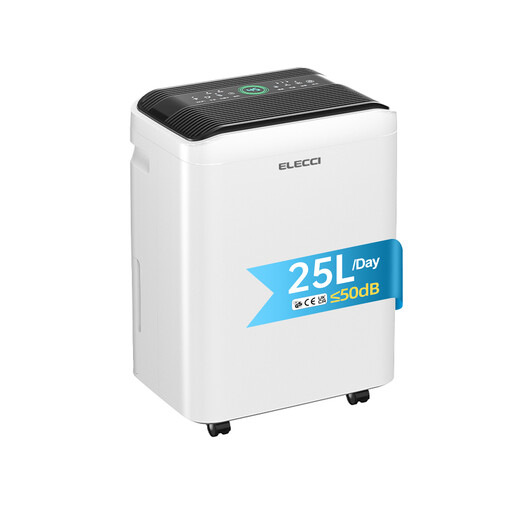
ELECCI 25L/day dehumidifier with 4.8 L tank
Consider this model if its stated coverage of up to 50 m² fits the room and you want a larger tank or continuous drainage. The 25 L/day rating is stated at 30°C and 80% relative humidity, not necessarily at your living-room conditions.
The title specifies three speeds, a 24-hour timer and a drain hose. Check which operating mode applies to its stated sound rating if noise matters to you.
View on Joybuy
 No image available
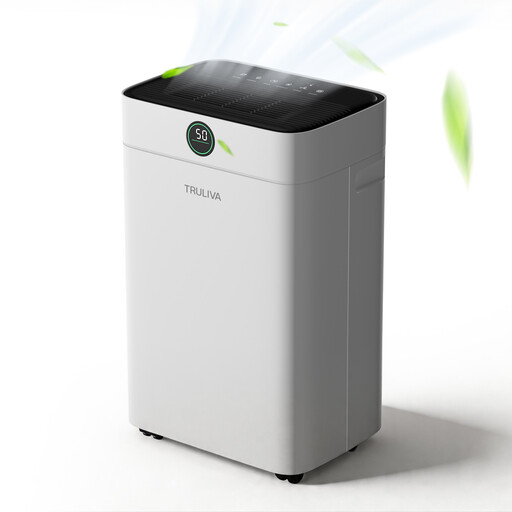
TRULIVA 25 L/day dehumidifier with laundry-drying mode
This model may suit a living room where laundry drying adds moisture, provided its coverage suits the space. Its stated 25 L/day extraction is qualified at 95°F and 90% relative humidity; the listing also says compressor operation may stop below 15°C during defrosting.
The title specifies a 2.8 L tank and continuous-drainage hose. Confirm room coverage and rated power for the exact model before comparing suitability and running costs.
View on Joybuy
 No image available
EcoAir DC26 compressor dehumidifier, 26 litres/day
Consider the DC26 for a larger or moisture-prone room if its stated coverage and operating conditions suit your space. The 26 litres/day figure in its title should be assessed alongside the conditions used to rate extraction.
The title specifies a 6.5 L tank and humidistat control. Compare sound level and input power for the exact model if it will run regularly in an occupied room.
View on Joybuy
 No image available
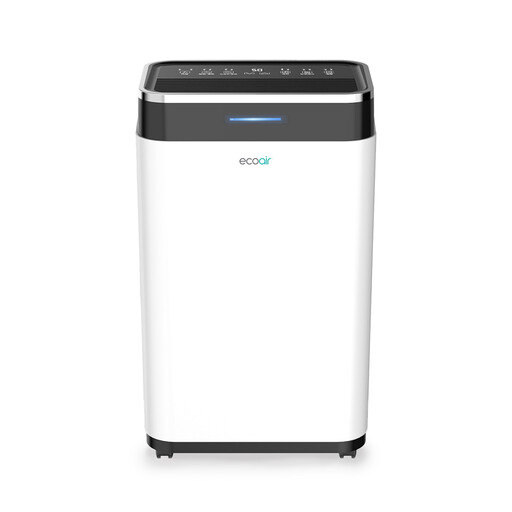
EcoAir DC18 MK2 compressor dehumidifier, 18 litres/day
Consider the DC18 MK2 for a larger living area only after checking its coverage against the room’s size and moisture load. Its stated 18 litres/day extraction should be read with the applicable rating conditions.
The title specifies a 6.5 L tank and humidistat control. Check sound level and input power for the exact model before choosing it for extended occupied-room use.
View on Joybuy
Frequently asked questions
Will a dehumidifier stop condensation on my living-room windows?
It can reduce airborne moisture and therefore help reduce condensation, but it may not resolve the cause on its own. Basingstoke and Deane Borough Council also identifies cold surfaces and ventilation conditions as factors; investigate damp that is persistent or confined to one area.
Should I choose a compressor or desiccant model for a large living room?
Compare suitably covered compressor models for a normally heated room, and include desiccant models if the space stays cool. Meaco says compressor extraction falls in cooler, less-humid conditions; EcoAir’s lower-temperature advantage for its desiccant range is a manufacturer claim, so compare the exact models’ operating guidance rather than assuming one type always wins.
Do I have to empty the water tank?
You can use continuous drainage instead if the chosen model provides it and you have a suitable drain that meets its installation instructions. For example, De'Longhi lists continuous drainage for the DEXD216RF; check the feature and any required accessories on the model you intend to buy.
What else can I do about recurring window condensation?
Control moisture sources and use suitable ventilation alongside the dehumidifier. GOV.UK notes that poor ventilation can trap moisture indoors, while Basingstoke and Deane Borough Council identifies cold conditions and excess moisture as contributors; persistent or localised damp warrants investigation rather than more appliance use alone.
If I rent in England, is damp and mould solely mine to solve with a dehumidifier?
No. GOV.UK guidance for England says private and social landlords must comply with regulations relating to damp and mould. Report the problem to your landlord rather than assuming an appliance is your only option; responsibilities elsewhere in the UK require country-specific guidance.


