Students using the unit near a bed or desk
If it will run while you sleep or study, compare the exact model’s stated noise level, dimensions and controls before deciding where it could go.


For a normally heated student bedroom, compare compact dehumidifiers by the room size they are stated to suit, their noise level and their humidity controls; 10–12L compressor models are a useful starting point, not a capacity rule for every room. A dehumidifier can remove moisture from the air, but it cannot replace ventilation or repair a leak or other building defect. Keep fitted trickle vents usable and report persistent mould or damp to accommodation staff or the landlord.
If it will run while you sleep or study, compare the exact model’s stated noise level, dimensions and controls before deciding where it could go.
Drying laundry adds moisture to the accommodation. Compare the stated extraction capacity and tank size, and consider continuous drainage only if there is a suitable, permitted route for a hose.
Recurring mould, leaks or damp patches call for a report to accommodation staff or the landlord. University of York advises students to report mould promptly; a dehumidifier is a supplementary moisture-control measure, not a repair.
Check the cause of the moisture and the room’s size and temperature first. Then compare the noise, tank routine and controls of models that fit those conditions.
| Concern | What to check | Who this matters to |
|---|---|---|
| Bedroom noise and usability | The exact model’s stated dB figure for the intended mode, plus its dimensions and humidity controls. | If I need the unit near my bed or desk, disruptive sound could make regular use difficult. Around 24% of consumers put quiet, manageable bedroom use first. |
| Moisture capacity and room fit | Stated room coverage and extraction conditions; tank capacity or a permitted drainage route if laundry dries indoors. | When clothes dry in my room, I need to know whether the machine suits both the space and the extra moisture. Around 30% of consumers make capacity and room fit their primary concern. |
| Electricity use and control | The model’s rated electricity use and its stated conditions, humidistat operation and working-temperature range. | If I pay for electricity or share the bill, I want control over when the unit runs. Controllable operation comes first for around 23% of consumers. |
| Persistent damp and reporting | Whether patches suggest a leak or another damp cause, and how to report them to the accommodation provider. | Recurring mould or a rain-related patch would make me seek help with the cause rather than rely on an appliance. Around 23% of consumers prioritise identifying and reporting persistent damp. |
Energy Saving Trust distinguishes condensation on cold surfaces from signs of other damp causes, including a tidemark low on a wall. A portable appliance cannot repair water ingress or a building defect.
Check the pattern of damp. Report a leak, rain-related patch or recurring problem to accommodation staff or the landlord.
Models with the same stated extraction class can differ in room coverage, noise, tank size and operating range. A maximum extraction figure is not a promise of the amount removed in your room each day.
Compare specifications for the exact model against your room, including the conditions attached to its extraction rating.
Government ventilation guidance explains that ineffective ventilation can leave moisture trapped indoors. Removing moisture with a dehumidifier does not provide fresh air.
Keep fitted trickle vents unblocked and follow the accommodation’s safe ventilation instructions.
A daily extraction rating and a tank capacity describe different things. A continuous-drain option is useful only where a hose can be routed safely and is allowed.
Check the tank, full-tank shut-off, hose arrangement and accommodation rules before planning to drain continuously.
Without a workable drain, regular manual emptying remains part of using the unit.
Its domestic range includes compact models positioned for single rooms and smaller homes.
Its compact models give students options to compare for room fit, noise and laundry-related moisture.
Its domestic range includes straightforward humidistat-led models as well as models with additional features.
These dehumidifiers offer different stated capacities, tank sizes and bedroom-related features. Compare each one with your room and moisture source rather than treating a higher extraction rating as automatically more suitable.
 No image available
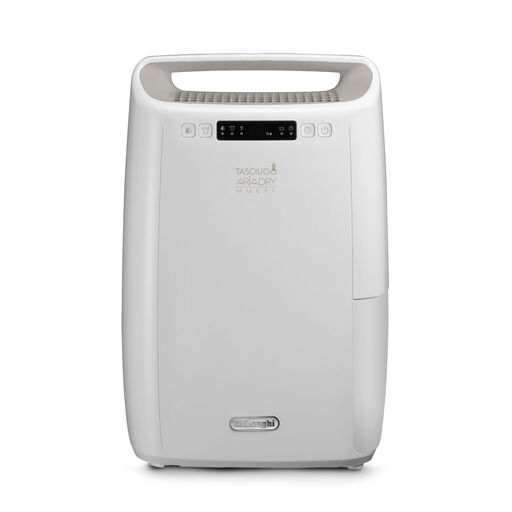
The laundry function makes this a model to compare if clothes dry indoors. Its stated maximum extraction is 14 L/day; check whether its room-volume guidance fits your bedroom rather than converting it directly into floor area.
The listing states a 40 dB maximum noise figure, but check the figure for the mode you would use near a bed. It also describes a 2.1L tank with full-tank shut-off and a continuous-drain option.
 No image available
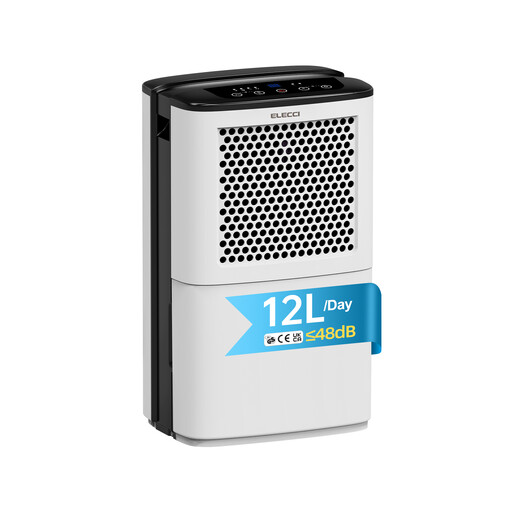
Consider its drying mode if indoor laundry adds moisture and your room fits the stated 25m² suitability. The 12L/day figure is a maximum under specified conditions, not a guaranteed daily result.
A drain hose is listed, but continuous drainage needs a safe, permitted route; otherwise the 3.8L tank needs emptying. Check the model’s noise level before planning to run it while sleeping, and follow its upright setup instructions.
 No image available
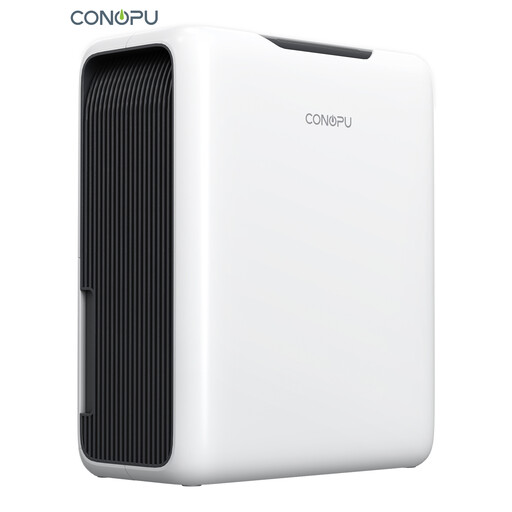
This is a bedroom-oriented option to assess where noise matters and the room fits its stated 20m² coverage. Its stated maximum moisture removal is 800ml/day; check that capacity against the moisture source rather than assuming it matches a litre-class compressor model.
The listing describes approximately 30 dB noise, a 3L tank and automatic shut-off when full. Check the applicable operating-temperature guidance for your room, as the listing gives differing temperature recommendations.
 No image available
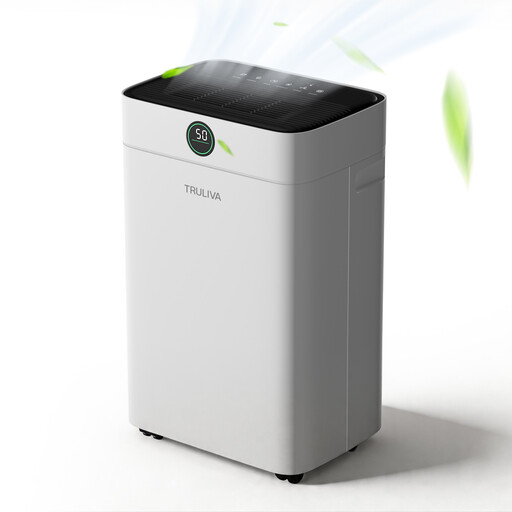
The laundry mode is relevant if clothes drying adds substantial moisture, but the stated 25 L/day maximum does not establish that this larger-capacity model fits a student bedroom. Confirm room suitability and placement space before choosing it.
The listing describes a 2.8L tank and a continuous-drain hose. Its below-50 dB claim applies to sleep mode; check noise in the mode you expect to use and whether hose drainage is permitted.
 No image available
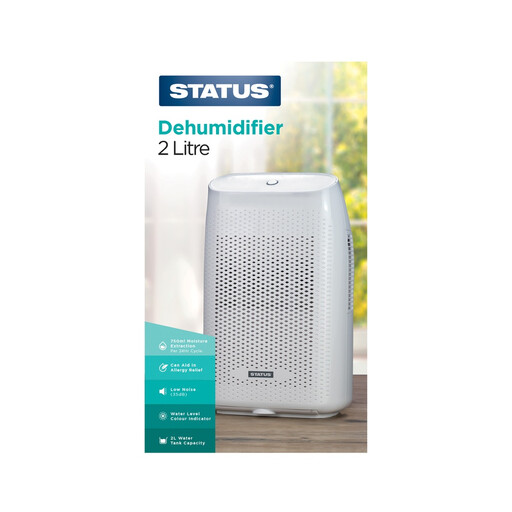
Its stated 35 dB noise figure makes it worth comparing for use near a bed or desk. Check whether its moisture-removal capacity suits your room, particularly if you dry laundry there.
The listing gives a 2L tank and a 40W power rating. That power rating alone does not tell you electricity use over a full period of operation.
Not necessarily: it removes moisture from the air but does not provide ventilation or fix a leak. Government ventilation guidance explains that trapped indoor moisture can become condensation, so keep fitted trickle vents usable and follow your accommodation’s ventilation arrangements.
Start with the room’s area or volume, temperature and moisture sources, then check each model’s stated coverage on the same basis. For comparison, Meaco describes its Arete One 10L for single rooms, while Pro Breeze states up to 20m² for its 12L Compact model; neither designation is a universal bedroom-size rule.
It can change which models are worth comparing: check the room temperature against each machine’s operating range before buying. Ebac advises that compressor units become less energy-efficient at very low temperatures and that desiccant units can perform better there; that is manufacturer guidance, not a conclusion that every cold room needs a desiccant unit.
Report it promptly to accommodation staff or the landlord and keep a written record rather than treating the dehumidifier as a repair. University of York advises students to report mould promptly; the appropriate follow-up route depends on your accommodation and where you live.